
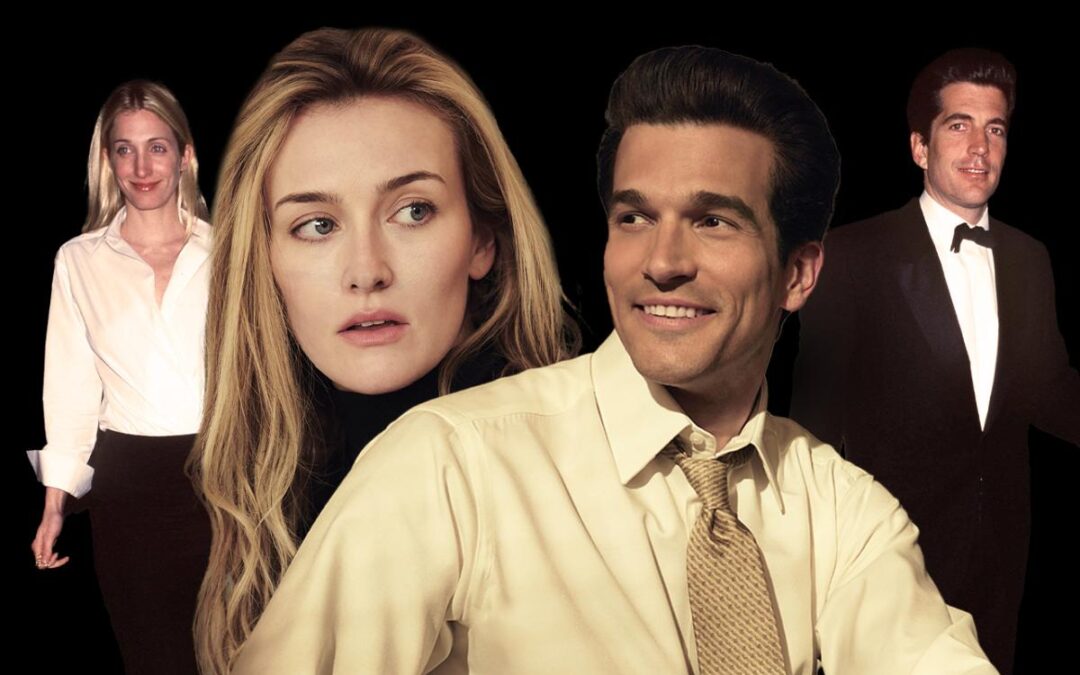
Love Story, which recently concluded its run on FX but remains up on Hulu for people who want to feel sad for a few days, is a show about loss. The loss of John F. Kennedy Jr., “America’s prince,” comes to mind first. But the show’s real protagonist was Carolyn Bessette Kennedy — played in a heartbreaking, star-making performance by Sarah Pidgeon — who sacrificed everything, including her life, for her marriage. Carolyn’s sister Lauren Bessette, an up-and-coming executive on Wall Street, also died in the 1999 plane crash that killed JFK Jr. and Carolyn.
The show mourns the loss of something larger than three bright young lives. In its own somewhat corny but ultimately effective way, it recalls a lost era. When that plane went down off the coast of Massachusetts, the dream of the ’90s died as well. Love Story, for all its flaws, is going to end up being a defining document of ’90s nostalgia, just like American Graffiti/Happy Days were the defining documents of ’50s nostalgia, Dazed and Confused was peak ’70s nostalgia (though I also love Licorice Pizza), and Stranger Things was the endgame of ’80s nostalgia. Now the dream of the ’90s has been revived.
When I say “the dream of the ’90s,” I’m not talking about my specific ’90s. I was a newspaper reporter living in Chicago, spending my ample free time at poetry slams and going to see mostly dirty bands in mostly dirty bars. But I was young and loose and happy, certainly happier than the tortured romantic protagonists of Love Story. JFK Jr. and Carolyn weren’t downtown hipsters playing pool at Max Fish. They were weekending in Hyannis, jetting off to Paris or Belize or wherever, constantly under assault from paparazzi. Those were realities that I, and pretty much anyone else who was floating around in the 1990s, didn’t have to face, and couldn’t possibly imagine. Still, we shared a kind of reality.
The ’90s appeal today because they were a time more or less like our own. We had email and Oprah, CNN and credit cards, Thai takeout and The Simpsons. It’s not the unrecognizable past. But many of the elements that make our lives painful and difficult today were absent. There was no social media, no airport security, no smartphones, no threat of AI. It was pre Bush V. Gore, pre 9-11, pre obesity crisis. Donald Trump was just a pompous Manhattan real-estate developer; people wore their baseball caps backwards. In the show, when JFK Jr. and Carolyn see gossip about themselves, they have to pick up a newspaper, or occasionally turn on Inside Edition. It was toxic and torturous, but was also something they could occasionally escape.

That’s why younger audiences are responding with such passion to the show. It’s certainly a juicy love story. Pidgeon and former model Paul Anthony Kelly, who plays JFK Jr., are enormously appealing protagonists. Connor Hines, who created the show, wrote something clean, moving, and deeply romantic.
Love Story stumbles around in its early episodes. There’s a ludicrous scene where Naomi Watts, playing Jackie Onassis, dances around her luxury townhouse, dying of cancer, to the theme song from the Broadway musical Camelot in front of a portrait of her slain husband. That’s a little on the nose. And actress Daryl Hannah, JFK Jr.’s most prominent ex, comes off as a needy, moronic fool, a portrait so slanderous that it caused Hannah to write a response essay for The New York Times.
Love Story gains power in its second half, though, as Hines’s true purpose takes shape. Once Bessette agrees to marry JFK Jr., suddenly the ice princess melts and becomes vulnerable. The Kennedy mythos, and the toxicity that surrounds it, consumes her soul and destroys her. She loses her career, her friends, and her identity — even her soul — while JFK Jr. continues to play around with George and go to book parties and Vanity Fair launches while pursuing his amateur pilot’s hobby that eventually kills the both of them.
Once those elements are in place, Hines focuses his lens. The show’s penultimate episode ends with a long, seemingly single-take argument as Kennedy and Bessette desperately try to save their flailing marriage. After the plane goes down, there’s a long and heartbreaking grief scene between JFK’s sister Caroline and Bessette’s mother, played with stunning effectiveness by longtime TV ringer Constance Zimmer, giving what might be her best-ever performance. There’s a funeral and an ashes-spreading and then the show drifts off into infinity.
So what are we really mourning? When I watched Love Story, I didn’t feel actual grief for the people involved, however real the performances felt at times. I didn’t know them. They were magazine characters to me. I did feel some grief for people in my life who I’ve actually lost, but any evocation of grief, like Hamnet, can do that. Instead, I found myself mourning a time, and a place, and, to some extent, my youth.
Even viewers who didn’t live through the ’90s are mourning the decade’s loss through the show. Love Story features a protagonist who, even though he was one of the richest and most famous people in America, rides his bike through Manhattan on dates. You took cabs, you didn’t Uber. If you wanted takeout, you called the restaurant, for there were no Door Dash grandmas to exploit. If you saved up $250, you could get on a plane and be in Europe the next day.
JFK Jr. and Carolyn Bessette Kennedy weren’t like us. They were American royalty. But they lived in our time. The world as it is today isn’t nearly as bad as people say. But when someone who was there tells you that the ’90s were better, believe them. Because it’s mostly true.
Neal Pollack is the author of ten bestselling books of fiction and nonfiction. His latest novel is the sci-fi satire Keep Mars Weird. He lives in Austin, Texas.


