
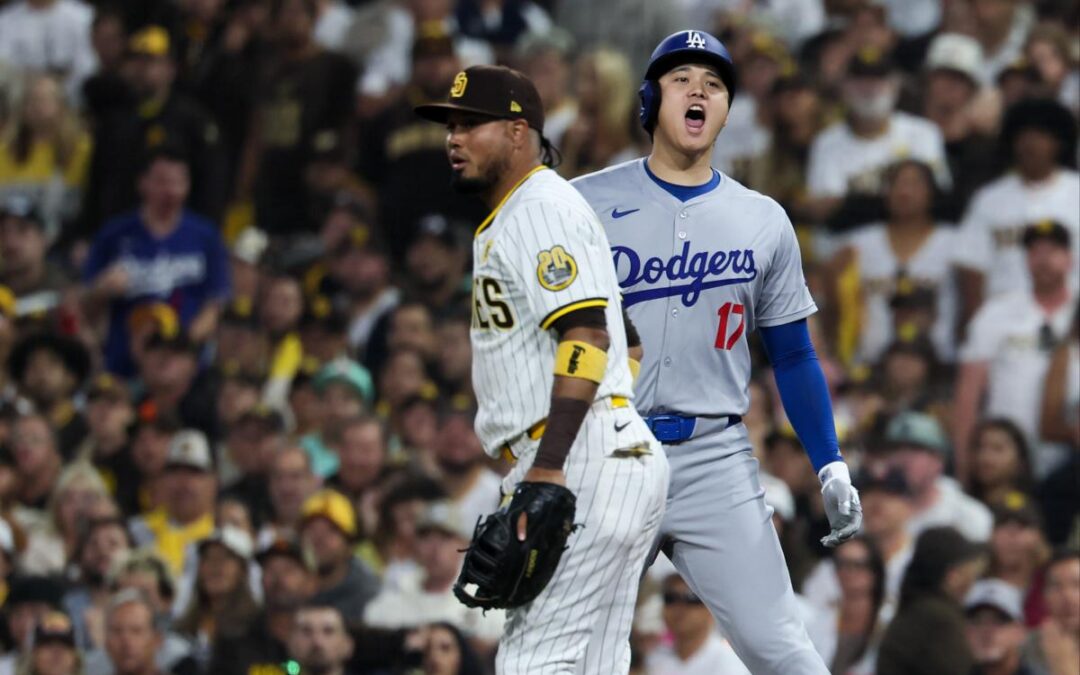
The Padres may be about to fetch a record $3.9 billion sale price after a vicious ownership feud, as The California Post reported.
But just because you paid Dodgers prices, you might not get Dodgers wins.
You might get Mets losses.
Dodgers fans know the real question is not what a team sells for. Rather, the key is the kind of people who take over after the wire clears.
And in this case, that means private-equity billionaire José Feliciano, who is leading the Padres purchase, and is expected to become the controlling owner.
The Dodgers sold for $2.15 billion in 2012. Adjusted for inflation, that works out to about $3.1 billion today. Forbes recently valued the Dodgers at $7.8 billion. So — no, the Padres are not suddenly operating at Dodgers value.
But they are selling for a number close enough to the Dodgers’ purchase price to trigger the comparison that matters most: wWhat happens after the sale closes?
And the Padres are not some sleepy franchise changing hands in the background.
San Diego has opened the season with one of the best pitching staffs in baseball, and enough offense to turn that into a strong early record. This is not a team being sold on branding or promise. It is being sold with the kind of all-around play that can make October very interesting.
They are one of the best teams in baseball, and they would be leading or tied for first in every other division.
Their problem is not that they are bad. Their problem is that they share a division with the Dodgers.
In the National League West, very good still leaves you looking up.
But the Dodgers did not become the Dodgers just because Mark Walter’s group wrote a giant check.
They became the Dodgers because the people at the top knew exactly what they were doing after the sale closed.
Walter became the controlling owner. Stan Kasten brought experienced executive leadership. Andrew Friedman took over baseball operations. Brandon Gomes became part of the front-office brain trust. Dave Roberts gave the dugout a steady hand.
That is the difference.
Yes, the Dodgers spend big.
But baseball is full of rich people. Steve Cohen bought the New York Mets in 2020 for $2.4 billion, a record at the time. Today, he is trying to console Mets fans in the middle of a long losing streak, posting on social media that there are “green shoots” that show promise.
What separates the Dodgers from the rest is that they paired deep pockets with baseball judgment. They hired the right people, let them work, and built an operation that expects to contend every year.
That is not celebrity ownership. That is not vanity ownership.
That is grown-up ownership.
Now comes the part Padres fans may not love.
Feliciano may be bringing near-Dodgers money to the table. That does not mean he is bringing anything close to the Dodgers blueprint.
And Feliciano is not some side investor along for the ride. He is leading the Padres purchase and is expected to be the controlling owner. That makes his other sports ownership relevant.
And Chelsea offers a cautionary tale.
Before the Clearlake-led ownership group, in which Feliciano is a central figure, bought Chelsea FC, one of England’s biggest soccer clubs, in 2022, the team had just finished third in the Premier League and won the FIFA Club World Cup and UEFA Super Cup.
In the first full season after the takeover, Chelsea dropped to 12th.
It later climbed back to sixth, but that was still a steep drop from where the club had been. Chelsea also posted a pre-tax loss of £262.4 million, about $350 million, for 2024-25, a Premier League-era record.
That does not mean the same thing will happen in San Diego. But it sure gives Padres fans a reason to wonder.
The Dodgers are not just a rich franchise. They are the back-to-back World Series champions, built around stars like Shohei Ohtani, Mookie Betts, and Freddie Freeman. They are chasing a third straight title.
And they are not carried by three names alone. They roll out the kind of depth, pitching, and top-to-bottom talent that only serious ownership and elite baseball operations can sustain.
So the issue here is not whether the Padres are expensive. The issue is whether they are importing a championship culture, or something merely transactional.
Those are not the same thing.
The Padres are good enough to matter. Good enough to command a huge price.
But paying near-Dodgers money and thinking like the Dodgers are two very different things.
The Padres may be buying into the Dodgers’ financial neighborhood. That does not mean they are moving onto the Dodgers’ block.
Writing the check is the easy part.
What follows is what will judge this sale.
Jon Fleischman, a longtime lover of baseball and a Dodgers season-ticket holder, writes at SoDoesItMatter.com.


