
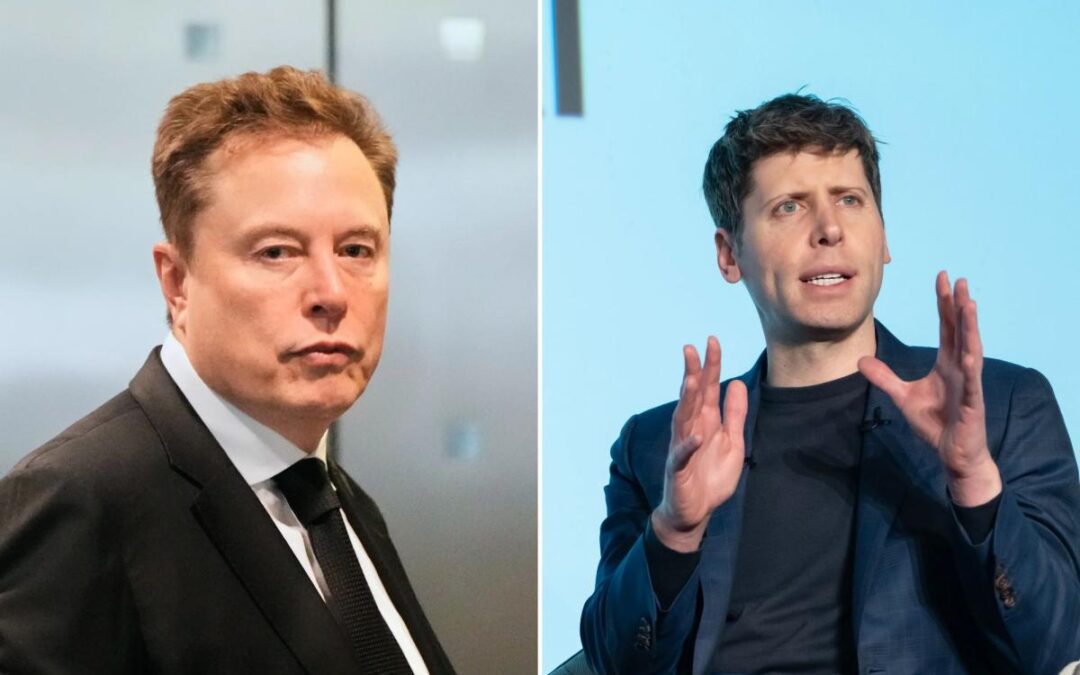
The high-stakes trial over the future of OpenAI kicked off on Tuesday – but not before Elon Musk unleashed a flurry of social media posts that slapped OpenAI’s CEO Sam Altman with the moniker “Scam Altman.”
Ahead of opening statements, lawyers for OpenAI on raised concerns after Musk posted more than 20 times on X a day earlier during jury selection, at one point writing, “Scam Altman and Greg Stockman stole a charity. Full stop.”
Musk, in response, told the federal courtroom in Oakland, Calif., he was responding to OpenAI’s own public statements about the case.
US District Judge Yvonne Gonzalez Rogers encouraged both sides to adopt a “clean slate,” and “control your propensity to use social media to make things worse outside this courtroom.”
Musk’s “Stockman” barb was aimed at OpenAI co-founder Greg Brockman, who along with Musk and Altman on Tuesday agreed to minimize social media activity during the trial.
The case centers on claims that OpenAI abandoned its founding nonprofit mission in favor of becoming a for-profit company backed by billions in investment from Microsoft.
“This was a horse of a totally different color,” said Musk’s lawyer Steve Molo, a partner at Molo Lamken LLP, in opening statements. “It was no longer open source. It was no longer operating for the good of humanity. So Elon hired a lawyer to investigate.”
Molo urged jurors to listen closely to testimony given by UC Berkeley AI researcher and professor Stuart Russell and former Columbia Law School dean David Schizer who would detail the bizarre and unethical switcheroo that OpenAI is trying to pull off.
“No one should be allowed to steal a charity,” Molo said. “To steal a charity is absolutely wrong.”
Musk’s lawsuit accuses Altman and Brockman of betraying OpenAI’s original mission to serve as a nonprofit steward of artificial intelligence for the benefit of humanity, instead transforming it into a profit-driven enterprise.
Musk is seeking $150 billion in damages from OpenAI and Microsoft, with any proceeds intended for OpenAI’s charitable arm. He is also asking the court to restore OpenAI’s nonprofit status and remove Altman and Brockman from leadership roles.
Musk, who co-founded OpenAI in 2015 and contributed about $38 million in early funding, has said the company’s shift to a for-profit structure in 2019 occurred after he left its board. OpenAI disputes his claims, arguing that Musk supported the transition at the time and only brought the lawsuit after failing to become CEO and later launching his own AI company.
The trial is expected to feature testimony from several prominent figures, including Musk, Altman, and Microsoft CEO Satya Nadella. Jurors will review years of internal communications and documents to determine whether OpenAI’s leadership violated its founding principles. If liability is established, the court will later consider potential remedies.
Judge Gonzalez Rogers has indicated she wants jurors to begin deliberating on liability by May 12. The case, which traces OpenAI’s evolution from a nonprofit research lab to a company valued in the hundreds of billions of dollars, could have significant implications for the future of the organization and the broader artificial intelligence industry.
The trial has already offered rare glimpses at Silicon Valley drama and is expected to spill more inside gossip and dirty laundry in the weeks ahead.
Among the evidence that OpenAI has cited is a text exchange between Musk and Zilis just before he quit OpenAI’s board in 2018. Zilis, who has borne several of Musk’s children, asked him whether she should stay “close and friendly” with OpenAI to “keep info flowing.”
“Close and friendly,” Musk replied, according to court documents. “But we are going to actively try to move three or four people from OpenAl to Tesla.”

