
Foreign soccer fans are boycotting the 2026 World Cup in droves, threatening to blunt the economic boost US hotels and host cities were counting on, an industry report warned on Monday.
Nearly 80% of hotel operators in nine of the 11 American host cities said reservations are running well behind early projections: even though more than 5 million tickets have already been sold, according to the American Hotel & Lodging Association’s US Hotel Outlook Report.
FIFA canceled or released about 70% of its massive room blocks, flooding the market and triggering cancellations of up to 95% of contracted inventory in some cities.
Visa delays, concerns about how they would be treated by immigration officials, soaring airfares, a strong US dollar, and geopolitical tensions have kept international travelers home, the AHLA said.
Those visitors were projected to spend an average of $5,048 each — 1.7 times more than typical overseas tourists — with one-third planning multi-city stays longer than two weeks.
“Indicators suggest the anticipated economic lift may fall short of expectations. Despite more than five million tickets sold, this demand has not translated into strong hotel bookings,” the report said. “Domestic travelers are outpacing international travelers — an imbalance that threatens the broader economic impact the World Cup was expected to generate.”
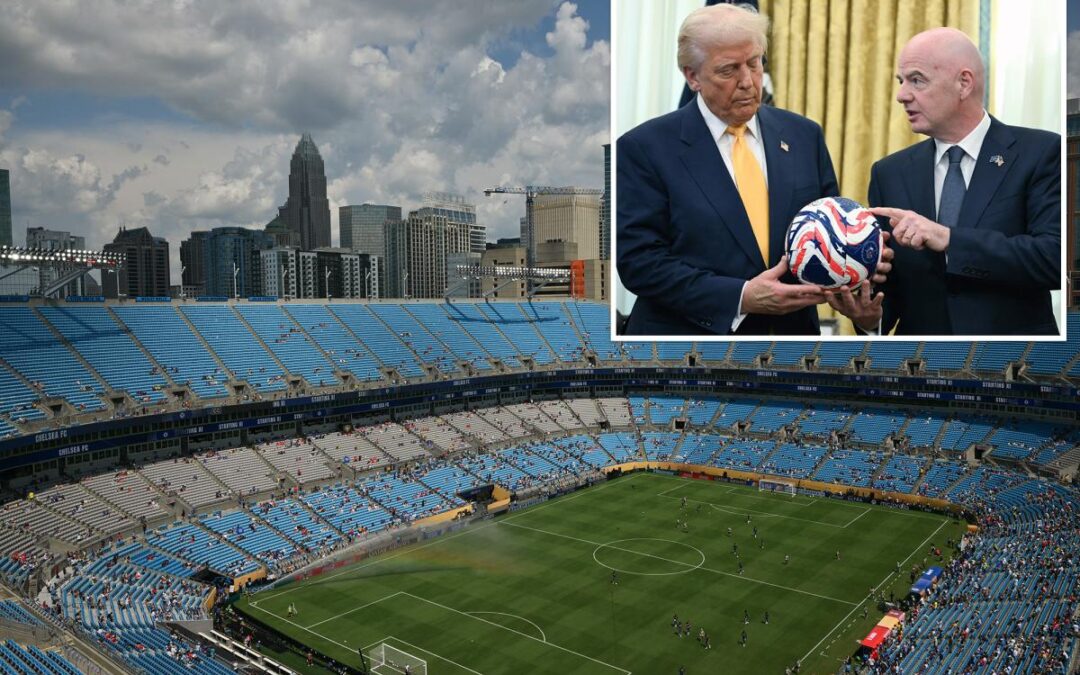
At a November 2025 White House meeting with FIFA President Gianni Infantino, President Donald Trump declared the tournament “is going to have a $30 billion impact economically in this country” and would “create nearly 200,000 jobs for America.”
The commander-in-chief appeared to be citing an analysis produced for FIFA in conjunction with the World Trade Organization that referenced the $30 billion figure.
President Trump also said his administration would “ensure that soccer fans from all around the world are properly vetted and able to come to the United States next summer—easily.”
But in a thinly-veiled dig at the White House’s recent immigration crackdown, the report said: “Even with global anticipation building, the path to the US for many World Cup travelers feels increasingly less like a red-carpet welcome. There is a perception that international travelers may face lengthy visa wait times, increased visa fees, and lingering uncertainty around entry processing.”
American fans are booking, but they cannot make up the gap offered by bigger-spending international supporters, the study added.
Nationwide revenue per available room is still forecast to rise 1.7% during the June-July tournament window, according to CoStar data cited in the report. Without the World Cup, that growth shrinks to 0.2%.
Only Atlanta and Miami are holding steady. About half the operators in Atlanta and 55% in Miami said bookings are meeting or beating expectations, helped by team base camps, strong leisure demand, and easier flights.
Everywhere else, the outlook is grim. In Kansas City, 85% to 90% of hotels reported bookings trailing a typical summer. Boston, Philadelphia, San Francisco, and Seattle are running nearly 80% behind projections. New York, Dallas, and Houston are essentially flat.
Hotels had poured millions into preparations — fan zones, multilingual staff, upgraded security and transportation tie-ins — only to pause further World Cup-specific spending when reservations stalled.
Now state and local tax hikes threaten to make the slump worse, the report claimed.
New Jersey, home to the MetLife Stadium, is proposing to raise its lodging tax from 5% to 7.5% and add a prepared-food tax increase that would cost 17 counties an extra $110.5 million a month, it said.
Philadelphia wants to lift its hotel tax from 8.5% to 10.5%, a move the AHLA said would cost 1,900 jobs, $154 million in economic activity, and 192,000 room nights.
“Imposing an additional consumer tax at this moment risks further discouraging visitors from choosing New Jersey,” the report said.
The tournament runs from June 11 to July 19 in 11 US cities: Seattle, San Francisco Bay Area, Los Angeles, Boston, New York/New Jersey, Kansas City, Philadelphia, Atlanta, Dallas, Houston, and Miami.
The US team opens play on June 12 against Paraguay in the SoFi Stadium in Inglewood, CA, with the cheapest tickets available for an eye-watering $1,000 per seat. Canada and Mexico are co-hosts.
The AHLA is urging FIFA to release more details on remaining room blocks, and telling US officials to speed up visa processing, as well as holding off on new taxes and fees.
“Policy restraint and operational transparency can unlock remaining potential,” the report concluded.
Hotels are still hoping for a last-minute surge once the knockout rounds begin and casual fans commit to travel.
But with opening day approaching, the lodging industry that bet heavily on soccer’s biggest tournament is having to recalibrate fast.


