
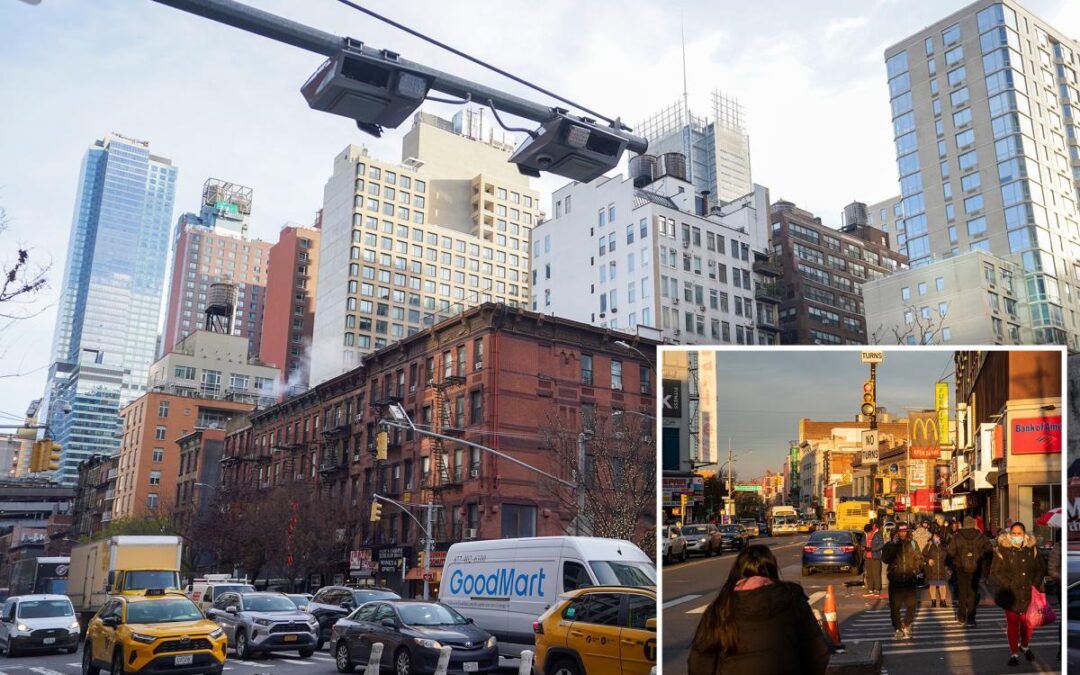
Congestion pricing is choking some of the Big Apple’s poorest neighborhoods.
Air quality in the South Bronx has significantly worsened since the controversial toll went into effect — despite its backers touting lofty environmental promises — an alarming new report found.
Researchers found fine particulate matter concentration increased after the $9 base tax scheme to enter Manhattan below 60th Street during peak hours was enacted in January 2025, according to an analysis by Columbia University and grass roots organization South Bronx Unite.
Two years of data analyzed from 19 air quality sensors around the Bronx found four “exhibited significant increases” in fine particulate matter, according to the findings, Gothamist reported.
Exposure to the pollutant can cause cardiovascular and respiratory issues and even premature death for people with preexisting heart or lung disease, according to the Environmental Protection Agency.
And the South Bronx is already known as “Asthma Alley” due to its notoriously poor health outcomes, high rate of respiratory disease and long-standing air quality issues.
Around 1 in 5 children are diagnosed with asthma in the Mott Haven-Port Morris sections of the South Bronx, according to South Bronx Unite.
City health data also shows a startling 20.7% of South Bronx adults have asthma — or 79,000 — compared to the Big Apple’s 14.2% rate.

Congestion pricing has outperformed revenue expectations, generating a whopping $526 million in net revenue in its first year – a windfall critics blasted as proof the toll is nothing more than a cash grab.
The MTA tried to pour cold water on the report, however, pointing to other studies that have shown drops in overall New York City air pollution since the toll kicked off.
A Cornell University study previously found air pollution plummeted 22% in the Congestion Relief Zone – the Manhattan roads south of 60th Street –and also discovered more modest drops across the Big Apple.
“Reducing air pollution has always been one of the core goals of New York’s Congesting Pricing program,” MTA head honcho Janno Lieber said in a statement.
“The data shows it’s already succeeding, and now we’re taking the next step by using revenues to fund additional improvements for Bronx residents.


