
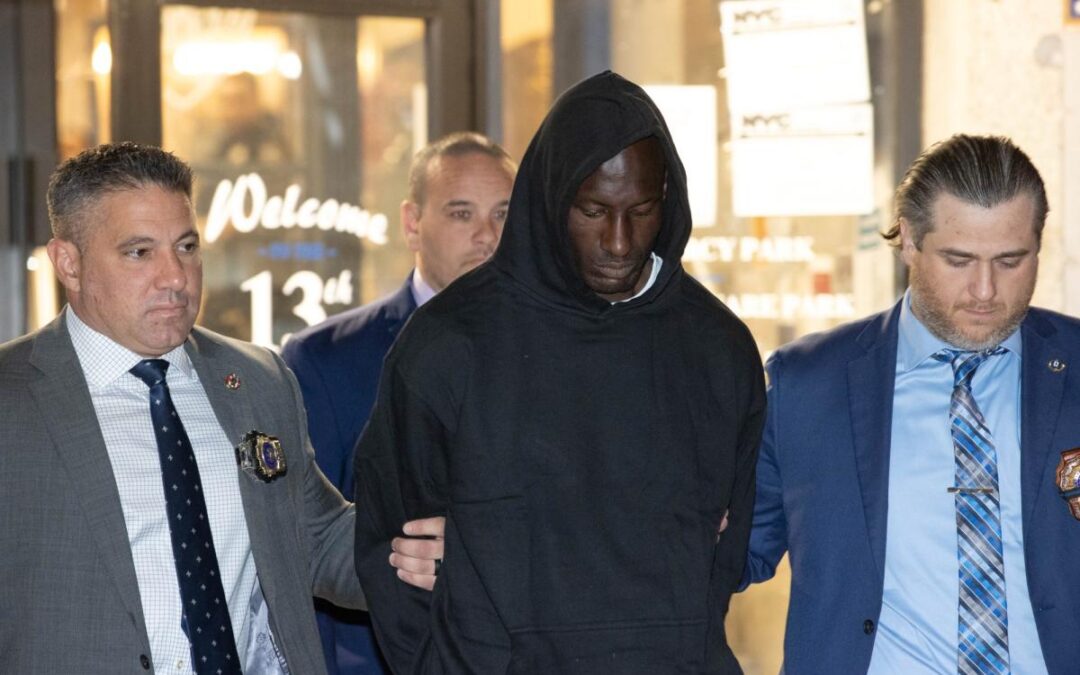
Another New Yorker was made the victim of the city’s revolving-door criminal justice system last week.
Ross Falzone, 76, was entering a subway station in Chelsea when Rhamell Burke, 32, allegedly shoved him down a flight of stairs. Falzone later died from his injuries.
In spite of this, somehow Burke appeared in court on a completely different charge the next morning. Even more shockingly, he was allowed to walk free.
Burke had also been turfed from Bellevue just hours before he allegedly took Falzone’s life.
In addition to an indictment of the city’s mental-health policies, Burke’s story is that of another frequent flyer released under New York’s lax bail laws.
‘Racist’ concerns
Burke’s Friday hearing, for a third-degree assault case, was not an isolated incident. He’s been arrested four times in the past four months, according to the NYPD.
One of his past victims, a 23-year-old woman, told The Post that Burke assaulted her and her friend on the subway just last month. He allegedly grabbed her hair, tried to slam her to the ground and kicked her friend in the back.
All of that led to an assault charge and supervised release — putting a dangerous and unstable person back on the street.
The victim said she had declined to cooperate with prosecutors, but regrets her choice.
“Maybe a part of me was just like, I don’t want to put another black man in jail,” she said.
That attitude — not wanting to put a dangerous, frequent offender in jail because it might be “racist” — also inspired the laws that cost Falzone his life.
Under the state’s bail reform, only a limited number of serious offenses can get a person detained pretrial.
And, under New York law predating bail reform, judges cannot consider an offender’s dangerousness to the community in deciding whether or not to remand him — a rule found in no other state in the union.
The revolving door means that offenders like Burke keep getting rereleased until they kill someone.
Indeed, according to New York state data, 88% of those who have a misdemeanor assault charge and another open case are rereleased.
Of these, 40% are rearrested; 18% of rearrests are for a violent felony offense.
Burke’s case, in other words, is not an isolated incident.
It’s a pattern, one that’s making New Yorkers less safe.
It’s an iron law of criminology that a handful of criminal offenders do the overwhelming majority of offending.
Put public safety first
New York is no exception; just 63 individuals account for some 5,000 arrests on the subway, The Post has reported.
The best thing to do with such people is to take them off the streets, putting them either in prison or a mental facility as appropriate.
The court in Burke’s case should have been able to remand him on the basis of his danger to public safety. Ideally, he would have been held after his unprovoked assault on two women last month.
The fact that he wasn’t represents not just a failure of the court and its officers, but of New York’s detention laws more generally.
It’s long past time for New York to catch up with every other state and permit the detention of frequent and dangerous offenders based on their criminal history.
Stop worrying about putting “another black man in jail,” and start worrying about protecting the lives of law-abiding citizens like Ross Falzone.
Charles Fain Lehman is a senior fellow at the Manhattan Institute and senior editor of City Journal.

