
The ink isn’t even dry on New York City’s proposed pied-à-terre tax — and one Miami Beach tower is already counting the money.
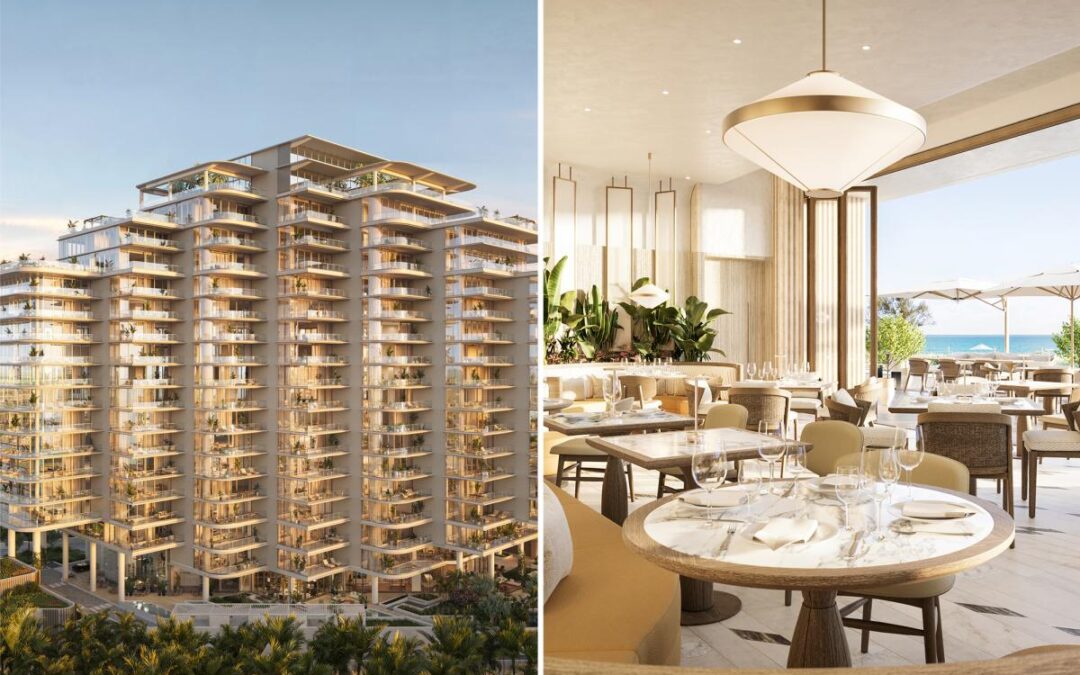
At the Perigon Miami Beach, a 72-unit oceanfront condominium in Mid-Beach designed by Pritzker Prize-winning architect Rem Koolhaas’s firm OMA, developers say they logged more than $70 million in sales from New York buyers in the 30 days after the building reached its full structural height in early March.
The project, developed by Mast Capital, is priced from $12.55 million and expects to open in 2027.
It is no coincidence, on April 15, Mayor Zohran Mamdani and Governor Kathy Hochul jointly announced an annual surcharge on secondary homes in New York City valued above $5 million, targeting owners whose primary residence is elsewhere.
The city says it expects to raise $500 million a year. What nobody in Albany or City Hall seems to have accounted for is what happens south of the Mason-Dixon line when that kind of news lands.
“What we can speak to is what we’re seeing on the ground … New York buyer interest has certainly increased,” Camilo Miguel Jr., CEO and Founder of Mast Capital told The Post. “Buyers who were evaluating South Florida are now moving from consideration into action.”
The broader picture is more complicated. High-end Manhattan sales have actually ticked up since the tax was announced, with 133 contracts signed for apartments priced at $4 million or more between April 14 and May 10 — a slight increase over the same period last year, with total dollar volume rising 10% to $1.12 billion.
Wealth flight, at least for now, appears to be more of a threat than a reality in New York itself, pending whether the proposal will be approved.
But Miami is a different calculation. Establishing a Florida primary residence doesn’t just sidestep the proposed surcharge — it eliminates New York City and state income tax liability entirely, a far larger number for most people in that bracket.
The pied-à-terre tax is in many ways the nudge that makes a move that already penciled out feel urgent.
The proposal has already sparked a very public fight. Mamdani filmed a social media video in front of hedge fund billionaire Ken Griffin’s Manhattan building to announce the tax, prompting Griffin to call the move “creepy and weird” and pledge to expand his firm Citadel in Miami rather than New York.
Meanwhile, New York’s own comptroller has raised doubts about whether the tax will actually raise anywhere near $500 million, noting that behavioral responses — including sales, conversions to rentals, and primary-residence claims — introduce significant uncertainty into the projections.
Real estate brokers have lobbied to halt the tax in Albany, warning it will hurt the market and cost jobs. Corcoran Group President and CEO Pamela Liebman told the Real Deal that Corcoran “has so many deals that have been put on pause, particularly at the $30 million, $40 million level, that are just wait and see.”
“For many New York purchasers already considering South Florida, the combination of tangible construction progress and a near-term delivery timeline created a strong sense of urgency,” Miguel said. “Just as importantly, they’re responding to the quality of the offering itself.”
The amenity package leans heavily into the residential-hotel territory that today’s ultra-luxury buyer has come to expect.
There is a 75-foot beachfront lap pool, a private beach club, a spa, a screening room and a double-height lobby lounge. The culinary program is anchored by two venues — Nota, an oceanfront restaurant, and FiftyThree, a residents-only speakeasy — both run by Michelin-starred chef Shaun Hergatt.

