
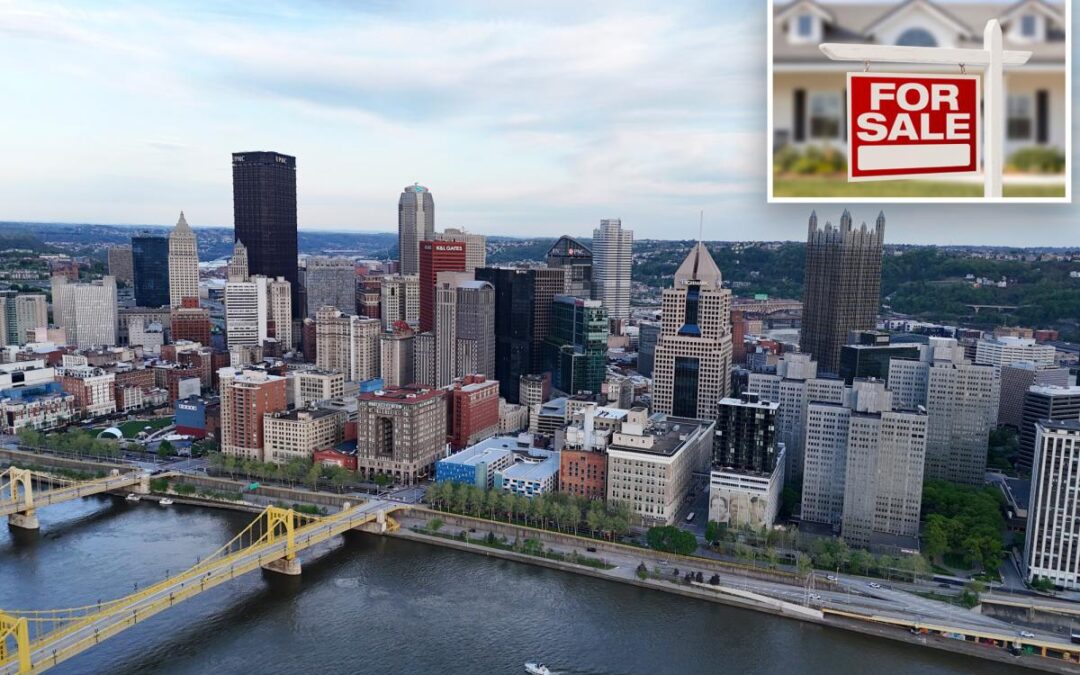
The top 10 most affordable housing markets in America are almost all in red states, and only one of them is in the Northeast, according to a shocking recent report.
Pittsburgh, Pa., is the cheapest large housing market in the US — with its resident Yinzers living in the only big American city where buying a home costs less than renting, according to a report by AmeriSave.
Typical housing values in “The Steel City” were around $240,000 as of April 2026, more than $180,000 less than the national median of around $426,000.
At one time seen as a gritty and polluted steel city, Pittsburgh is now thriving thanks to its transition from dying heavy industry to the more viable modern sectors of technology and healthcare, with Google, the University of Pittsburgh Medical Center and Carnegie Mellon University among its biggest employers.
It is one of nine of the US’s cheapest 10 cities to be found in red, or Republican-leaning, states, where property taxes are relatively low and wages are decent.
The second cheapest city, Decatur, Ill., is the only one of the top 10 to be located in a blue, or Democratic-leaning, state.
Median home values in the manufacturing and agricultural hub are just $89,855, less than twice the city’s median income of $49,714.
Many of the remaining cities are located in the Midwest, which has seen historical population losses in recent decades.
But what they may lack in glamour compared to New York City and Los Angeles, they make up for with far less punishing costs of living and more stable employers.
Wichita, Kan., known as the “Air Capital of the World” because of its high-paying aerospace industry, has a cost of living 11% below the national average.
Oklahoma City has the facilities of a large metro area but some of the lowest costs of living of any major metropolitan region in the US, with more than half of its homes selling for less than asking price in 2025.
Omaha, Neb., has also become a major center for healthcare, insurance and logistics, with its largest employers including Warren Buffett’s Berkshire Hathaway and Union Pacific.
Here are the 10 cheapest housing markets in the US:
1. Pittsburgh, PA
- Population: 2.42 million metro
- Median home price: $240,000
- Median income: $77,214
- Cost of living: 2% below national average
- Major industries: Finance, healthcare, higher education, technology
2. Decatur, IL
- Population: 92,000
- Median home price: $89,855
- Median income: $49,714
- Cost of living: 20% below national average
- Major industries: Agriculture, advanced manufacturing, logistics
3. Enid, OK
- Population: 50,763
- Median home price: $164,000
- Median income: $62,125
- Cost of living: 11% below national average
- Major industries: Agriculture, aerospace, defense, energy
4. Fort Wayne, IN
- Population: 275,000
- Median home price: $245,993
- Median income: $61,422
- Cost of living: 39% below national average
- Major industries: Manufacturing, healthcare
5. Des Moines, IA
- Population: 296,200 metro
- Median home price: $240,000
- Median income: $85,731
- Cost of living: 23% below national average
- Major industries: Data services, finance, insurance
6. Oklahoma City, OK
- Population: 694,800
- Median home price: $225,167
- Median income: $68,656
- Cost of living: 21% below national average
- Major industries: Aerospace, healthcare, technology
7. Wichita, KS
- Population: 389,000
- Median home price: $190,000
- Median income: $64,620
- Cost of living: 11% below national average
- Major industries: Aerospace, manufacturing
8. Green Bay, WI
- Population: 192,900
- Median home price: $282,595
- Median income: $79,876
- Cost of living: 13% below national average
- Major industries: Food processing, paper
9. Omaha, NE
- Population: 486,000
- Median home price: $230,000
- Median income: $73,200
- Cost of living: 10%
- Major industries: Healthcare, insurance, logistics
10. Cedar Rapids, IA
- Population: 173,000
- Median home price: $210,000
- Median income:$64,435
- Cost of living: 30% below national average
- Major industries: Aerospace, food


