
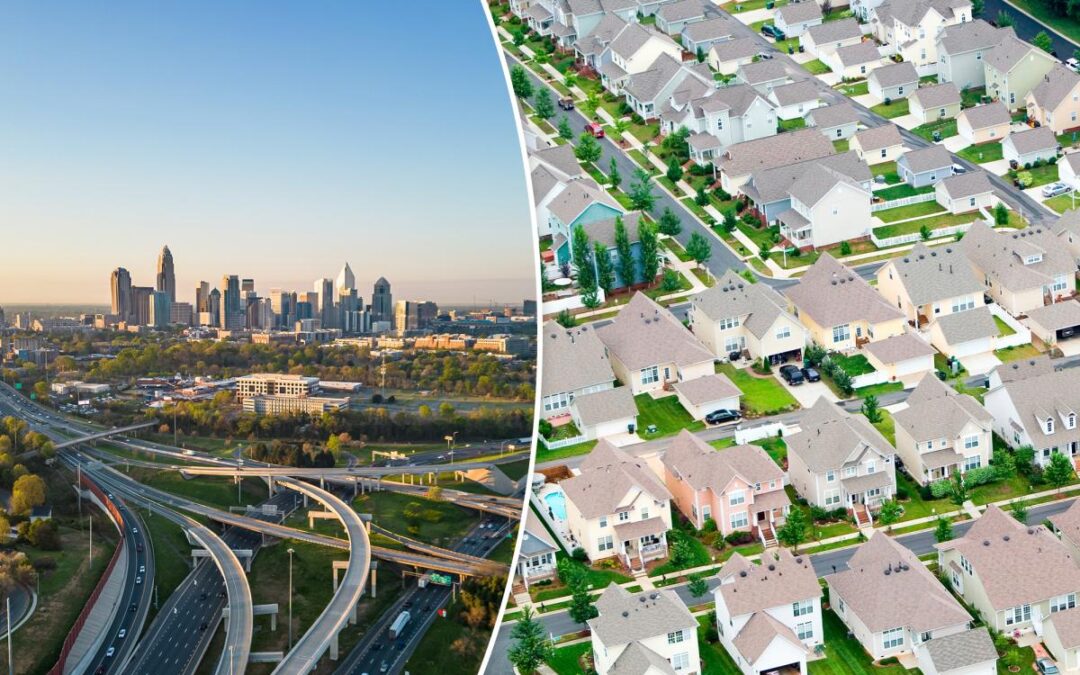
Has this COVID-era Sun Belt boomtown become too hot?
Axios reports that Charlotte, North Carolina — the home of Bank of America and long the “Queen City” that has lured job-seeking out-of-staters for being a banking hub — is rapidly approaching a population of 1 million. And now, locals are sounding an alarm: “We’re full.”
Similar to the North Carolina capital Raleigh, which also grew rapidly during the pandemic years and stands three hours away by car, Charlotte emerged as an alternative to cities like New York and Atlanta that were simply becoming too crowded. But now, with more Americans flocking there than ever before, those who left other cities in previous years are getting uncomfortable flashbacks.
“I traded the Long Island Expressway (I-495) for I-485,” Dennis Cirillo, who moved to Charlotte in 2017, told Axios. “It is the same movie with different accents.”
The growth has been staggering. Between 2024 and 2025, Charlotte saw nearly 21,000 new residents, outpacing every other city in the nation, according to census data. That now brings the city’s total population to 964,784.
Not only is it cramped, the surge means it’s also becoming unaffordable for those who call Charlotte home.
In 2020, the average family needed an annual income of roughly $79,000 to afford the average home there. Come 2025, according to the UNC Charlotte Housing Report, that salary ballooned to roughly $150,000, marking an 89% jump.
What’s more: in 2019, the area’s median home value stood at $238,000. By 2024, it jumped to $407,000.
And Charlotte really is growing. Longtime locals, in need of lower housing costs, resent the new apartments cropping up. Cranes at construction sites punctuate the skyline and traffic is terrible.
“There’s really no equilibrium for a city,” Andrew Blumenthal, a real estate broker and vice chair of Charlotte’s planning commission, told the outlet. “Either you’re growing, or you’re not.”

