
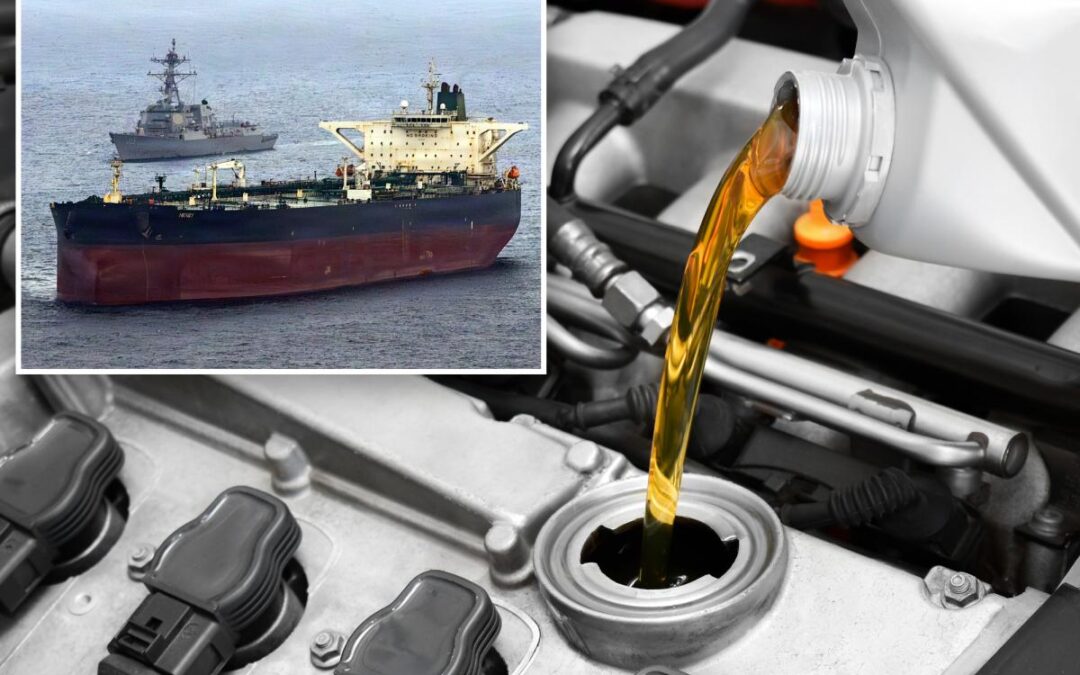
Automakers are scrambling for synthetic motor oil as the Iran war chokes off critical supplies from the Middle East — threatening to send the cost of a routine oil change soaring by nearly 40%.
Dealerships and distributors are stockpiling oil while prices surge, with some suppliers warning the US could run out of key Group III base oils from the Gulf region by June, according to Automotive News.
The looming supply crunch is already driving up the cost of oil changes at some repair shops.
Chris Harp, owner of A&C Auto Repair in Alabama, told WBRC that a 55-gallon drum of full synthetic oil that once cost between $300 and $400 has surged to roughly $1,000 in recent weeks.
As a result, routine synthetic oil changes that previously cost about $65 could soon jump to as much as $85 or $90, he said.
Group III base oils, which are highly refined petroleum oils engineered to handle extreme temperatures and reduce engine wear, are the key ingredient used to make most modern synthetic motor oils and transmission fluids.
Nissan has already begun rationing two of its most popular synthetic motor oils to dealerships, slashing allocations to as little as 55% of last year’s levels as shortages ripple through the supply chain, according to Automotive News.
Toyota reportedly warned dealers that supplies of certain motor oils could run short because of “production and logistics constraints within the global petrochemical supply chain,” advising service departments to use substitutes to reduce demand.
The Post has sought comment from Nissan and Toyota.
The shortage is so severe that some industry executives are comparing it to the semiconductor crunch that crippled auto production during the COVID pandemic.
Without synthetic motor oil and transmission fluid, automakers would be unable to move newly built vehicles off assembly lines, Arnold Gacita, CEO of Texas-based Petra Automotive Products, told Automotive News.
It’s “almost like the chip shortage back during COVID,” Gacita said.
“So you can make the car, but we’re gonna sit it there because we’ve got no transmission fluid to put into it.”
The Independent Lubricant Manufacturers Association reportedly warned the shortage could last until at least mid-2027 and potentially threaten new vehicle production across the industry.
Suppliers are now racing to secure inventory as demand spikes and panic buying spreads through dealerships and distributors.
“I can show you countless emails from [automakers] and dealerships saying, ‘I am out of this. My supplier doesn’t have it. Do you have this?’” Gacita was quoted as saying.
Lauren Fix, an automotive analyst and industry commentator, argued that the looming shortage has been exaggerated by panic buying and alarmist headlines.
“We’ve seen this movie before,” Fix told The Post, likening the situation to the run on toilet paper and other goods at the start of the coronavirus pandemic.
Fix acknowledged that there are legitimate supply disruptions affecting some specialized synthetic oils — particularly ultra-low-viscosity blends used in newer vehicles — but said most drivers are unlikely to face widespread shortages.
She told The Post that the crunch is largely concentrated in premium Group III base oils used in thinner synthetic blends required by some newer engines, rather than conventional motor oils used in older vehicles.
Fix said standard motor oils remain widely available and predicted most drivers using common blends such as 5W-30 or 10W-30 would likely see little more than higher prices and fewer discounts.
She also warned that consumers rushing to hoard oil could worsen supply pressures.
Rather than panic, consumers should keep the issue in perspective, she said.
“Your local store is not about to become a post-apocalyptic wasteland with empty oil shelves and chaos in the parking lot,” Fix told The Post.
“The bigger concern should actually be how quickly Americans are manipulated into panic consumption cycles every time there’s even a modest supply disruption.”


