
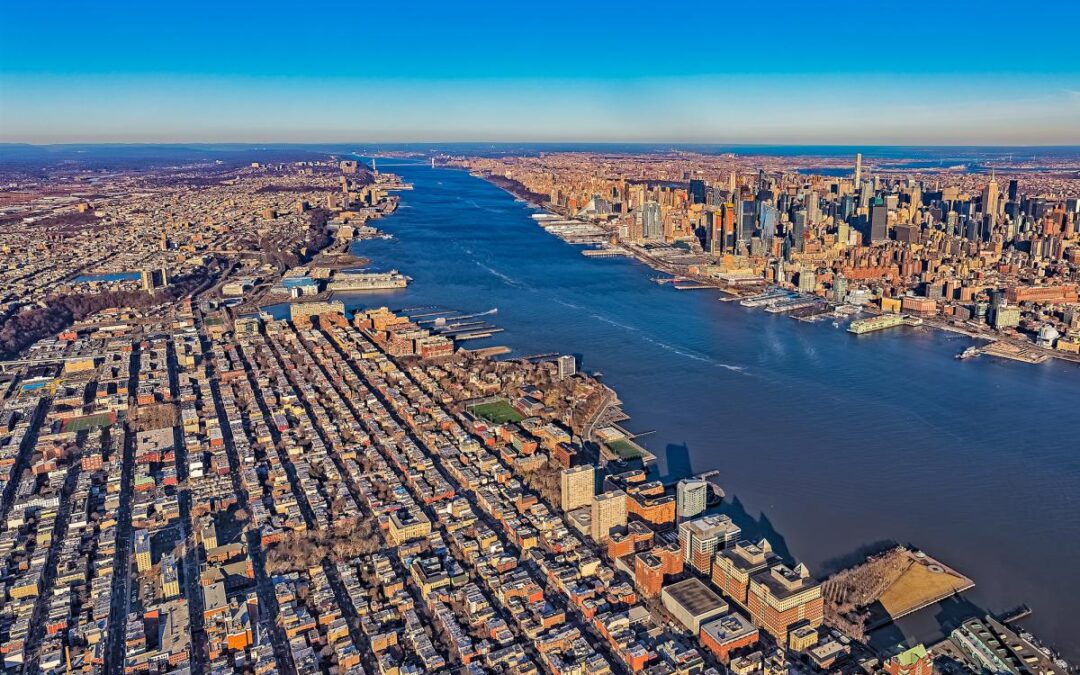
New York renters are getting squeezed harder than ever, with Manhattan apartment prices smashing records again this spring. But just across the Hudson River, one of the region’s hottest pandemic-era boomtowns is telling a very different story.
While New York City’s median one-bedroom rent surged to an all-time high of $4,680 in May, Jersey City rents remain below where they stood during their 2024 frenzy after a dramatic correction triggered by an avalanche of new apartment construction, according to the latest Zumper National Rent Report.
The contrast highlights the increasingly fractured housing market taking shape across the country, where supply-starved coastal cities are once again seeing landlords regain leverage while building-heavy markets are still working through an oversupply hangover.
Jersey City became one of the busiest development hubs in the New York metro area after the pandemic, as developers rushed to capitalize on soaring demand from renters fleeing Manhattan for more space and somewhat cheaper prices. But when thousands of those new apartments hit the market at the same time, pricing power collapsed.
“The steepest declines were really a 2025 phenomenon,” Crystal Chen of Zumper told The Post. “One-bedroom rent peaked around $3,430 in mid-2024, then corrected hard last year, bottoming near $2,650 in August 2025 with annual drops as steep as 22%.”
“Since then it’s partly recovered and leveled off. As of May 2026, the median one-bedroom rent is $2,860, down 2.1% year-over-year.”
That downturn gave renters rare negotiating power in a market that had become notoriously expensive during the pandemic-era migration boom.
“The simplest explanation is supply. Jersey City was one of the busiest apartment-construction markets in the entire New York metro region, adding thousands of new units as developers chased the post-pandemic demand surge,” Chen said.
“When all that inventory came online at once, landlords had to compete on price to fill the units, which pulled rents down from their 2024 peak. The building boom is why renters are getting a break now,” Chen said.
The reversal stands in stark contrast to Manhattan, where years of limited rental development and stubbornly low vacancy rates are pushing prices to unprecedented levels.
According to Zumper, New York City’s median one-bedroom rent climbed 3.1% in just one month to hit $4,680, the highest figure recorded in the company’s more than decade-long history tracking rents. Two-bedroom apartments in New York and San Francisco are now tied as the most expensive in the country at $5,500.
The report found Manhattan vacancy rates remain below 2%, with available apartments renting at one of the fastest clips seen in months. Many renters are opting to stay put rather than risk jumping into today’s market, where the gap between existing lease rates and asking prices has widened dramatically.
Nationally, rents are also beginning to rise again after two years of sluggish movement.
Zumper’s national median one-bedroom rent increased 0.7% month over month to $1,519 in May, marking the strongest monthly increase since spring 2025. Two-bedroom rents rose 0.4% to $1,903.
“National averages are masking two very different housing markets right now,” Shawn Mullahy, CEO of Zumper, said in the report. “In supply-constrained coastal cities, pricing power has returned quickly. Across much of the Sun Belt, operators are still working through the inventory wave delivered over the last several years. Demand is there, but supply still needs time to normalize.”
San Francisco also continued its sharp rebound, with one-bedroom rents topping $4,000 for the first time ever as the city experiences a surge fueled by AI hiring and a stronger return-to-office push.
Meanwhile, much of Texas remains stuck in correction territory after an enormous apartment construction wave flooded those markets with inventory. San Antonio posted the steepest annual decline among major Texas cities, with one-bedroom rents down 10.4% year over year. Houston fell 9.6%, while Dallas and Austin also posted declines.
But in Jersey City, the market appears to have found firmer footing after last year’s plunge. Rents are no longer collapsing, though they remain well below their peak.
For renters priced out of Manhattan, that may be one of the few bits of relief left in the New York area housing market.


