
Is it free woolly?
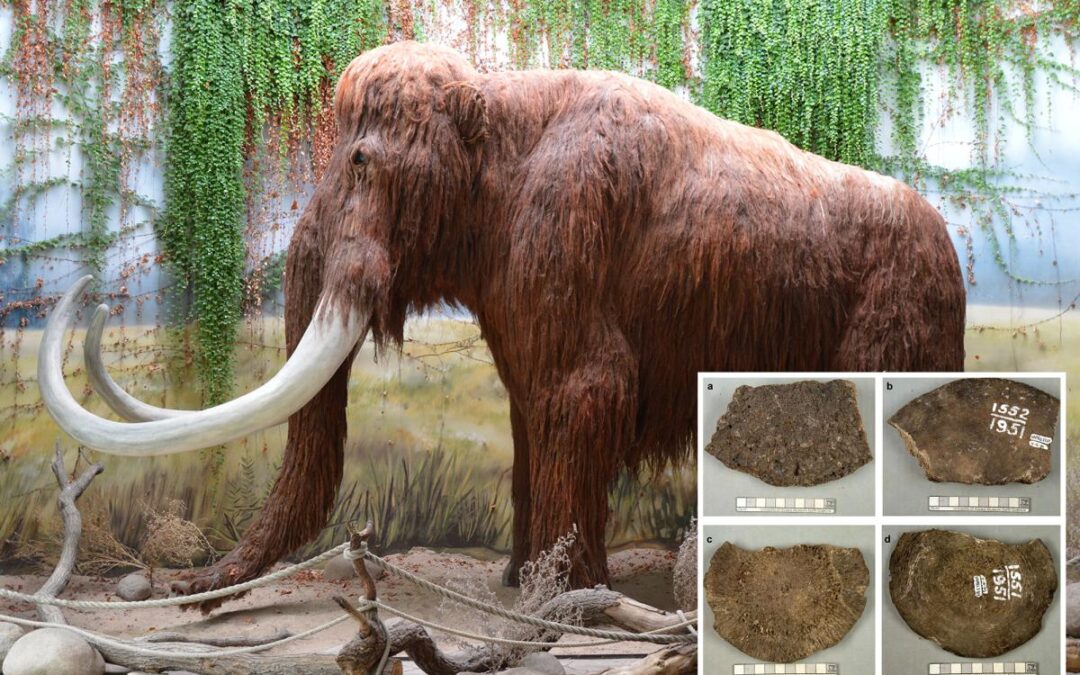
Scientists were flabbergasted after discovering that the mammoth backbones that had been housed in an Alaskan museum for 70 years actually belonged to a whale, per a study published in the Journal of Quaternary Science.
This archaeological case of mistaken identity began way back in the 1950s, when archaeologist Otto Geist happened upon some bones while traveling through the Alaskan interior, roughly 10 miles North of Fairbanks in a region formerly known as Beringia, The Smithsonian Magazine reported.
He assumed the remnants, a pair of growth plates, belonged to the plush pachyderm mammoth based on their size and the fact that they were found in a region known for producing megafauna fossils.
The area had previously yielded the remains of mammoths, bison and other creatures dating to the Late Pleistocene.
Geist subsequently transported the items to the University of Alaska’s Museum of the North.
They remained archived there for seven decades under the wrong label until an investigation by the institution blew the lid off this whale of a “tail.”
Through radiocarbon dating, the museum determined that the backbone fossils were between 2,000 and 3,000 years old. That was far too young for a mammoth, which went extinct 10,000 years ago — although some populations held out for 6,000 more years.
If the bones did belong to the tufty tusker, they’d be by far the youngest fossils ever found, wrote University of Alaska Fairbanks biogeochemist Matthew Wooller and his team in the study.
Another peculiarity? Carbon and nitrogen analyses revealed that the lusciously locked landlubbers subsisted on marine organisms.
Hoping to solve this paleontological caper, the fossil sleuths conducted DNA testing on the remains, only to discover that they belonged to two different species of whales: a minke whale and a North Pacific right whale.
In doing so, they’d finally exposed this cetacean in mammoth’s clothing.
But solving the mammoth masquerade only raised another question: “How did the remains of ancient whales become emplaced in sediment so far from the coastline?”
There are several theories.
Some scientists claimed the fossils had been transported there by animal scavengers or indigenous tribes who made tools out of whale bones.
However, the most commonly accepted explanation was that the remains had been mislabeled as hailing from the interior, when Geist had actually happened upon them closer to the sea.
Either way, Wooller believes that the misattributed remnants could shed light on cetacean behavior.
“Now you’ve got two ancient whale specimens that are now documented and genetically typed in the museum,” he told KTUU-TV. “Those might be useful as parts of whale studies going forward.”
This isn’t the first time fossils have been misidentified of late.
Scientists recently discovered that some garden-variety dinosaur bones in Texas actually belonged to Tylosaurus Rex, a bus-sized mosasaur — a predatory sea reptile — that ruled the oceans during the Cretaceous Period, around the same time the Tyrannosaurus Rex terrorized the land above.
“Everything is bigger in Texas, and that includes the mosasaurs, apparently,” the study’s head author, Amelia Zietlow of the American Museum of Natural History in New York City, quipped in a statement.


