
World Cup games this summer could be staring down outrageously long weather delays.
Under typical U.S. thunderstorm protocols, any sporting event taking place within eight miles of a lightning strike must be halted immediately.
However, FIFA takes things a step further: Soccer’s governing body does not have a cut-off point for matches to be called off, according to The Athletic.
The American storm protocol mandates that 30 minutes pass without further lightning activity for a game to resume. But that count restarts if there is any lightning before that, and that — combined with FIFA’s hands-off approach — could lead to some gnarly delays this summer.
The issue has already surfaced at a major FIFA tournament on American soil.
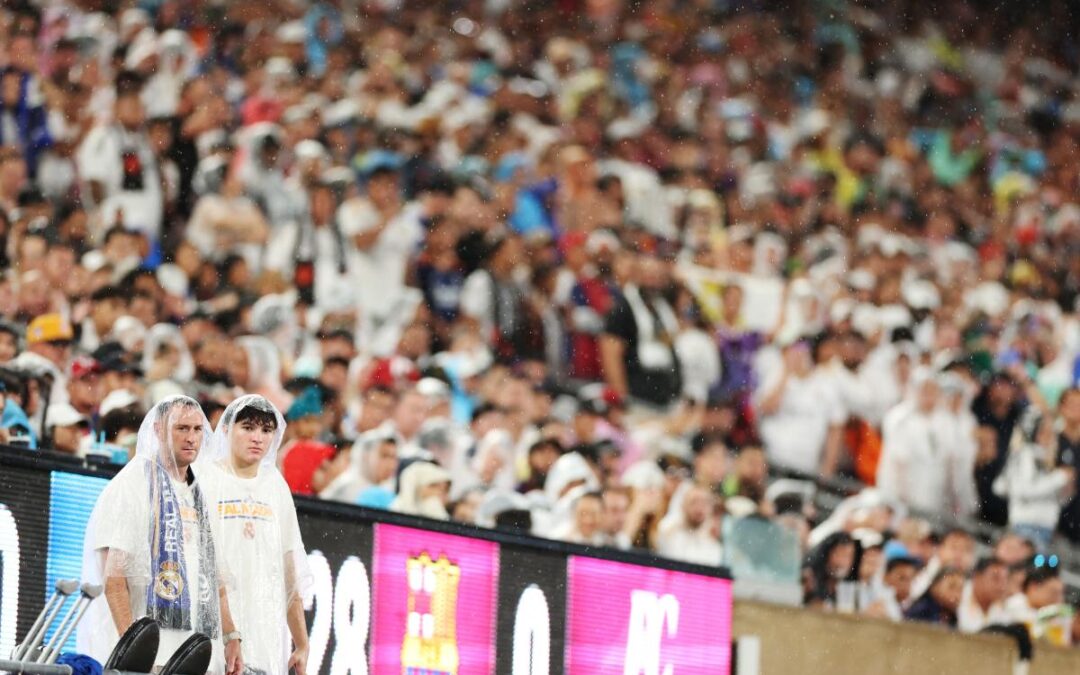
During last summer’s Club World Cup, eventual champions Chelsea saw their round of 16 clash against Benfica suspended for nearly two hours due to severe weather in the area.
By the time the match concluded, more than four and a half hours had passed since kick-off.
The United States will host 78 of the World Cup’s 104 matches across 11 cities, with the competition running from June 11 through July 19. The final will be held at MetLife Stadium, one of several venues that could be affected by summer thunderstorms.
The timing of the tournament has raised questions over the potential impact of weather-related interruptions, with June and July among the most active months for thunderstorms across large parts of the United States, particularly in the Southeast and Gulf Coast regions. Host cities, including Miami, Atlanta, Houston and Kansas City, regularly experience lightning-producing storms during the summer months.

While weather delays are not uncommon in American sports, the millions of international fans expected to attend the World Cup may be unfamiliar with the country’s strict lightning regulations.
Unlike rain, which rarely causes soccer matches to be suspended, the mere detection of nearby lightning is enough to bring proceedings to a halt regardless of conditions inside the stadium.
FIFA has extensive experience dealing with adverse weather conditions, from extreme heat to heavy rain, but the prospect of repeated lightning delays presents a unique challenge.
With much of the tournament taking place during the peak of thunderstorm season in several host cities, officials may have little choice but to hope the weather cooperates.
If summer storms begin rolling across host cities, some of the biggest matches in world football could find themselves paused indefinitely.


