
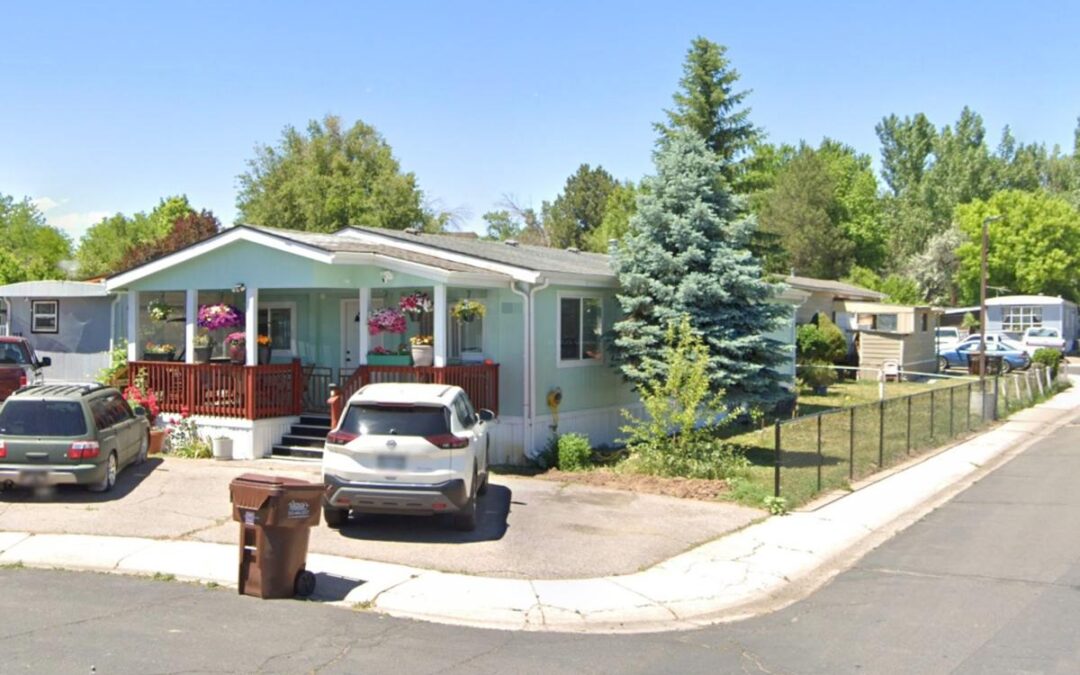
Damien Teague has lived in San Lazaro Mobile Home Park in Boulder County, CO, for 18 years.
So when he received a Post-it on his door on March 20 saying that the owners were planning to sell the park for $42.5 million, his heart sank.
“The next morning, I was sitting on my back porch working with ChatGPT to explore my options, just feeling the stress of the unknowns,” he tells Realtor.com®.
“As I was sitting there, I also felt the stress of the 212 other households that were feeling the same thing, and that was enough for me to take action.”
The medically retired Navy veteran had learned of a Colorado law granting mobile home park residents the opportunity to buy their park if the owner plans to sell it or repurpose the property, giving residents the first right of refusal.
Twenty-two other states have similar laws on the books, according to manufactured housing industry expert Glenn D. Esterson.
In Colorado, residents have 120 days after receiving notice of the intent to sell to submit an offer. If no agreement is reached by the end of the 120-day period, the seller can proceed to sell the mobile home park to other buyers.
This gives San Lazaro residents until July 18 to obtain financing for the park’s full asking price, or face the risk of a new owner either jacking up monthly leases on lots or redeveloping the land.
Neighbors joining forces
While the task was daunting, Teague immediately began to organize.
“I posted notices that we would have a meeting about what options we have and what’s in front of us,” he says.
“Now, we have a nine-person steering committee, and the state and county have been really good working with us. A lot of people want to see us succeed.”
Sarah Huntley, the director of communication and engagement for the city of Boulder, tells Realtor.com, “City staff members have been in discussion with the residents of San Lazaro, and we’ve indicated support for their efforts. The city and the county of Boulder have agreed to get an appraisal of the property together.”
To raise funds, San Lazaro residents are reaching out to the Colorado State Housing Board, the Colorado Department of Local Affairs Mobile Home Park Acquisition Fund, local employers, investors, and organizations including Thistle Community Housing—a nonprofit that helps mobile home communities become resident-owned communities.
Lisa Krebs, Boulder County senior communications specialist, tells Realtor.com, “The county is aware that residents have begun the initial steps necessary to pursue becoming a resident-owned community.
“Boulder County has been talking with residents and organizations supporting them, including Thistle Community Housing. Boulder County is actively exploring ways to support residents through this process.”
Teague says the tight-knit community of 800-plus residents is worth fighting for. “We help each other out and have each other’s backs,” he says.
“We have a food share and a services share—and if someone is in need, we step up.”
He says there are many long-term tenants—including a 93-year-old woman who has lived in the park since it was established in 1966.
Crunching the numbers
Teague owns his mobile home, and rents the lot underneath it for about $1,000 a month. That’s 40% less than the median asking rent in the US, which is $1,673 per month according to Realtor.com data.
Teague says San Lazaro residents are fearful of what would happen if a corporate entity purchased the property and either hiked up rents or shut the park down.
It can cost a whopping $10,000 to $20,000 to move a manufactured home in most locations, according to Esterson.
“It’s scary to be in this unknown place,” says Teague.
But Teague and other residents are inspired by the nearby Sans Souci manufactured home community, which was purchased by residents in 2021 for $3.3 million.
“Since then, their lot rents have stabilized, the values of their homes have appreciated, and they have a voice of ownership in their homes,” says Teague. “It’s very inspiring to see other people who have been down this road and have been successful.”
San Lazaro Park Properties LLP, which is based in Minnesota, has owned San Lazaro Mobile Home Park since 1983.
Attorney Brian Ray, who represents San Lazaro Park Properties, tells Realtor.com, “The park owner would like to communicate they are eager and excited to explore the possibility of the residents purchasing the park and will work with them in good faith towards their effort.”
San Lazaro residents are proposing a financing model similar to the one used last year to acquire two mobile home parks in Colorado’s Roaring Fork Valley for $42 million.
According to the Denver Post, that purchase was financed by a $26 million loan, with the remaining funds coming from a coalition of seven local governments that offered forgivable loans or grants, along with contributions from private donors.
Resident ownership on the rise
Esterson, the industry expert, tells Realtor.com that resident ownership of manufactured home communities has grown substantially over the last decade, and the pace is accelerating.
“A large driver is Resident Owned Communities USA, a national nonprofit that provides technical assistance and financing to resident groups looking to buy their communities,” he says.
“In states with strong purchase opportunity laws like New Hampshire, Massachusetts, Vermont, and Rhode Island, over 20% to 30% of parks are already resident-owned. We are seeing legislative momentum and more organized efforts nationally.”
Esterson says owning the park provides residents with stability.
“When residents own the land under their homes, the threat of closure, redevelopment, or abrupt rent escalation is reduced,” he says.
“Manufactured homes placed on leased land tend to appreciate in value because the tenure is secure. Residents also gain governance control, they elect the board, set policy, and direct capital improvements.”
However, Esterson says there are trade-offs.
“Resident ownership doesn’t eliminate the financial pressures of operating a park, it transfers them,” he explains.
“Many communities are carrying years of deferred maintenance, aging infrastructure, and rising tax and insurance burdens at the time of purchase.
“It’s a significant undertaking, and the success of a resident-owned community depends heavily on the quality of its management, its access to capital, and realistic expectations about operating costs from day one.”
Teague says they’re preparing for those expenses, and will do what it takes to keep their village intact.
“We’re a true community, which in this day and age is becoming much more rare,” he says. “We don’t want to lose that.”

