
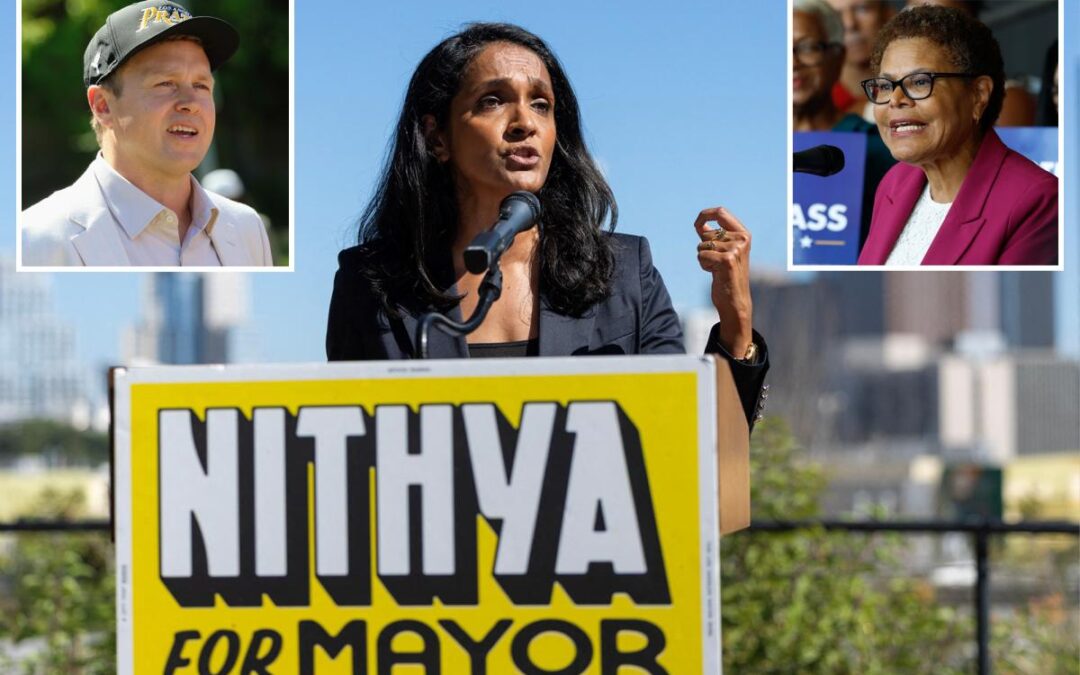
Los Angeles City Councilmember Nithya Raman said voter frustration helped fuel support for celebrity candidate Spencer Pratt in the city’s hard-fought mayoral race, acknowledging that many Angelenos are fed up with the status quo.
“I know many people in this city voted for Spencer Pratt, who gave voice to the fear and anger so many in this city are feeling right now,” she said. “I don’t think Spencer Pratt was the candidate LA needed in this moment, but I understand why he was able to cultivate support.”
Raman’s comments reflected a central theme of the mayoral race: residents have grown increasingly angry over deteriorating conditions across Los Angeles and what they view as a failure of city leadership.
“People in this city are frustrated with the conditions on our streets, and they can feel an absence of leadership here,” she said. “They can feel that the city is not working, and they are sick of it.”
The lefty councilmember also took aim at Mayor Karen Bass, arguing that powerful insiders continue to dominate local government.
“The mayor has the entire political machine behind her,” Raman said.
The mayoral contest unfolded against a backdrop of mounting political turmoil, including a massive lawsuit filed by thousands of homeowners who lost properties in the devastating Palisades Fire.
The sweeping legal action names the city of Los Angeles, the state of California, the Los Angeles Department of Water and Power and several other entities as defendants.
Among the plaintiffs is Kenneth D. Bass — the brother of Mayor Karen Bass — adding another layer of intrigue to the high-profile case as questions continue to swirl over the government’s response to the deadly blaze.
Bass has defended her administration’s record, highlighting efforts to reduce homelessness, expand public safety programs, and support the entertainment industry, while also criticizing Raman’s approach during a downtown campaign kickoff.
Raman has run as a systems-focused reform challenger, arguing City Hall has failed to respond with urgency to homelessness, housing affordability, infrastructure, and basic city services.
She has criticized what she describes as inefficient and costly homelessness programs, questioned major spending decisions, and called for stronger accountability across city departments.
In her policy platform, she has pledged to lower housing costs, protect renters, reduce homelessness, improve city services, strengthen emergency response systems, support small businesses, and preserve entertainment industry jobs.
She has also positioned herself as an outsider to what she describes as entrenched political interests.
The campaign has also been overshadowed by controversy, including videos circulating online that appear to show homeless residents on Skid Row claiming they were paid to vote for Bass and Raman.
Raman has additionally drawn comparisons during the race to New York political figure Zohran Mamdani.
Historically, the contest comes at a moment when no incumbent Los Angeles mayor has lost reelection since 2005, when James Hahn was defeated by Antonio Villaraigosa.
In her first comments since election night, Raman also acknowledged the support that Pratt found during the primary and what she believed it reflected about the mood of the electorate.
“I know many people in this city voted for Spencer Pratt, who gave voice to the fear and anger so many in this city are feeling right now,” she said. “I don’t think Spencer Pratt was the candidate LA needed in this moment, but I understand why he was able to cultivate support.”

