
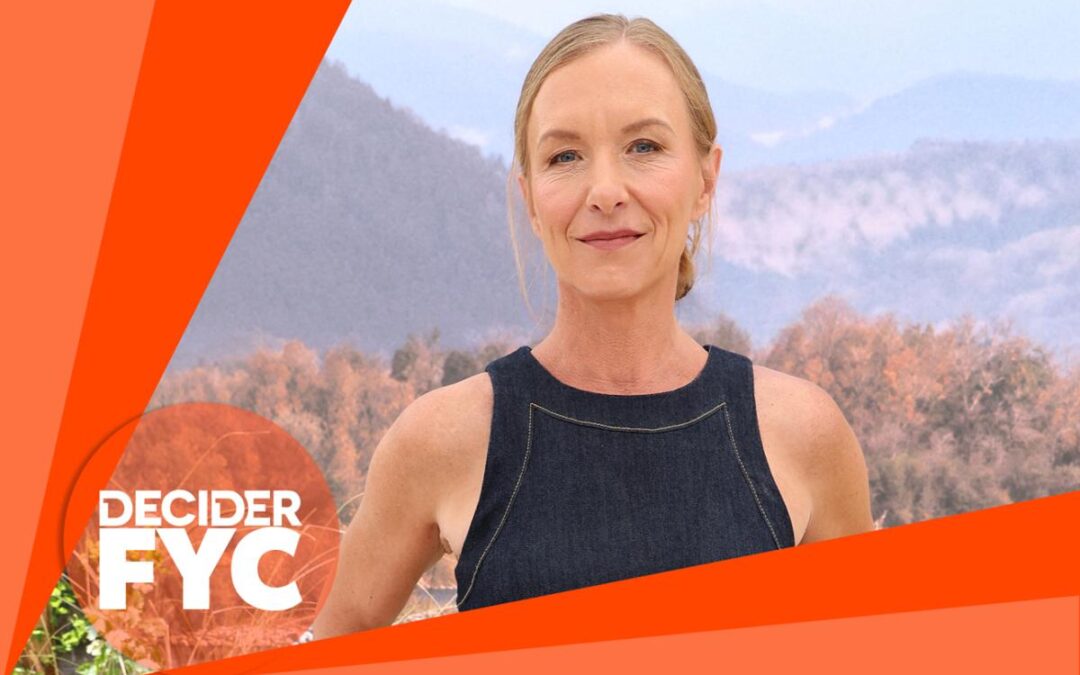
Christina Alexandra Voros is one of the hardest working women in streaming, and it’s about time the industry noticed. As one of Taylor Sheridan‘s most trusted collaborators, Voros has worked her way up from a B camera operator on Yellowstone to a director/EP on both The Madison and Dutton Ranch in just six short years. “I know my trajectory has been really unique,” said Voros. “I pinch myself every day.” Even after proving herself within the industry tenfold, Voros remains humble, crediting her success to Sheridan’s special talent of seeing people’s true potential. “He knows when to push people into the deep end—sometimes before they even know that they’re ready—because he knows that they’re ready,” said Voros.
Voros’ rise within the SheridanVerse is due to her uncanny eye, her ability to draw raw performances from her cast, and her capacity to collaborate with hundreds of crew members on a daily basis. Voros’ full array of talent is on display in The Madison, Sheridan’s latest series that follows the Clyburn family—led by Michelle Pfeiffer‘s Stacy—after the death of their patriarch, Preston (Kurt Russell). They leave the wilds of Manhattan and head to Montana to grieve Preston in his favorite place.
As the series’ only director, Voros is rightfully earning Emmy attention for her hard work and craftsmanship. Oddly enough, Voros’ own journey mirrors Stacy’s in some ways. “I grew up in Boston. I lived in New York for 15 years. I met my husband from West Texas on a movie set. I moved to a tiny little town about 20 miles from the Mexican border,” said Voros. “I experienced firsthand what it is to fall in love with landscape and be forced to reckon with myself.” Drawing on her real-life experience, Voros was able to seamlessly transfer the Clyburns’ story from page to screen. “At its very purest form, this story is something that I have lived,” said Voros.
Even though Voros had full faith in Sheridan’s vision, she still was surprised by the series’ overwhelmingly positive reception. 8 million viewers watched The Madison during its first 10 days, which marks the biggest original series launch yet for a Sheridan show on Paramount+. “It was so different from anything Taylor had done,” said Voros. “We would joke that it’s an entire season of television where nothing really happens except people having feelings for each other.” However, Voros recognizes that “grief is a universal thing,” noting that people in her own life have reached out to her to share their experiences. “The Madison has made a lot of people feel seen and understood,” said Voros.
Voros spoke with Decider over Zoom to discuss the show, share more about her working relationship with the mysterious Sheridan, and reveal the moment she knew The Madison was “special.”
DECIDER: With the success of The Madison and Dutton Ranch, it’s no surprise your name is frequently mentioned in Emmys conversation. How does it feel to have your work recognized?
CHRISTINA ALEXANDRA VOROS: It’s been such a strange year because we shot the first season of The Madison a year ago. It was released a couple of months before Dutton Ranch, which we were filming right up into the beginning of this year. It feels like this abundance of riches all at once. However, the two series are really a cumulative work of nonstop production for two years. This has been a super, super exciting time.
A lot of the same people who worked with us in the Yellowstone universe for a very long time are now working with us across these shows. It’s been a wonderful time to celebrate not only the release of these projects, but also this awesome family that Taylor has put together. We keep getting to work together and keep getting to tell these stories. It’s been a wild couple of months.
Taylor Sheridan’s investments in his crews and casts clearly pays off. You started as a camera operator on Yellowstone and are now one of his most trusted colleagues. What has his mentorship meant to you?
It’s meant everything. Taylor is an incredible writer, but more than that, he’s an incredible leader and friend. He seeks out talent across different disciplines that he feels aligns with the kind of stories he’s telling. We do these really, really big, ambitious projects, and we’re grateful to him for an opportunity that is rare in this industry.
I know my trajectory has been unique. It’s not a normal path to go from a B camera operator to an executive producer in six years. I pinch myself every day, but I also know that I’m not the only one Taylor has given opportunities to. There are camera assistants who are now operators. There are stunt guys who are now coordinators. He knows when to push people into the deep end—sometimes before they even know that they’re ready—because he knows that they’re ready.

You told me that working with Taylor Sheridan has made you a braver, more resilient storyteller. What’s he like as a collaborator?
As a writer with all these stories in his head, Taylor feels a profound sense of responsibility to the material and his collaborators. There are a handful of us working with Taylor—Ben Richardson (1923), Michael Friedman (EP), Steven Kay (Landman), and myself—who have been handed entire seasons of television to work on. It gives me a certain sense of pride to know that he trusts us and that he gives us the creative space to really captain our own ships. Though, we are all sailing in a direction that has been agreed on.
There’s a real sense of autonomy on these shows. People always ask me how much Taylor and I talk during the filming process and the answer is: we don’t really. Once we’re in production, there’s not a whole lot of conversation. There will be little emails about casting or a specific location, but he really, really trusts the people around him to tell these stories. That’s a gift. He doesn’t micromanage at all. It’s a wonderful way to work.
The Madison is centered around a powerful family like the Duttons, but it still feels like a departure for Taylor Sheridan. Its depictions of grief are so raw and real. What did he tell you about the impetus for the series?
We didn’t talk a lot about The Madison’s origin story, but I knew from the moment I started reading the scripts that he was drawing on a narrative that had to be personal on some level. To do a story about grief justice, you have to be able to draw on your own experience.
Just look at Michelle’s or Beau Garrett’s performance. These actors had to access really intense emotions from difficult times in their lives. When you have writing that asks that of you, it’s scary. However, it’s an easier risk to take because you know that the person who has written the story is drawing from a place that is real and grounded.
I think some of the more intense scenes in Taylor Sheridan’s oeuvre take place in The Madison. Can you talk about how you tackled directing those scenes that were so emotionally raw?
When I’m asking actors to go to a place that is incredibly broken and to allow themselves to be fragile or undone, I have a deep respect for the emotional cost of doing that. With a scene like that, everyone has to be ready to go and dialed in. I won’t ask an artist to go to that place and then be like, “you know, I want to add a light.”
It all goes back to team work. I am working with some of the best craftsmen and artists in the business. Our focus pullers are super human. My gaffer and key grip read my mind. We have been painting beautiful pictures together for nearly a decade. I never have to say, “all right, Michelle’s going to have to go to a harrowing place, so everyone get your game face on.” Everyone shows up to work every day knowing exactly what we are there to do.
I did a panel with the cast recently, and they were all talking about how protected they felt by this crew. It’s easier to lose yourself in the performance because you know that there are 200 people on that set willing to catch you. The actors knew that if they did the emotional labor, the final product would be captured and produced beautifully.

As a former city dweller turned Texas resident, could you relate to Preston’s and Stacy’s pull to the West? Their love affair with the land was almost as romantic as their personal connection.
I can relate to it more than I can say. I grew up in Boston. I lived in New York for 15 years. I met my cowboy husband on a movie set. His West Texas accent is so thick that Siri never understands what he’s saying. I moved to a tiny little town about 20 miles from the Mexican border. If you had told me in my 20s that was a path my life was going to take, I never would have believed you. I experienced firsthand what it is to fall in love with landscape and be forced to reckon with myself.
At its very purest form, this story is something that I have lived, although my discovery of this other part of myself didn’t come directly through grief as it does for Stacy Clyburn. People get so stuck in their routines that they don’t really think about what could be on the other side. Preston spent years trying to get Stacy to go out West, and she wouldn’t go. Only after his death did she learn about herself by going to Montana and getting out of her comfort zone. I think that’s a really important lesson.
Obviously, Season 2 of The Madison has already been filmed. What are you excited for viewers to see in the Clyburn family’s next chapter?
Viewers have spent the first season falling in love with these characters and being inspired by their strength and their resilience and their humor. Grief changes us, but it doesn’t change everything about us. There are elements of all of the characters’ personalities that will continue to come together and come apart as they navigate the next stage of their relationships with this place.
The Madison is Taylor Sheridan’s most popular series debut ever. How does it make you feel that audiences respond to your work and his work the way that they do?
It’s amazing. When we wrapped the first season, Patrick J. Adams said something that stayed with me. He said, “this is the last moment that we are all going to be together while this is still just ours.” For the last two years, the cast and crew have been the keepers of the Clyburns’ world. We had no idea how it would be received because it was so different from anything Taylor had done. We would joke that it’s an entire season of television where nothing really happens except people having feelings for each other.
We knew it was important. We knew it was beautiful. We knew that it was something that we were all very proud to be a part of. The response has been overwhelming. I have heard from people that I haven’t spoken to in years who have lost a parent, lost a partner, lost a child. Grief is such a universal thing. As a culture, we don’t do a particularly great job dealing with it.
The Madison has made a lot of people feel seen and understood. Great art should be cathartic. We did a friends and family screening for the cast and crew and the number of teary-eyed folks that walked out of that room astonished me. These big grips and unflappable transpo guys were sobbing. I thought, “wow, if this show touches this spectrum of people, we’ve made something really special.”


