
While the New York Knicks were battling to win the NBA Finals earlier this month, Mitch Modell landed in the middle of a testy exchange with the new owner of Modell’s Sporting Goods — capping months of failed negotiations to buy back the faded retail brand, The Post has learned.
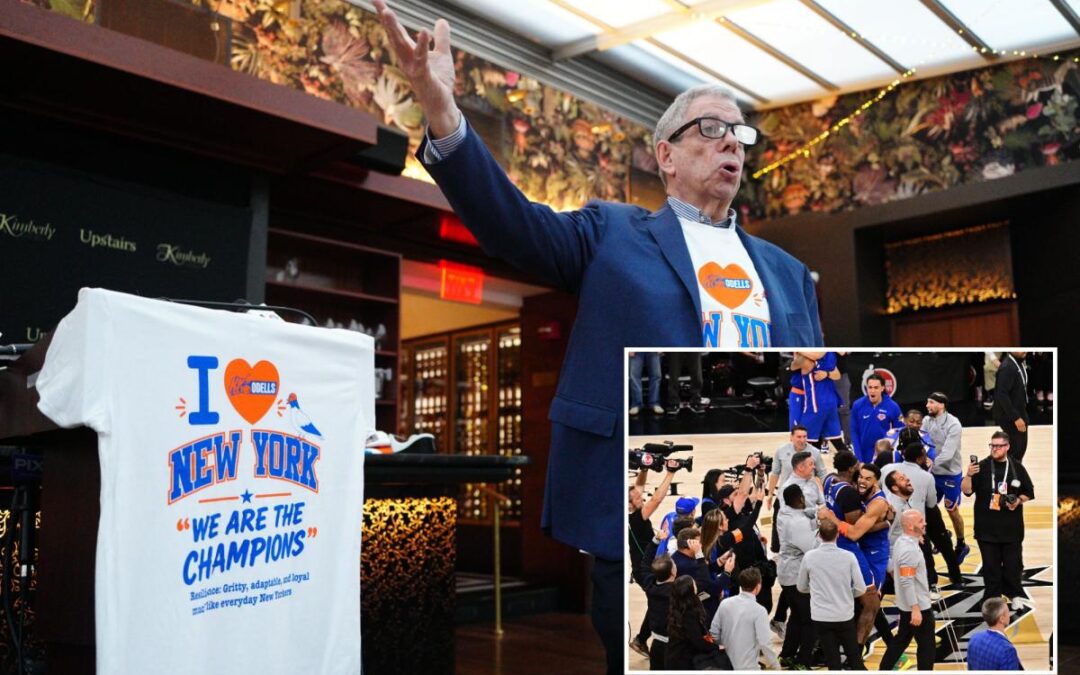
The former “Undercover Boss” and CEO of the sporting-goods chain, which went bankrupt in 2020 and closed 140 stores, on Monday revealed MitchellModells.com, a new online apparel site that’s selling a T-shirt commemorating the Knicks’ historic title.
That was after months of on-again, off-again talks to buy back the 137-year-old brand – famous for its “Gotta go to Mo’s” jingle – fizzled in acrimony, sources told The Post.
On June 12 – the day before the Knicks clinched the championship – Modell was locked in a heated text exchange with Raj Gupta, head of Omni Retail Enterprises, which had scooped up Modell’s in 2023.
Omni now operates Modell’s as an e-commerce business, and the site was down — just as a frenzy for Knicks merchandise was going full-tilt.
“Modell’s website is closed down for maintenance??? Everybody is calling where to buy shirts,” the 72-year-old Modell texted Gupta. “You blew it. I hope you choke on it.”
Gupta responded, “Stop texting me,” and later, “site back up. FYI.”
Modell replied with a thumbs-up emoji — and that was the last they communicated, according to both parties. That’s after talks that had gone as far as a written, unsigned sale agreement that had been drafted by Gupta’s attorney.
Modell — whose great-grandfather Morris Modell founded the business in 1889 — had first tried to buy back the brand from Gupta in 2024. He initially offered $500,000 as he and his sons also tried and failed to buy Party City and Big Lots. In December, Modell upped his bid to $1 million.
Gupta tentatively agreed, but the talks hit a roadblock when Gupta demanded that he retain a 5% stake in the company — along with a piece of its future profits.
“This price won’t be offered again,” Gupta wrote to Modell. “We will continue growing it ourselves.”
Meanwhile Modell had demanded to see sales and customer data.
“I told him I’d give him the $1 million and I told him you have to tell me how many emails you have from my customers,” Modell told The Post. “He had all my data, everything.”
As the pair continued to haggle, Modell lamented the look of the Modell’s website, according to text messages viewed by The Post.
“Selling coolers in Dec. is not a winning formula for success,” Modell sarcastically wrote to Gupta.
“We went back and forth,” Modell said. “He stalled me for two months.”
By March, Gupta still had not forwarded the customer info, claiming he’d been “super busy.”
Weeks turned into months, with the pair finally erupting into the testy exchange during the NBA Finals.
In a brief phone interview this week, Gupta confirmed the text exchanges, but was tight-lipped on details of the negotiations.
“The deal fell apart because he didn’t stand by the terms we had agreed to,” Gupta told The Post, declining to elaborate.
Modell’s was first acquired out of bankruptcy for $3.6 million in August 2020 by Retail Ecommerce Ventures, an ill-fated firm led by the flashy self-help guru,Tai Lopez and his business partner, Alex Mehr, a former NASA scientist who helped orchestrate REV’s acquisitions after selling its Zoosk dating site.
Gupta acquired REV’s assets in late 2023 after that company – which had bought other bankrupt companies including RadioShack and Pier 1 Imports – imploded in a flurry of lawsuits and government probes.
Because he doesn’t own the retail brand or have licensing agreements with the Knicks and the NBA, Mitch Modell’s $20 T-shirts refer to the “Knodells” and feature a NYC pigeon, “the unofficial mascot of New York,” according to the website.
Sales of the shirts also support research for cancer — $5 from each item sold — which claimed the lives of both his father and brother.
The online store represents Modell’s comeback to retail, he said on Monday.
“The same way our beloved Knicks came back from San Antonio down 30 points — it’s about believing that failure does not have to be final, it’s about believing that bankruptcy is not the end of the story,” he said.

