
Students will no longer be able to take out federal loans to pay for degree programs that fail to provide them a return on investment, thanks to a new federal policy that went into effect on July 1.
And it’s about time.
It’s a response to a shocking fact: Graduates of more than 800 college programs across the country — including at institutions like the University of South California and New York City’s New School — make less than the average high-school grad four years after getting a degree, despite all that time, effort and tuition money.
Now the American government will have no part in propping up degree programs that may not even lead to a livable wage. A provision of the Big Beautiful Bill cuts them off from federal aid access if they can’t break the non-grad salary baseline.
Programs that fail the test for two out of three consecutive years will no longer be able to bury kids in debt — at least not on the taxpayer’s dime.
These Big Beautiful Bill revisions represent “the biggest set of changes to financial aid in decades,” according to Robert Kelchen, head of the Department of Educational Leadership at the University of Tennessee, Knoxville. And change is much needed.
Teens and twentysomethings should be protected by the federal government from making a catastrophic financial decision, like taking on debt to finance a degree that ultimately could decrease their earnings potential. But until now the government has been enabling those decisions by underwriting loans without regard to the value of the investment.
“It makes complete sense from a student perspective and also from a taxpayer perspective [to stop giving] money to programs that leave students financially worse off,” Michael Itzkowitz, president of the HEA Group, said.
The HEA Group, a policy organization focused on higher education and economic mobility, used Education Department data to compare average graduate earnings from some 32,000 bachelor degree programs around the country with average high school graduate wages in the same states.
According to the findings, 804 programs — 2% of all undergraduate programs which graduate 40,000 students annually — were flagged as potentially failing the new policy changes, including several at high-profile universities.
Graduates with music degrees from the University of Southern California, Juilliard and the New School earned less on average four years after graduation than high school graduates — making $34,124, $32,842 and $32,930, respectively.
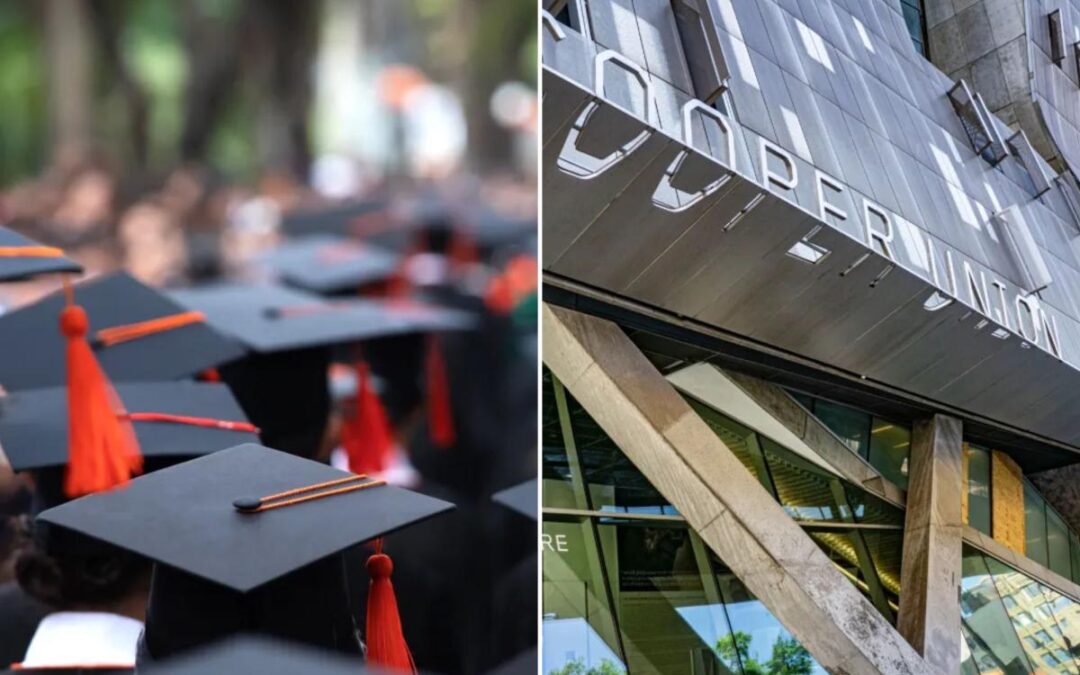
Graduates of the Fine and Studio Arts program at New York City’s Cooper Union pulled in just $24,920 on average four years out, and students with degrees in Liberal Arts as well as Fine and Studio Arts from Bard College made slightly below the typical high school grad, at $34,571 and $34,667, respectively.
The Post reached out to these schools for comment.
Mark Kantrowitz, author of “How to Appeal for More College Financial Aid,” says that we can expect to “see some chaos resulting from” these new changes. The Department of Education will analyze tax records from the Treasury Department to calculate the return on investment for students by school and program.
“We may see some colleges discontinuing some of their programs when they see significant shifts in enrollment and borrowing patterns,” Kantrowitz said. “The higher-cost colleges that have the least generous financial aid [are] going to be the most impacted.”
Itzkowitz says that the new earnings provision actually is exactly what students are asking for: “If you speak to any [college] student … they will want to earn more than someone that has a high school diploma. They would probably [not] want to attend a program if the majority of students can’t even earn that amount.”
But Andrew Gillen, an educational researcher at the Cato Institute, says the changes from the Big Beautiful Bill “don’t go far enough.”
“You could still have programs that just barely increase their graduates’ earnings but load them up with so much debt that it’s still a terrible financial investment for the student and for the taxpayer,” he said.
Yes, it might be uncomfortable or even emotional for some in academia to acknowledge that many degrees, particularly in the humanities, are poor investments for many students. But it’s time we confront that truth so that students can make informed decisions about their futures.
The student loan system enabled by the federal government spent years foisting debt onto teenagers who were told that college is the singular pathway to success, without ever asking whether the programs accomplished what they promised.
Predictably, schools raised tuition, passed the bill over to the taxpayer, and buried kids in debt that they can’t repay. That’s why more and more young people are concluding that college simply isn’t worth it and dismissing the value of education altogether.
More responsible federal lending can prevent young people from throwing the baby out with the bathwater and help us reach a healthier middle ground — where colleges have a duty to make their product worth it, and students can pursue education with the confidence that they’ll be better off for it.

