
Sins Of Kujo, a new Japanese legal drama on Netflix, features a lawyer who not only defends the dregs of society, but also tends to get them reduced sentences or exonerated. What kind of lawyer takes on cases like these? That’s what this show ventures to find out?
SINS OF KUJO: STREAM IT OR SKIP IT?
Opening Shot: We see a courtroom in Tokyo. A voice over says, “An attorney can only protect their client, even if the client is labeled a villain by society.”
The Gist: Taiza Kujo (Yûya Yagira) is just that kind of attorney; he successfully defends clients who are accused of doing vile things, often finding technicalities or evidence that gets their sentences reduced or their clients exonerated. He is able to shut out any sort of opinion or emotion and just focus on the law, even if he’s cursed out by opposing lawyers or his clients’ victims after the verdicts go his way.
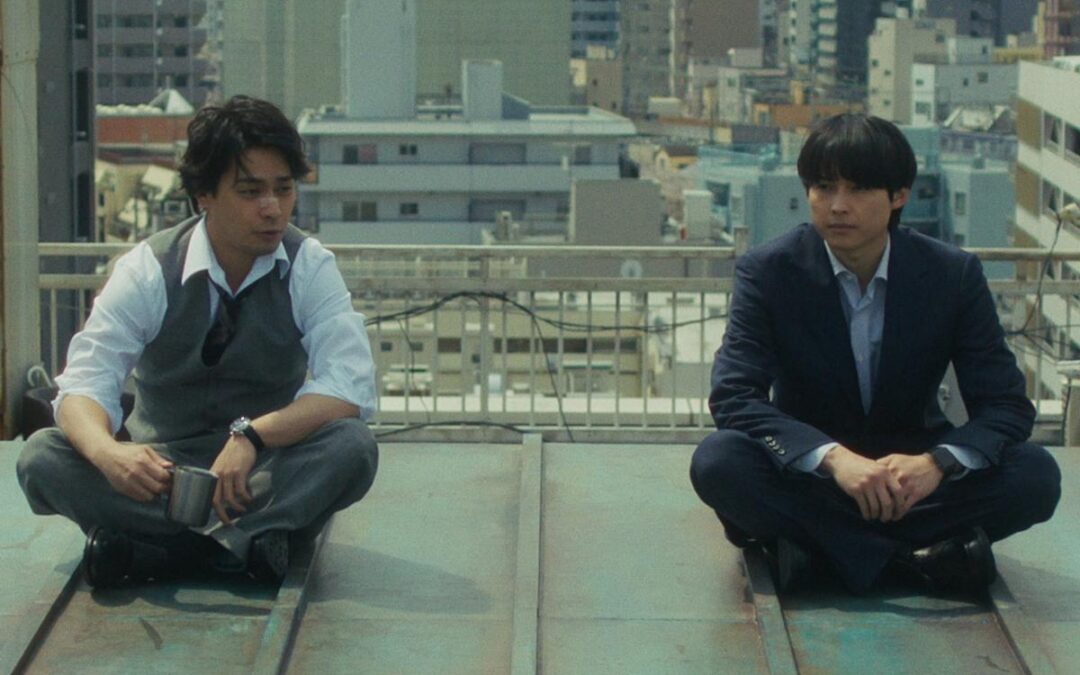
We see a young lawyer named Shinji Karasuma (Hokuto Matsumura) make his way to Kujo’s office, with the help of a crude map drawn by his friend, social worker Hitomi Yakushimae (Elaiza Ikeda). He’s there to interview with Kujo for an associate attorney job. He’s surprised to find out that Kujo lives in a tent on the roof, but Kujo is surprised that an attorney with Karasuma’s pedigree wants to work for him.
When Karasuma has dinner with Hitomi, he admits he’s curious about a lawyer that defends the scum of the earth, saying “I want to find out if Attorney Kujo is a good attorney or a bad one.”
Kujo immediately brings on Karasuma, and the first case he helps Kujo with is for a customer of Kengo Mibu (Keita Machida), an auto-repair shop owner who has underworld ties and often funnels clients to Kujo. Someone came in with a damaged bumper on his car, and Mibu knew there was something suspicious. Kujo encourages the man to tell the truth. It turns out that the man hit a father and child on a bicycle, while playing an online game, after having had a few whiskeys. Kujo encourages the man to turn himself in, giving him a much bigger chance of getting a lighter sentence.
What Kujo finds out is that, despite all the signs looking like the client hit the father, who didn’t make it, and the child, who lost a leg, that the accident didn’t go the way everyone thought. The father had already collapsed due to a heart condition, and the bike was already on the ground when his client hit it. Despite his client being drunk and distracted, he did not kill the father, and that comes out in the ruling. What Karasuma ends up finding out, though, is that Kujo does have a moral code and a guilty conscience, and it shows itself in interesting ways.

What Shows Will It Remind You Of? Based on the manga Kujo no Taizai by Shohei Manabe, Sins Of Kujo reminds us of some of David E. Kelley’s best law-based series, like Boston Legal and The Practice.
Our Take: One of the most interesting aspects of Sins Of Kujo is the idea that Kujo is able to shut out all of the noise while defending these dregs of society. When Karasuma asks him straight out why he does it, Kujo sidesteps the answer, but we get it’s somewhere along the lines of, “someone has to do it.” In other words, everyone deserves due process, a fair trial and an informed defense. He just has the talent to focus on working with the law in a particular case without being affected by emotion or public opinion.
But it does weigh on him, as he tells Karasuma after the case of the boy losing his leg. He may robotically tell Karasuma repeatedly that his job is to protect his client, but he does admit that cases like these do wear on him. It’s likely the reason why Karasuma lives in a tent on the roof of his building, and why he seems to have about as friendly a disposition as a rhinoceros.
As the cases come across Kujo’s desk in this first season, though, it’ll be interesting to see where Karasuma falls within them as he observes Kujo. Will he start to see that Kujo is brilliant but troubled? And will he wonder why his friend Hitomi works with him so often?
The two attorneys do have a connection, as they both witnessed a trial 20 years prior that sent them both down the path of becoming attorneys, and we’ll see more of that in subsequent episodes. The format of the show generally consists of one case that takes up an episode or two before being concluded, sort of like an Acorn TV or BritBox mystery series. But there will always be some continuing arcs mixed in, where Karasuma really digs into Kujo’s story to see just how he got to the point where he only seems to take on scumbags as clients.

Performance Worth Watching: Yûya Yagira plays Kujo’s quirks, like the fact that he has some sort of sinus condition that leads him to permanently wear a breathing strip on his nose, seriously. This leads the audience to think there is a troubled background brewing just under his stoic surface.
Sex And Skin: None.
Parting Shot: Kujo videos the police harassing a kid who left Mibu’s shop with “snacks,” and tells the cops “I’m an attorney with a nasty personality.”
Sleeper Star: Elaiza Ikeda’s character Hitomi seems to be the only “good” character in this show, at least on the surface.
Most Pilot-y Line: “If you wanted to help them, you should have just refused to defend the bad guy,” Karasuma tells Kujo after he secretly sends advice to the victims that they should sue his client. That’s not what Kujo’s about, buddy.
Our Call: STREAM IT. Sins Of Kujo is an intriguing story about a dark man who has his reasons for defending the clients he takes on, and there seems to be a lot of layers for the show’s writers to dig into.
Joel Keller (@joelkeller) writes about food, entertainment, parenting and tech, but he doesn’t kid himself: he’s a TV junkie. His writing has appeared in the New York Times, Slate, Salon, RollingStone.com, VanityFair.com, Fast Company and elsewhere.


