
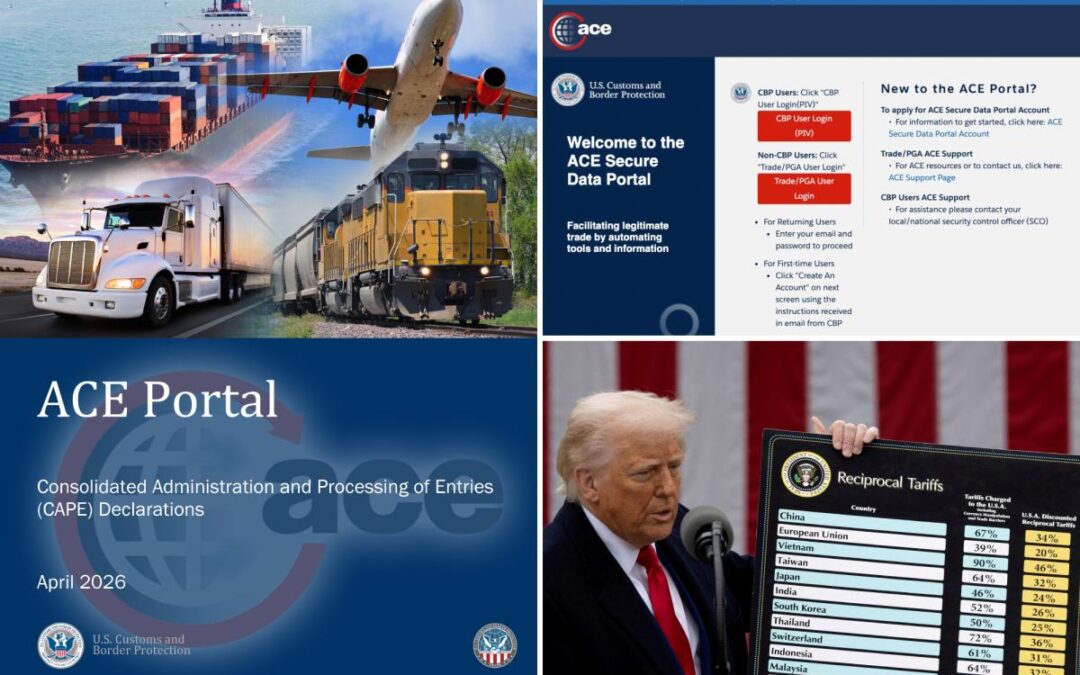
The Trump administration on Monday launched an online portal that allows US businesses to file claims for tariff refunds as the federal government moves to comply with the historic Supreme Court order striking down the levies.
US Customs and Border Protection unveiled the Consolidated Administration and Processing of Entries (CAPE) system on Monday.
The portal is meant to enable importers to file bulk refund claims tied to tariffs imposed under the International Emergency Economic Powers Act, which the highest court in the land ruled unconstitutional in February.
Billions up for grabs
The portal marks the government’s first large-scale attempt to return an estimated $166 billion in tariff payments following the high court ruling that invalidated the core of the policy.
More than 56,000 US importers had registered to receive tariff refunds as of early April, according to Customs and Border Protection, underscoring the intense demand ahead of the portal’s launch.
The first slew of applications to be process will cover only tariffs that are still under review or were finalized within roughly the past 80 days, with older entries expected to be addressed in later phases, according to CBP.
How to file a claim
Businesses seeking refunds must file through the ACE Portal — the government’s customs processing system — using a structured CSV upload process.
Companies are required to upload a spreadsheet listing the import “entry numbers” tied to tariffs they previously paid. That file becomes the basis of a single consolidated refund claim.
Filers need to download a template and input eligible entry numbers.
Each submission can include up to about 10,000 entries, with additional files required for larger claims. Only importers of record or the customs brokers who originally filed those entries are authorized to submit.
Once uploaded, the system runs a multi-step validation process — first checking formatting, then confirming that each entry exists, matches the correct importer and qualifies under program rules.
The system will not accept files that are not in CSV format, contain too many entries or lack required headers, according to the CBP site.
When companies can expect a refund
Even for approved claims, companies shouldn’t expect an immediate payout. Federal guidance says refunds will generally take 60 to 90 days to process, though more complex cases could take longer.
Not all businesses are poised to benefit equally. Refunds will go to the companies that directly paid the tariffs — typically importers — even though the costs were often passed along through the supply chain to retailers and, ultimately, consumers.
Will consumers see refunds?
With the refund program aimed at businesses, it remains unclear whether everyday shoppers will see any of the funds. Tariffs are typically paid by importers, even if the added costs are later baked into retail prices.
Companies that receive refunds are not required to pass the money on to customers, meaning any benefit to consumers would likely depend on whether businesses choose to lower prices or offer discounts.
Still, shipping firms such as FedEx and UPS, which in some cases collected tariff payments directly from customers, have indicated they may return refunds once they receive them from the government.
At the same time, consumers have begun filing lawsuits against major companies in an effort to force them to share the proceeds.
Earlier this year, the Supreme Court ruled that the Trump administration overstepped its authority by using the International Emergency Economic Powers Act, or IEEPA, to impose sweeping tariffs on imports from countries including China, Mexico and Canada.
The court decreed that the decades-old law does not give the president the power to levy tariffs — a move historically reserved for Congress.
The decision effectively wiped out a major portion of the administration’s 2025 tariff program, though the president quickly announced new global tariffs of 10%.
While the ruling settled the legal fight over the IEEPA tariffs, it left unanswered a key question: how to return billions of dollars already collected from businesses.
In the weeks that followed, companies rushed to court and pressed the federal government for clarity, with thousands of cases filed seeking repayment.


