
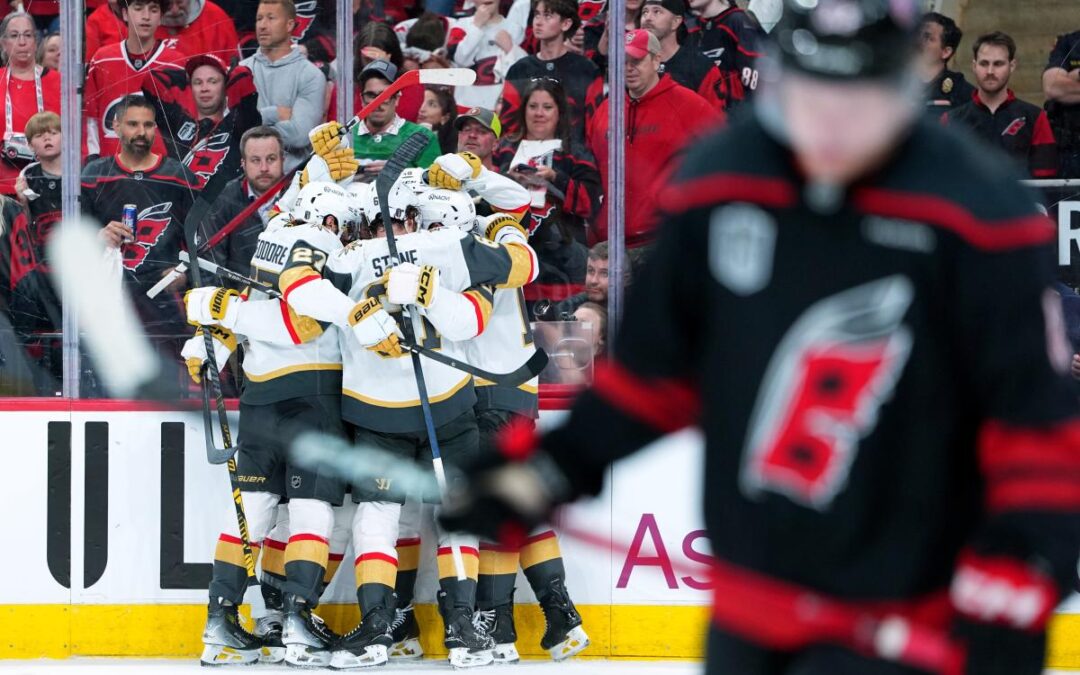
Just about everybody was in agreement before Game 1 of the Stanley Cup Final between the Carolina Hurricanes and Vegas Golden Knights. Goals and scoring chances would be at a premium, and there would be almost no space to maneuver in the offensive zone.
Twenty-five seconds into the best-of-seven, that all went out the window.
Nikolaj Ehlers staked the Hurricanes to a 1-0 lead before anybody was in their seat at the Lenovo Center, and from there, both teams continued trading chances and committing egregious defensive mistakes until Tomas Hertl’s game-winner with under four minutes to go in the third period.
Vegas’ Game 1 win on the road flipped the series line to Golden Knights -150, but the market has remained stubborn for Game 2. Just like in the curtain-raiser, it’s the Canes sitting at -164 to even up the series before it heads to Vegas. The total is still sitting at 5.5 goals, though it could tick up to 6 by puck drop.
Nonetheless, the market is telling us that Game 1 was an outlier and that we should expect things to tighten up for Thursday’s contest in Raleighwood.
That would be a big boost for the Golden Knights.
While Carolina’s defense can look foolproof when games are played on their terms, as they were in the first three rounds, the Hurricanes can get themselves in trouble when they go up against opponents who are able to jam up the middle, remain patient, and then spring counterattacks off blocks, turnovers, or an aggressive pinch.
That is exactly how the Knights, the best counter-punching team in the NHL, prefer to play.
It wasn’t on display in Game 1, but Vegas has mastered the art of protecting the most dangerous part of the ice. The Knights allowed the fewest shots from the inner slot during the regular season, and nothing changed in the postseason. They lock things down in front of their own goal, which is where Carolina’s bread has been buttered for years under Rod Brind’Amour.
Because of their high-volume approach, the Hurricanes rely on getting to the middle of the ice and jumping on loose pucks and rebounds in the slot. If you can jam things up and protect that part of the rink, the Hurricanes’ offense looks tepid, as they’re just flinging shots from distance and hoping to get lucky. That approach also makes them quite vulnerable in transition.
Betting on the NHL?
Looking back on recent series where the Hurricanes were defeated, whether to the Rangers or Panthers, you’d notice that the opposition was able to tidy things up in the slot, and then cash in on counters, catching the ultra-aggressive Carolina defense on pinches and poor reads. Vegas has the same DNA, especially with Tortorella behind the bench.
Against the Canadiens, Flyers, or Senators, you’d be right in saying that the last thing Carolina would want was a back-and-forth tempo. But the Golden Knights are built differently from that crop of also-rans, so it would now benefit the Hurricanes for the remaining contests to remain as helter-skelter as Game 1.

The only problem is that Carolina wasn’t able to take advantage of that game script on Tuesday night, and the Hurricanes are unlikely to get another look like that in this series. If they can’t win when things are on their terms, what is going to happen when the tempo slows down?
Despite that, the betting market is still siding with Carolina for Game 2. Perhaps bettors are banking on Carolina’s desperation being enough to get them over the line on Thursday night, but I’d rather bet on the stylistic advantages of the underdog.
The Play: Golden Knights moneyline (+136, FanDuel)
Why Trust New York Post Betting
Michael Leboff is a long-suffering Islanders fan, but a long-profiting sports bettor with 10 years of experience in the gambling industry. He loves using game theory to help punters win bracket pools, find long shots, and learn how to beat the market in mainstream and niche sports.


