
Hundreds of billions of dollars are being invested by every major economy around the world in the race to dominate artificial intelligence — but none of it will matter without the energy needed to run it.
Every AI breakthrough will depend on data centers and computing infrastructure that consume enormous amounts of electricity.
In the age of AI, energy is king.
Unfortunately for the United States, much of the federal regulatory framework still governing American energy production is mired in outdated and misguided Obama-era rules.
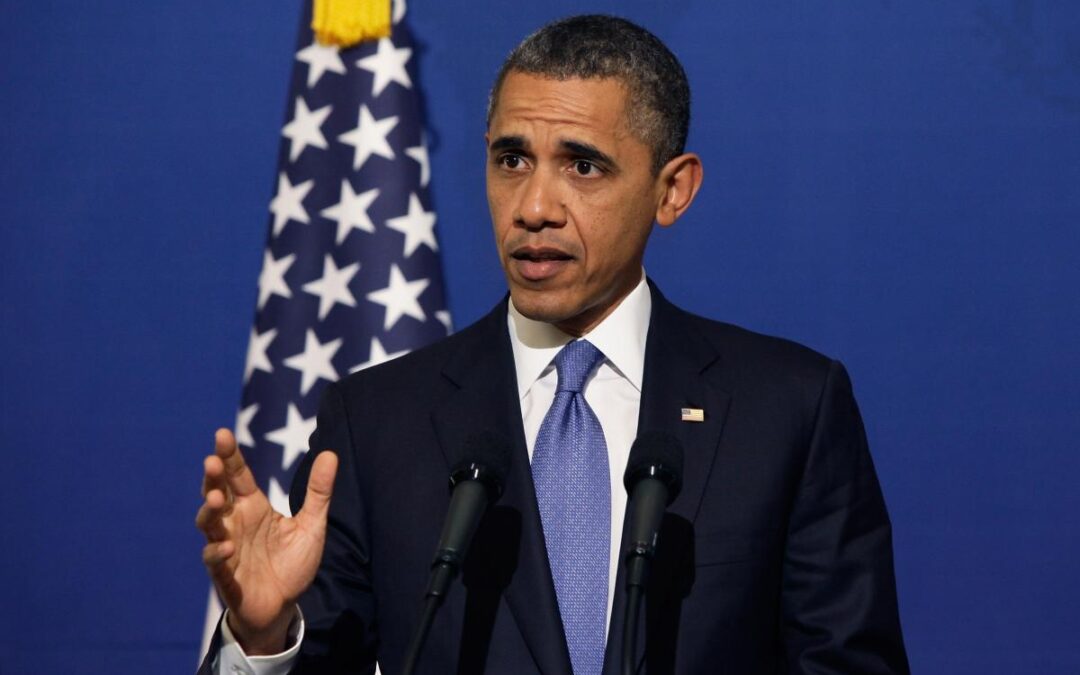
In 2009, President Barack Obama’s administration issued its notorious endangerment finding for greenhouse gases.
This ruling declared fossil-fuel emissions to be dangerous to public health, opening the door to federal regulation.
It became the legal foundation for the next decade’s war on coal-fired powered generation and some of the most aggressive federal restrictions ever imposed on America’s power sector.
Reflecting leftist climate orthodoxy, it aimed to force America to reduce energy consumption and eliminate energy sources that had fueled our prosperity for generations.
Those assumptions have aged remarkably poorly.
If America intends to win the AI race, it can no longer afford Obama-era policies designed to push some of its most reliable and abundant sources of energy out of the market.
That’s why President Donald Trump must rescind the federal power-plant regulations, in effect since 2009, that were established under the endangerment finding’s aegis.
There’s precedent for this: In February, EPA Administrator Lee Zeldin rescinded similar regulations related to vehicle emissions.
Applying the same logic to electricity generation would remove one of the largest regulatory obstacles standing in the way of the abundant, affordable power America will desperately need in the decades ahead.
The United States currently possesses an estimated 249 billion tons of recoverable coal reserves worth trillions of dollars — and containing enough electricity-generation potential to power American industry for years.
Advances in plant design and emissions-control technology have made coal-based power significantly cleaner than ever before.
Exasperatingly, instead of harnessing this remarkable resource, the US remains beholden to the 2009 activist-driven finding that was designed to eliminate fossil fuels, no matter the costs for affordable and reliable electricity.
The activists’ goal at the time wasn’t cleaner natural gas or improved energy production.
They wanted to replace those sources altogether with heavily subsidized wind and solar projects that have failed to deliver the reliable, abundant electricity their advocates promised.
In fact, states like California and New York spent years rushing to retire traditional power generation sources — and now find themselves being forced to extend the life of existing plants and embrace nuclear power as their pricey wind and solar projects fail to keep the lights on.
With electricity demand climbing to new highs and the AI boom only just beginning, the last thing America should do is bet its economic future on whether or not the wind happens to be blowing and the sun happens to be shining.
Those spending billions to build the AI economy have already reached that conclusion.
Meta is partnering with Oklo to build a 1.2 gigawatt nuclear power plant in Ohio.
Microsoft, Amazon and Google have all signed major agreements for nuclear and other reliable base-load power sources.
They’re making those investments because they know, better than anyone, that weather-dependent energy sources alone cannot support the data centers and computing infrastructure AI will require.
The reality is that America will need far more electricity, from every reliable source capable of delivering it, in the near-term future.
That includes coal, natural gas and nuclear.
With our national security and economic future on the line, the country will need far more of all three.
Rescinding the Obama power-plant regulations would help make that possible, by removing one of the most significant barriers to American energy dominance — and Trump and Zeldin could do it immediately.
But extending the endangerment-finding rollback to power plants isn’t enough to secure America’s energy future: Congress must act, too.
Our legislators must codify the change into law to prevent a future alarmist administration from restoring it.
The energy policies needed to support AI require long-term solutions that last beyond a single presidential term.
The nations that lead the AI age will be those that can produce abundant, affordable and reliable power.
And the consequences of allowing an electricity shortage to cut us off from that revolution would be catastrophic.
America has the resources to lead. It should stop regulating them out of existence.
Steve Forbes is chairman and CEO of Forbes Media.


