
Copper curves and a touch of myth are about to have some new owners in Oakland, Calif.
A one-of-a-kind home known locally as the “Dragon House” has surfaced in the Rockridge Hills, offering a dramatic reinterpretation of a long-lost Bay Area landmark.
Initially listed for just below $2 million, the property arrived at a moment when distinctive, design-forward homes commanded attention across the Bay Area. So much so that the listing is now in escrow after just three weeks for sale, The Post has learned.
“The home generated strong interest and widespread attention among prospective buyers,” Daniel Stea of Stea Realty Group, who holds the listing, told The Post. “The sellers received three competitive offers at the deadline and are now in contract at $2.46 million.”
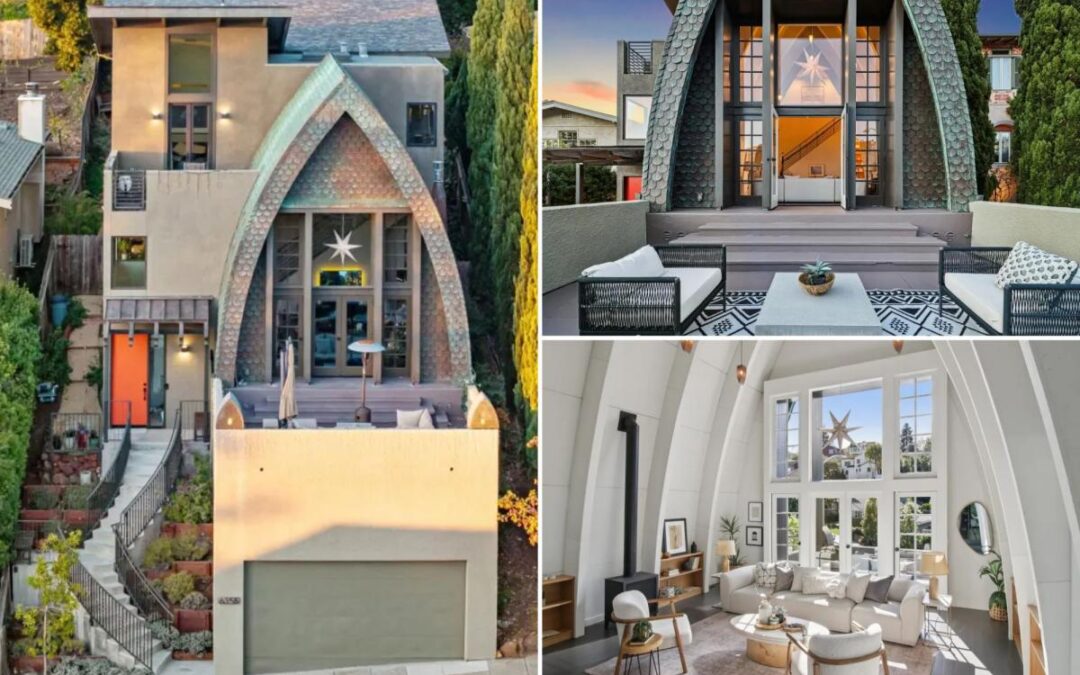
The four-bedroom, three-bath residence at 6356 Broadway Terrace — spanning roughly 2,100 square feet — channels the spirit of Bernard Maybeck’s Hearst Hall, the UC Berkeley gathering space that burned down more than a century ago, through its soaring, arched form and storybook-like presence.
Originally built in the 1990s and recently refreshed, the house is defined by a striking, curved roofline clad in shimmering shingles that sweep over the structure like a vaulted canopy.
From the street, the façade reads less like a conventional home and more like a small cathedral tucked into the hillside — a rare architectural flourish in a neighborhood better known for traditional California styles.
Inside, double-height ceilings rise above the main living space, where tall windows pull in light and frame leafy hillside views. The layout blends open gathering areas with more private quarters, while updated finishes aim to balance the home’s theatrical design with everyday functionality.
Hearst hall was completed in the early 1900s as a women’s gymnasium and social space.
Designed by Maybeck, that original structure was known for its cavernous interior and distinctive, sheltering roof — elements that have since taken on near-mythic status after the building was destroyed by fire in 1922.
While the Oakland home is not a replica, its form and proportions deliberately echo those defining features, effectively reviving a piece of architectural history in residential form.


