
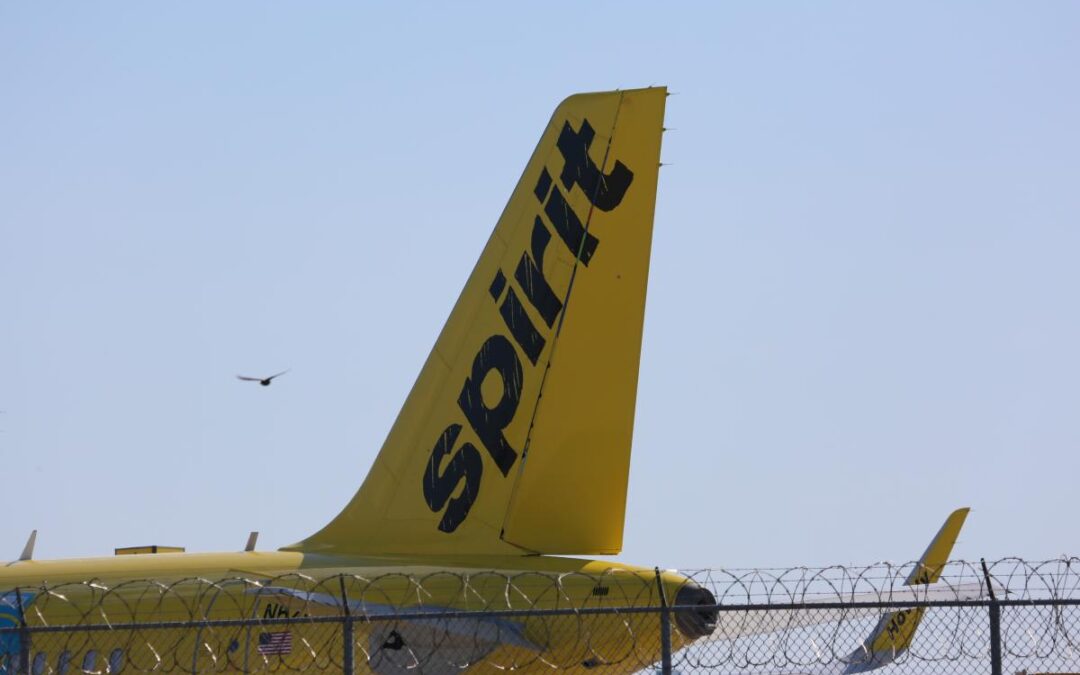
Regulators no longer have to worry that Spirit Airlines might upset the air-travel market by merging with the wrong competitor.
The now-defunct airline made poor business decisions and had to cope with tough circumstances.
But if its demise were an Agatha Christie mystery, the fingerprints of Joe Biden’s antitrust officials would be all over the crime scene.
These zealots fought a proposed deal between JetBlue and Spirit, and congratulated themselves on a 2024 court victory that doomed Spirit to likely oblivion.
This was wanton economic destruction masquerading as antitrust enforcement.
Sen. Elizabeth Warren (D-Mass.), who never met an antitrust action she didn’t like, exemplifies the perversity.
After the Biden administration got a federal judge to put the kibosh on the JetBlue-Spirit deal in 2024, she celebrated: “This is a Biden win for flyers!”
Last week, as Spirit teetered on the edge of the grave, she expressed dismay: “The Big Four airlines (American, Delta, Southwest, United) control 75% of the US market. Fewer choices = higher prices for you.”
Yes, it would be terrific to have a bigger, more serious challenger to the established players, wouldn’t it?
If only there’d been a way to achieve such an outcome.
The federal judge on the JetBlue-Spirit case conceded that “an expansion of all aspects of JetBlue’s business — including network, fleet and loyalty program — would allow for more vigorous competition with the Big Four, which carry most passengers in the country.”
No matter: For Biden officials, antitrust enforcement was a scholastic exercise where the definition of monopoly had no connection to reality.
If JetBlue had succeeded in gobbling up Spirit, that airline still would have been smaller than the Big Four.
Worrying about JetBlue getting too big is like fretting that Thrifty — the fifth largest car-rental outlet in the United States after Enterprise, Hertz, Avis and Budget — is one relatively small acquisition away from establishing market dominance.
As for the fear that the JetBlue-Spirit merger would end Spirit’s role as an ultra-low-cost carrier and therefore harm consumers, the airline has now gone away anyway, only in a more disorderly fashion.
JetBlue might wonder what Biden regulators had against it.
As the website View from the Wing points out, JetBlue got approval during President Donald Trump’s first administration for a partnership with American Airlines to expand in New York.
Then, the Biden team showed up — and killed the partnership on grounds that directly contradicted its rationale for nixing the JetBlue-Spirit deal.
“The Biden administration fought the American Airlines-JetBlue partnership,” View from the Wing notes, “calling JetBlue a pro-passenger disruptor who drives down prices.
“Then they turned around and claimed that JetBlue was a monopolist who would drive up prices if they bought Spirit.”
JetBlue itself is struggling, but at least the airline is still with us.
Spirit had a good run based on its initial disruption of the industry.
The airline’s idea was to make a basic fare extremely cheap, and then charge passengers fees for everything taken for granted at other airlines (drinks, carry-on bags and so on).
The customer experience was terrible, though.
And Spirit got buffeted by changes during the COVID-19 pandemic, while more established airlines matched its fares with basic economy.
Spirit stopped making money in 2019.
With the JetBlue deal blocked, it couldn’t get an alternative merger done.
It declared bankruptcy in 2024, and then again, in August 2025.
The recent spike in jet-fuel prices pushed it over the edge.
Warren was quick to say that “Trump’s war was the nail in the coffin for twice-bankrupted Spirit airline.” Well, yeah.
But its vulnerable state underlines how foolish it was to keep it from getting the merger lifeline it so desperately needed.
Ronald Reagan said the most terrifying words in the English language are, “I’m from the government, and I’m here to help.”
The Spirit fiasco shows that perhaps equally frightening are the words, “I’m with the DOJ antitrust division, and I’m here to protect consumers.”
X: @RichLowry


