
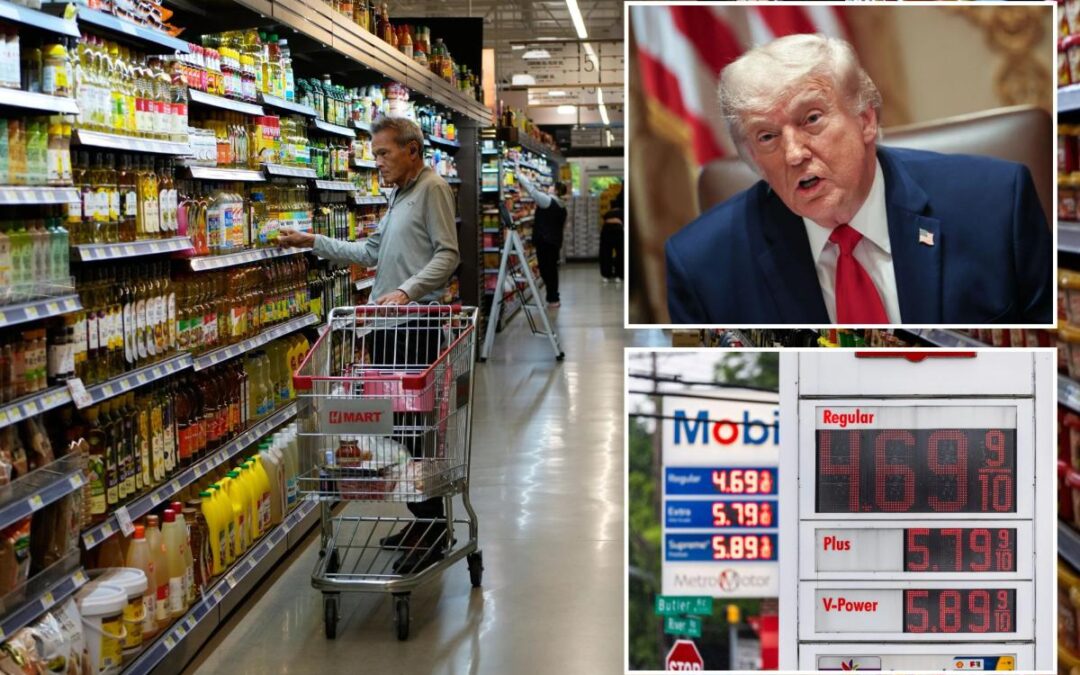
US inflation increased at its fastest pace in three years in April, driven by higher energy prices amid the war with Iran, and cementing economists’ views that the Federal Reserve could hold interest rates unchanged well into next year.
The personal consumption expenditures price index jumped 3.8% in the 12 months through April, the largest rise since May 2023, the Commerce Department’s Bureau of Economic Analysis said on Thursday. PCE inflation advanced by an unrevised 3.5% in March.
Economists polled by Reuters had forecast PCE inflation increasing 3.8% year-on-year. The PCE price index rose 0.4% month-on-month in April after shooting up 0.7% in March.
The conflict has disrupted shipping in the Strait of Hormuz, boosting energy prices, as well as straining global supply chains and causing shortages of a wide range of goods, including fertilizers, aluminum and consumer products.
The national average retail gasoline price shot up 12.3% in April, data from the US Energy Information Administration showed. Gasoline prices have increased more than 50% since the war started at the end of February.
Away from the pain at the pump, consumers are also paying higher prices for other goods and services. Inflation was already elevated before the war, largely because of President Trump’s sweeping import duties.
With inflation rising, Americans are growing frustrated with Trump’s handling of the economy. A Reuters/Ipsos survey last week showed Trump’s presidential approval rating fell to nearly its lowest level since he returned to the White House, hit by a drop in support among Republicans.
Trump won the 2024 presidential election in large part because of his promise to lower inflation. Soaring prices threaten his Republican Party’s congressional majority in the November midterm elections.
Excluding the volatile food and energy components, the PCE price index increased 3.3% year-on-year in April after rising 3.2% in March.
The so-called core PCE inflation gained 0.2% in a monthly basis after advancing 0.3% in March.
The central bank tracks the PCE inflation measures for its 2% target. Financial markets expect the Fed will keep its benchmark overnight interest rate in the 3.50%-3.75% range into 2027.
Minutes of the Fed’s April 28-29 meeting published last week showed a growing number of policymakers open to the possibility that they may need to hike rates.
Surging prices are flattening spending. Consumer spending, which accounts for more than two-thirds of economic activity, increased 0.5% last month after surging 1.0% in March.
Hefty tax refunds have provided a cushion for consumers, especially lower-income households. Consumers are also tapping into savings. But with inflation outpacing wage gains and the tax filing season over, consumers are likely to pull back.
Economists also expect that consumers will at some point want to start rebuilding their savings, especially in the face of uncertainty wrought by the war.


