
When Israel and the United States attacked Iran in late February, some Iranian opponents of the Islamic Republic hoped that it would bring an end to decades of theocratic rule they saw as oppressive.
Now, after devastating strikes and amid a teetering cease-fire, those hopes have been snuffed out. Feelings of disillusionment and despair have taken their place, driven by a reported death toll of 1,700 civilians, vast destruction and an economic implosion that has made daily life a struggle.
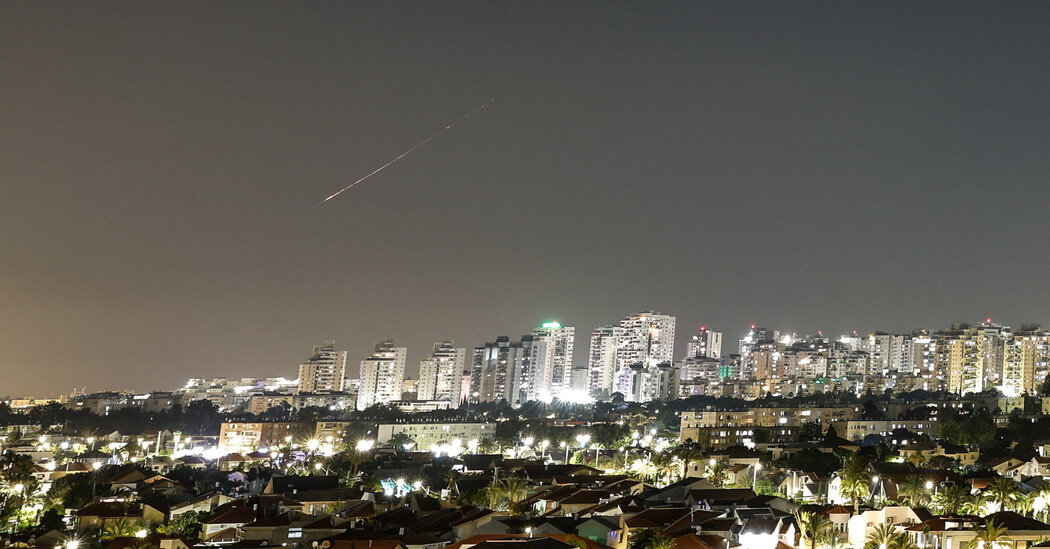
The cease-fire has provided some relief from bombs, but on Sunday, it was looking even shakier after Iran launched a new barrage of ballistic missiles against Israel. Iranian officials cited Israel attacks in Lebanon, but the strikes raised the specter of Israeli retaliation on Iran.
Beyond the military skirmishes, an economic war has sent the prices of basic goods skyrocketing. The crippling of critical industries and the effective closure of the Strait of Hormuz — a key trading route for Iran’s most precious export, oil — have tipped the already troubled economy into free fall.
The on-again, off-again peace talks, along with U.S. proclamations that the war is over when it’s not, has left both supporters and opponents of the government confused and anxious, according to interviews using voice apps with more than 20 Iranians in Tehran, Isfahan, Ahvaz and Mashhad in the days before Sunday’s strikes.
“I’m angry. I feel alone,” Kimia, a 25-year-old designer, said in an interview from Tehran. “We don’t matter to the world at all; we’re only seen as tools for war and negotiation, while we are human beings.”
For some of those desperate for regime change, learning that Israel and the United States had initially planned to install a former hard-line president, Mahmoud Ahmadinejad, as the country’s new ruler was a painful indignity. In interviews and in social media posts, several said that the disclosure of the plan by The New York Times left them feeling like bystanders in a geopolitical game with direct impact on their lives.
Ayatollah Ali Khamenei, the country’s longtime supreme leader, was killed in strikes on the first day of the war in February and has since been replaced by his son.
“What was this all for?” asked Amirali, a 62-year-old engineer in Tehran, in an interview. “They bombed and destroyed our country, our airports, roads and factories in the name of regime change so they could bring Ahmadinejad? This shows the goal was never to make Iran better or free.”
Like all the Iranians interviewed, Kimia and Amirali asked to be identified only by their first names to avoid any possible retaliation.
It has been a tumultuous year for Iranians. The United States and Israel struck Iran first in June 2025 in a short war and then attacked again starting in late February, hitting factories, airports, seaports, bridges, universities and densely populated residential neighborhoods. President Trump said this latest war was meant to create conditions to displace the regime and to ensure Iran could never get a nuclear weapon.
Negotiations to end the conflict appear to be at a standstill, with one of the main sticking points being the Strait of Hormuz.
Iran shut down internet service to the general public from the start of the war until late May, saying it was for national security reasons. Now that more people are back on social media, many of them are able to communicate with the world and with one another. Their messages paint a dire picture.
A retired professor in Tehran who was critical of the government said in an interview that people had simply given up on political change and were focused on surviving day to day. A manager of a plastic bottle factory near Mashhad said production was shut down and all employees furloughed because it lacked raw materials after Israeli airstrikes on Iran’s petrochemical industry. A doctor in Isfahan said pharmacies were rationing medicine, and that the health ministry had advised doctors to prescribe only essential medications because of shortages.
Amin Afshar, the head of Iran’s hemophilia association, recently told Iranian media that the country had no reserves of the medicine that people with the bleeding disorder needed, and that importing medication had become very challenging.
Social media in Iran is awash with tragedy. One story that has spread widely is that of Hamed Mirzaei, who posted that he lost 12 members of his family in an Israeli airstrike in March on Resalat Square, a densely populated residential area in Tehran. Mr. Mirzaei wrote that he is the sole survivor of the attack that killed his wife of one year, his parents, grandparents, uncle, cousins and other relatives, according to his Instagram posts and Iranian media reports.
“Until the last day I’m alive, I will not let your names be forgotten, I will speak of each and every one of you. I will not let you die in vain,” Mr. Mirzaei wrote in a post where he shared his wedding photographs.
Many Iranians — even those who have opposed the theocratic regime — say they oppose the war and have suffered enough. They are increasingly looking at diplomatic negotiations as a means for stabilizing the country and the economy.
“I am definitely in favor of negotiations right now given the circumstances,” said Lida, a 44-year-old environmental expert in Tehran who has been opposed to the government. “We lost a lot of lives and lost a lot of our infrastructure. We lost a lot of human resources and, to be honest, I don’t think that war is in our best interest.”
Analysts say that the huge airstrikes led many Iranians who initially supported the war to change their minds.
“This is a moment of Iranians taking stock of the reality and calculating things that have worked and have not worked,” said Ellie Geranmayeh, a senior fellow at the European Council on Foreign Relations. “Accepting the resilience of the regime despite all your hopes is a very bitter moment for those opposing the regime to digest. It has arguably left the regime more powerful than it was.”
Mr. Trump’s contradictory remarks about Iran have further inflamed confusion and fury, analysts and several people interviewed said. He initially said help was on the way to Iranian protesters, then threatened to annihilate Iran’s ancient civilization. On Thursday in comments to the media, Mr. Trump said that he would “be honored” to meet Iran’s new supreme leader, Ayatollah Mojtaba Khamenei, if a deal was reached with Tehran.
That comment became an instant news headline in Iran, and people flooded social media with commentary and jokes, some referring to the fact that the ayatollah has not been seen in public since the war started. “Well, 90 million people in Iran want to see him too, but it’s a shame they don’t have that fortune. And now you’re arriving late and you want to get ahead of the line?” Ahmad Mosaddegh wrote on social media.
But as the war drags on, some government supporters are also losing patience with their leaders.
Mehdi, a 52-year-old government employee, said in an interview that he had attended pro-government rallies with his wife and children. But he said his salary runs out by the middle of the month, and he cannot afford to buy beef or chicken to feed his family.
“I bought some groceries on loan from a shop in our neighborhood; he told me to pay when I get my paycheck,” Mehdi said. When he returned to pay, “the bill had doubled because the prices of everything had gone up. Everybody is angry over the economy and if the government doesn’t fix things, there will be trouble.”
And Hamed, a pro-government conservative, said in an interview that “the rising prices don’t distinguish between supporters and opponents of the government; it’s affecting us all.”
Iran’s official statistics center announced last week that inflation had spiked compared with this period last year. The report said the price of cooking oil had increased by 430 percent, eggs by 345 percent, rice by 287 percent and milk by 139 percent.
“Nobody is thinking of them or taking their opinions into consideration,” Sanam Vakil, the Middle East and North Africa director for Chatham House, said, adding that Iranians she reached inside the country kept asking her what would happen to them. “They are just a casualty in this conflict that is beyond their influence and grasp.”
Sanam Mahoozi, Rozhin Razavi and Shirin Hekmat contributed reporting.


