
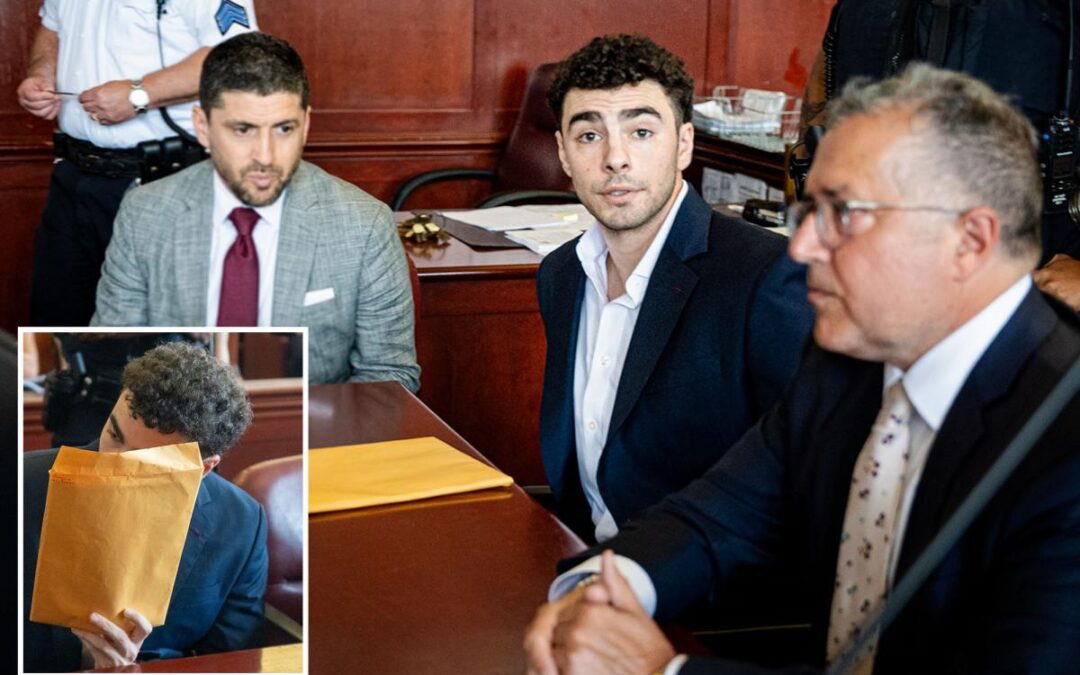
He’s crazy — like a fox.
Luigi Mangione, 28, may have scrapped his “psychiatric defense” for his state murder trial because the legal gambit could have come back to bite him, legal eagles told The Post on Friday.
Lawyers for the accused killer may have gotten cold feet after just one day and made the sensational about-face because they thought the defense could kneecap his separate federal case, according to lawyers not tied to the case.
There also could be something in Mangione’s medical records that he and/or his lawyers did not want to surface at trial, or it could have been a sudden decision made by Mangione himself — because he doesn’t want to be labeled mental, the experts said.
Either way, the sudden switch-up “certainly increases the likelihood that Mangione will testify at his own trial to talk about his hatred and bitterness toward the health-insurance industry,” said Ron Kuby, a prominent Big Apple lawyer who has defended psychiatric cases in the past.
Here is more explanation of the three possible reasons for the shocking change in legal strategy:
1. Making a federal case out of it
Mangione had planned to claim he was overtaken by an “extreme emotional disturbance” when he allegedly executed UnitedHealthcare CEO BrianThompson on a Midtown sidewalk in December 2024, the judge in his case revealed this week.
But that mental-health defense — which could lower his prison time by knocking the charges down from murder to manslaughter — is only available in New York state and not federal court.
That means that if the Maryland prep-school and Ivy League grad took the stand in state court and admitted to his guilt — claiming mental duress and landing a lesser sentence — he’d still have to face a federal trial, where his admission of guilt was already established and he wouldn’t have the mental-defect argument to fall back on to escape a harsh sentence.
“He cannot testify to that, or he will buried in federal court — it would basically be a full confession,” said top defense lawyer Mark Bederow, who called the dueling federal and state cases a “two-headed monster.”
But Mangione can still put on a slimmed-down version of a mental-health argument in state court without formally announcing his defense, experts said.
His lawyers now just have to do it without presenting medical evidence or putting on an “expert” doctor to describe his mental issues.
He could end up simply testifying how his allegedly meticulously planned murder of Thompson still represented a “profound loss of self control,” the lawyers said.
2. Keeping his medical records secret
After Mangione’s legal team Thursday submitted court documents saying it was planning a mental-health defense, Manhattan Supreme Court Justice Gregory Carro ordered his lawyers to reveal specifics about the argument to prosecutors by the end of the day.
“They need to know what malady this defendant suffers [from] and how that triggered extreme emotional disturbance at the time of the occurrence,” the judge said.
The defense team was ordered to divulge Mangione’s psychological examinations and medical history.
Prosecutors would have also been able to have their own doctor examine Mangione for any signs of mental illness.
Mangione’s lawyers instead nded up stunningly writing a letter to the court by that afternoon withdrawing their “notice” of the psych defense, thus dodging the directive.
“It would open his psychiatric records to discovery, and there may be something in there the defense does not want the prosecution to see,” former federal prosecutor Neama Rahmani told The Post.
3. Wild-card scenario: Mangione went rogue
The suspect’s legal team — led by wife-and-husband duo Karen Friedman Agnifilo and Marc Agnifilo — have yet to explain the abrupt switch in their legal strategy.
Kuby said it is possible that Mangione simply had second thoughts about being depicted as having psychological issues.
“Their client could have said, ‘You’re trying to call me crazy…I’m not crazy, I’m not doing this,’ ” Kuby told The Post.
Kuby said he experienced such a scenario with former client Gigi Jordan, a pharmaceutical millionaire who the lawyer said refused to accept a psychiatric defense at her Manhattan murder trial on charges of force-feeding her autistic son a fatal dose of prescription drugs.
Kuby said he made the mental-health defense nonetheless solely on the basis of Jordan’s eyebrow-raising testimony that she killed her son out of fear that her ex-husband would murder her and that her son would be condemned to a life of sexual abuse at the hands of his biological father.
The jury agreed with Kuby, finding Jordan guilty of the lesser charge of manslaughter, which carries a maximum sentence of 25 years, rather than murder, which carries a max of life in prison.
Mangione has pleaded not guilty in both his state and federal cases.

