
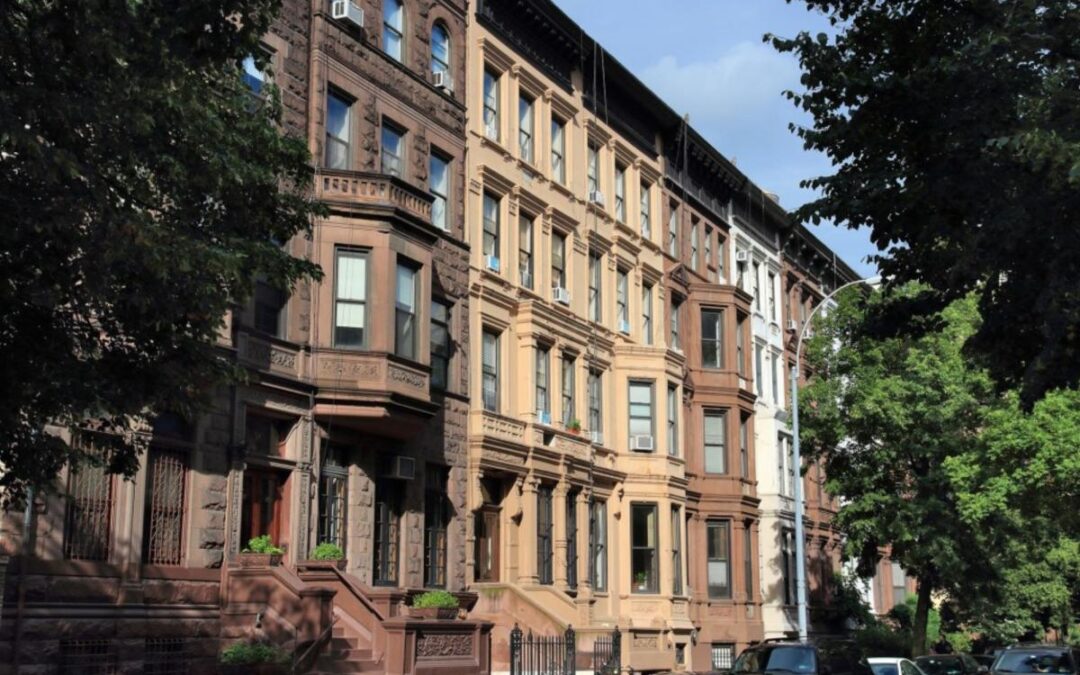
Buying a home in New York City will cost the average resident the better part of their adult life — in savings time, at least.
According to StreetEasy’s April 2026 market report, a New Yorker earning the city’s median income would need close to 20 years of disciplined saving to scrape together a standard down payment on a median-priced home.
The math is brutal. A New Yorker pulling down the city’s median household income would need to set aside 10% of their paycheck every year (before taxes, before student loans, before the cost of actually living in New York) for roughly two decades before they’d have enough cash to put a standard 20% down payment on a median-priced home.
The median asking price for a New York City home sat at $1.04 million last month, placing a 20% down payment at $209,000. Against the current citywide median household income of approximately $105,481, that sum remains well beyond a reasonable near-term savings target for most residents.
For those still on the sideline of homeownership — which is to say, most New Yorkers — the rental market offered no relief.
The citywide median asking rent reached $4,120 in April, up 7% from a year earlier and the highest figure StreetEasy has logged in its 16 years of tracking rental data.
Manhattan bore the sharpest pressure. The borough’s median asking rent surged 8.2% to $4,869, even as available inventory dropped 7.2% to 14,493 units — extending what is now an unbroken 26-month streak of annual inventory declines, the longest ever recorded for the borough.
Brooklyn and Queens fared somewhat better but were hardly spared. Brooklyn’s median rent climbed 6.8% to $3,845 as total rental inventory edged down 2%. In Queens, where new listings fell 12.1% from a year ago, total supply contracted 13.9% and the median asking rent rose 3.2% to $3,200.
With peak rental season approaching and renter inquiries historically spiking in June, StreetEasy analysts warned that conditions will likely grow more competitive before they ease.
And yet, by one measure, things are marginally better than they were. In April 2019, the same calculation yielded a wait of nearly 24 years. The gap has since narrowed by four years, a shift driven less by falling prices than by the slow upward drift of incomes and a modest easing in mortgage rates, which dipped below year-ago levels last month after spiking sharply in late March.
The improvement has been enough to stir the market. Across the five boroughs, 2,225 homes entered contract in April, an 8.5% jump from the same month a year earlier.
Manhattan led the charge, with 1,121 new contracts — the borough’s strongest showing since May 2022. Brooklyn added 602 new contracts, a 6.2% increase year-over-year. Homes that went to contract spent a median of 55 days on the market, only two days longer than the prior April, a sign that well-priced properties are still moving.
Meanwhile, competition is quietly returning. Homes that closed in April fetched a median of 97.9% of their last listed asking price, ticking up from 97.7% a year ago.
Nearly one in five properties (18.7%) sold above asking, compared to 17.1% 12 months prior.
For buyers who cannot stomach a two-decade savings runway, StreetEasy identified 10 neighborhoods across the city where the timeline shrinks considerably. Six of the 10 are in Queens.
Oakland Gardens topped the list. With a median 20% down payment of $69,800, a buyer earning Queens’ median income could theoretically get there in 7.8 years.
Neighboring Kew Gardens Hills was close behind at $71,000 and 7.9 years. Jackson Heights, Rego Park, Kew Gardens and Forest Hills rounded out the Queens contingent, each requiring between 9.2 and 9.3 years and down payments in the $83,000 to $84,000 range.
Manhattan made a surprising showing with three entries. Washington Heights, long the borough’s most accessible foothold for working-class buyers, required $109,800 and 9.7 years. Hamilton Heights came in at $119,800 over 10.6 years. East Harlem, the priciest on the list at $139,000, still demanded 12.3 years of disciplined saving.
Brooklyn claimed just one spot: Coney Island, where the median down payment clocked in at $95,400 and the savings timeline ran 11.1 years.
New sellers arriving to market this spring appear to have read the room. As inventory swelled 10.7% citywide to 4,672 new listings in April, asking prices adjusted accordingly, with the citywide median slipping 2.8% year-over-year. The dynamic has given buyers modestly more leverage, even as that leverage remains in the single digits.


