
The results, when all of those scoring runs stack together, have been blowouts.
Each one for the Knicks — the small spurts, the overpowering tears, the mind-boggling stretches that alter games and series — added together and turned their 2026 postseason appearance into a historic six weeks.
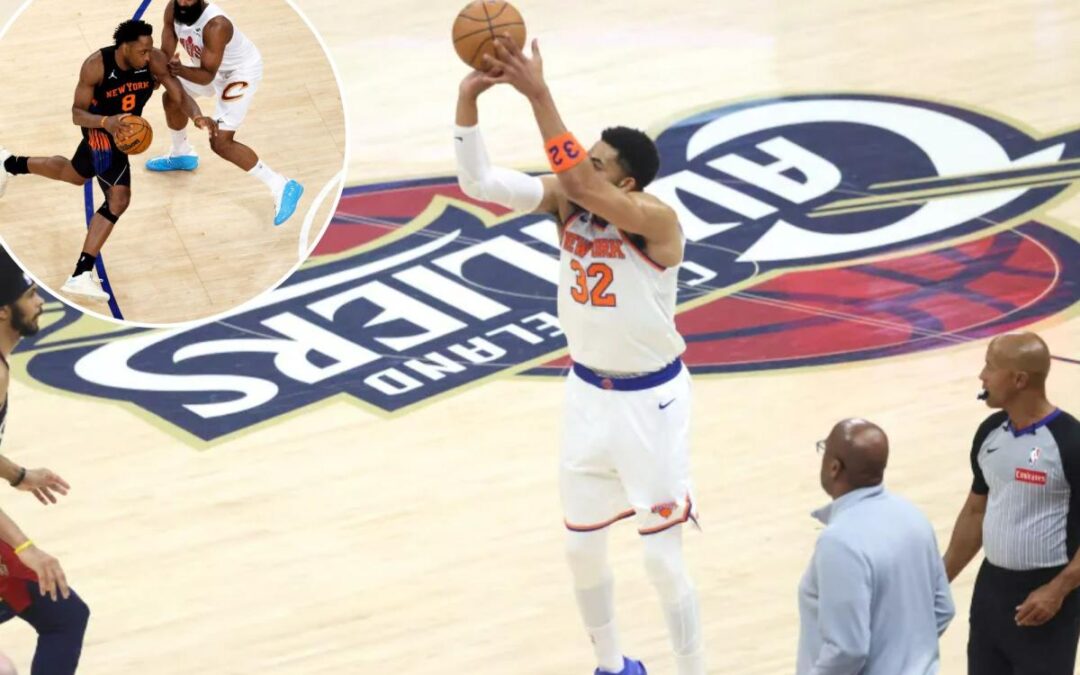
When the Knicks open the NBA Finals on Wednesday, they’ll enter on an 11-game winning streak during which they’ve outscored opponents by 262 points.
Scattered throughout those victories, the Knicks have embarked on scoring stretches that capture a strong momentum team, extending those stretches to the point where they could even end up at 63-11 — like it did in Game 6 of their first-round series against the Hawks.
These runs, OG Anunoby said, are infectious, combining shots falling, ball movement, turnovers, steals, stops and some more shots falling.
“It adds up,” Anunoby added, and the Knicks’ ability to overwhelm opponents has become a defining trait ahead of their first Finals appearance since 1999.
“It’s great when you can kinda have those moments in the game where everything’s clicking,” Karl-Anthony Towns said Friday after the Knicks practiced in Tarrytown, “and I think what’s great about us and what this run has shown is that when we get on those runs, we continue to extend those runs for a long period of time.
“So our ability to stay focused and stay in that zone has helped us tremendously in this playoff, and it’s a lot of the reason why we’re sitting here in this chair today talking about NBA Finals.”
Game 6 against the Hawks served as the most ridiculous instance of a scoring run for the Knicks, allowing them to construct the largest halftime lead in playoff history and score the franchise’s most points in a postseason game.
But they also used a 44-11 tear to close Game 1 of the Eastern Conference finals against the Cavaliers after trailing by 22 points.
That stretch featured 15 points from Jalen Brunson, and it also included Landry Shamet’s forever shot from the corner — the game-tying 3-pointer to force overtime — and nine points from Anunoby in overtime.
The Knicks produced an 18-0 run in the third quarter to break open Game 3 against the Cavaliers and a 20-0 run in the second quarter to all but decide Game 4 before it even reached halftime.

There were also smaller moments that flew under the radar, like a 17-5 run in the final frame of Game 2 against the 76ers that turned a four-point lead into a 16-point advantage and allowed the Knicks to avoid a close finish.
And Brunson always possesses the ability to construct his own spurts.
These windows can be delicate, too.
They take connectivity and belief in everyone and sacrifice, head coach Mike Brown said, because someone could be on the bench when a run begins and won’t make it on the floor.
“There are maybe times when you’re open during those runs and somebody misses you and you can’t get pissed,” Brown said Friday, “because if you get pissed, now your emotions and your energy are someplace else or focused on something else as opposed to what you need to do defensively and all that other stuff.”
At some point in the Finals, the Knicks could get hit with a counter punch.
They might not be able to sustain runs and orchestrate blowouts and rest starters in fourth quarters.
But until then, they’ve mastered the art of momentum — of creating it, of sustaining it, of using it without seemingly anything, or anyone, being able to interrupt their flow.
“Anything and everything out of the ordinary can happen [during runs],” Brown said of being a momentum team, “and you gotta rely on those intangibles to make sure you stay locked in.”


