
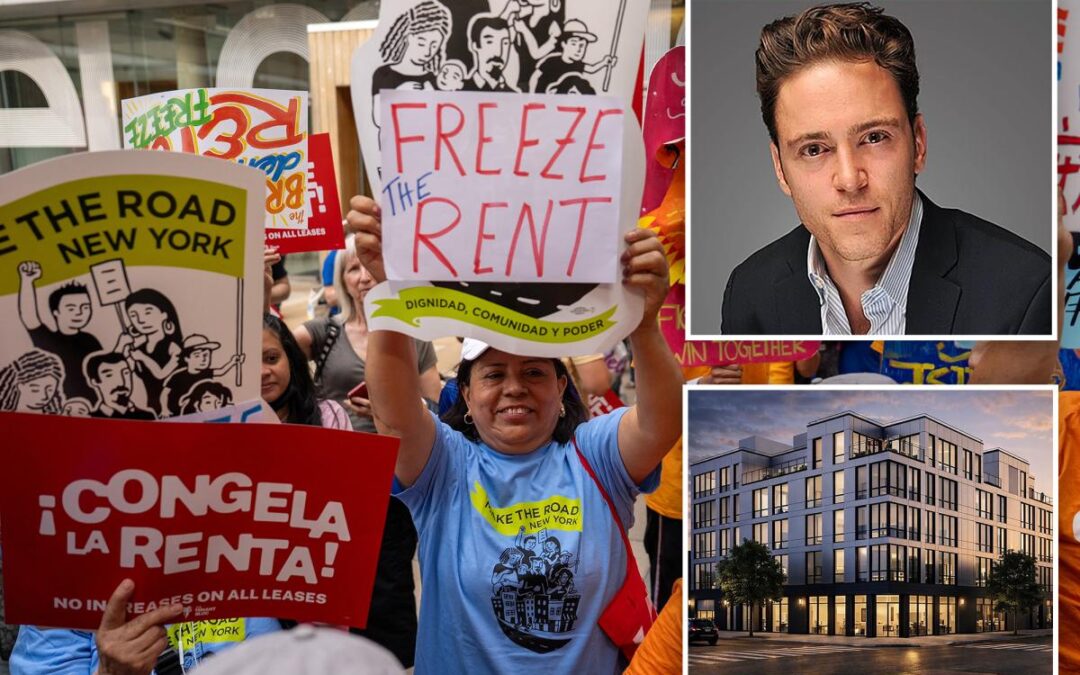
Rent-stabilized landlords face a harsh reality: rising costs and capped revenues.
On Thursday night, the city’s Rent Guidelines Board made good on Mayor Zohran Mamdani’s key campaign promise to “freeze the rent” on one- and two-year leases for the Big Apple’s roughly 1 million rent-stabilized units to the chagrin of some landlords.
“Expense items are not proportional to the income the properties generate,” said landlord Lav Bauta, whose firm Zion Equities owns about 800 New York City rent-stabilized units and manages 4,000 apartments. “Rent-stabilized properties incur the same, or greater, expenses as their fair-market counterparts: insurance, wages, supplies, elevator service, utilities, etc. There is no support or control mechanism to cap expenses while incomes have been capped.”
The median collected rent in a property that is over 90% rent-stabilized in 2025 was $1,395 per month, according to NYU Furman Center, which Bauta said is “roughly equal to the monthly operating cost of such a unit.”
At Zion’s 4242 Ithaca St. in Elmhurst, Queens, two units were rented below that figure.
“You can see how this is clearly unsustainable, and we are not even making considerations for debt service which was foundational for providing the capital needed to perform ongoing repairs and reinvestment at the varying sites,” Bauta added.
The RGB’s decision came hours after the public resignation of one of the RGB’s nine members, Christina Smyth, who accused the panel of ignoring its own data during the lengthy process to decide whether to adjust rents.
According to the RGB’s own research, for buildings that contain rent-stabilized apartments, costs increased 5.3% between April 2025 and March 2026, and are projected to tick up 4.1% the following year. Taxes, which carry the highest weight in the year’s Index, went up 2.6%. The greatest increases, however, were in fuel, surging 11% — followed by insurance, climbing 10.5%.
James Whelan, president of the real estate trade group Real Estate Board of New York, echoed Smyth’s sentiment, saying the RGB “ignored its own data and made a terrible decision.”
The outcome, Whelan said, is “less investment in maintenance and repairs, accelerating the deterioration of the housing stock that millions of New Yorkers call home.”
Similarly, landlord attorney Nativ Winiarsky noted, “Owners who lack sufficient revenue may be unable to make required repairs, resulting in violations, fines, emergency repair charges, tax liens, and, in some cases, court-appointed administrators or the loss of the property.”
Late last year, in the wake of Mamdani’s mayoral win, a number of rent-stabilized landlords rushed to sell their buildings for pennies in anticipation of what materialized on Thursday night in East Harlem. And due to an inability to afford renovations of stabilized units because rent charges won’t make them break even, at least 50,000 units have been warehoused for years — which only drives up prices for market-rate homes due to scarcity, according to critics.
Rent freezes by the RGB are rare, having occurred only three prior times in its history — for one-year periods in 2015, 2016 and 2020, all during Mayor Bill de Blasio’s term. This is the first time ever that it instituted the cap on two-year leases.
Mamdani called it a “historic victory for New York City tenants,” while mom-and-pop landlord group Small Property Owners of New York called the vote “an absolute farce,” and New York Apartment Association, a trade association that represents landlords of rent-stabilized units, promised that the freeze “will destroy the living conditions for hundreds of thousands of New Yorkers.”
Real estate developer Sam Eshaghoff, founder of West Egg Development, has nearly a dozen properties in New York City with rent-stabilized units, including the newly opened Hana building at 45-10 215th Pl., in Bayside, Queens.
“By freezing rents in the face of rising operating expenses, regulators have decisively decided that the economic return of owning a rent-stabilized building will trend ever closer to zero,” Eshaghoff said.
“Landlords don’t set rents; they only meet the market where the demand is. When there is no incentive to build new housing, and we have a housing shortage, the free market tenants will fight for the remaining apartments, and this higher demand will cause the market-rent prices to rise.”


