
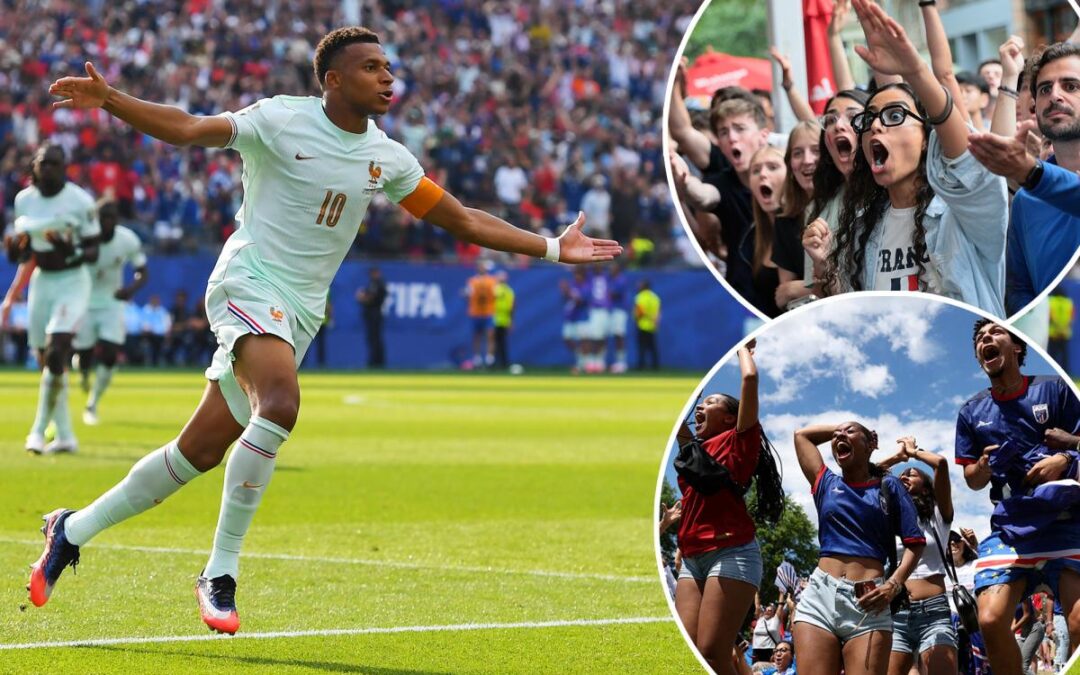
Think you could score a World Cup penalty kick against a professional keeper? One in four Americans thinks they could.
That’s the finding of a survey of 2,000 people, which found 28 percent feeling they could convert from the penalty if the moment arose.
And with several big teams already going out at the dreaded penalties stage, it’s surprising so many feel they could hold their nerves.
Confidence in converting the pressure kick rises the younger a person is, with 43 percent of Gen Z feeling they could beat a World Cup goalie versus 37 percent of millennials, a quarter of Gen X (26 percent) and just 12 percent of baby boomers.
The survey took the temperature of America’s World Cup passion, with respondents polled in the opening week of the tournament.
Nearly half of working soccer fans said they’ll be skipping work to watch games.
With the competition heating up and now well into the knockout rounds, World Cup fever has gripped many, even when the games take place during working hours.
Conducted by Talker Research, the survey found a quarter of workers (26 percent) have skipped work at least once or twice.
While a more devout one in seven (14 percent) said the World Cup takes total priority and have watched several games on work time throughout the tournament.
The research found early interest in the tournament was mixed. Half of the 2,000 polled (52 percent) were uninterested in catching any of the games.
But a third (32 percent) always planned to catch games here and there or just the matches where the United States is playing.
Twelve percent said they’re trying to watch as much as they can, and four percent of diehards said they’ll have watched every game in the whole tournament before the winner lifts the trophy on July 19th.
If someone does manage to watch every single World Cup game, they’ll rack up 72 group stage matches and 32 knockout games, including the final and semi-finals.
That’s 9,360 minutes of soccer or 156 hours or nearly 20 full working days— before any extra time and penalties.
And with the World Cup impact, the future for soccer in America does look bright; younger generations are more likely to have participated in watching the World Cup.
Just 36 percent of Gen Z said they wouldn’t be watching any games, versus 64 percent of baby boomers.
Research methodology:
Talker Research surveyed 2,000 Americans; the survey was administered and conducted online by Talker Research between Jun 11, 2026 – Jun 17, 2026.


