
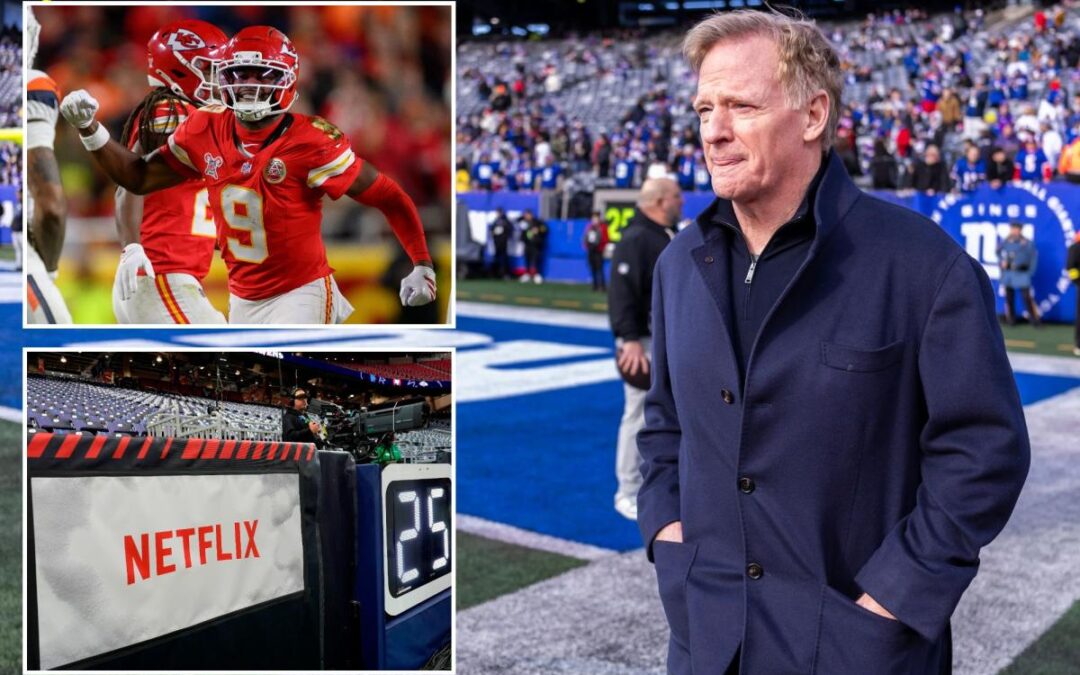
NFL Commissioner Roger Goodell will not testify before Congress next week about the league’s broadcast deals and its recent practice of airing games on paywalled streaming services.
Goodell declined an invitation to appear at a House Judiciary Committee hearing on June 10 “due to ongoing litigation related to the topic of the hearing,” the league’s general counsel, Ted Ullyot, wrote in a letter Wednesday to the committee chairman, Rep. Jim Jordan, R-Ohio.
Jordan is one of several elected officials who’ve raised concerns about the prices fans have to pay to watch NFL games and whether the league’s streaming deals comply with the Sports Broadcasting Act of 1961, which granted the league a limited antitrust exemption.
The law applies only to broadcast networks. Courts have ruled in the past that it does not apply to other media, including cable, satellite and streaming. There has been bipartisan sentiment in favor of updating the law.
This spring, the Justice Department began investigating the NFL for potential anticompetitive practices related to its broadcast deals.
In his letter to Jordan, Ullyot said 87% of the league’s games will be available over the air this season, and that every game in the competing teams’ home markets is on broadcast television. He said the increased number of games on streaming services has corresponded with a slight drop in games shown on cable.
“The NFL’s decision to license a few more games to widely adopted streaming services is simply a reflection that those platforms now offer significantly more reach than the current pay TV ecosystem and that broadcast television remains the foundation of our media distribution,” Ullyot wrote.
A spokeswoman for Jordan did not immediately respond to a request for comment.
The league also sent a letter to Jordan signed by 21 members of Congress urging caution with any changes to the broadcasting law. Ullyot’s letter said the SBA helps maintain competitive balance because it supports “broad media distribution, substantial revenue sharing among the clubs, and a collectively bargained salary cap.”
“If the league were not to handle media distribution as it has since the passage of the SBA,” the letter said, “the result would be to harm NFL fans through increased cost and confusion and the undermining of the competitive balance that makes NFL games so exciting.”


