
They’re winning the rat race.
The Big Apple’s rodents are evolving to become smarter and stronger than their biggest predators — humans.
House mice are genetically mutating to build immunity against household pesticides, while rats are simply figuring out how to escape deadly traps, according to a study published this month.
“They have adapted to human strategy, which means we have to understand more and we have to become much smarter than them,” Jin-Jia Yu, a postdoctoral fellow in the Department of Entomology at the Rutgers School of Environmental and Biological Sciences, told The Post.
Yu and his Rutgers partner, Changlu Wang, sampled DNA of 300 house mice and Norway rats from dense urban areas in New Jersey, Pennsylvania, Washington DC and New York — the latter of which all came from the Big Apple.
They soon discovered the rodents were evolving, though the species were advancing in different ways than one another.
A whopping 70% of pesky house mice had a genetic mutation that rendered anticoagulant poisons — the most common form of rodenticide — useless.
“When the mice eat the poison, they can still function normally, basically. That’s why they are more tolerant,” explained Wang, an extension specialist in the Department of Entomology.
Mice have built up immunity after decades of letting their curiosity get the best of them, leading them to consume unfamiliar food sources, including poison baits.
Much more suspicious by nature, rats are not evolving to have the same mutation at the same rate — but the sneaky squeakers seem to be developing in their brains.
A study of rats, particularly in the Bronx, found that the rodents have become expert escape artists.
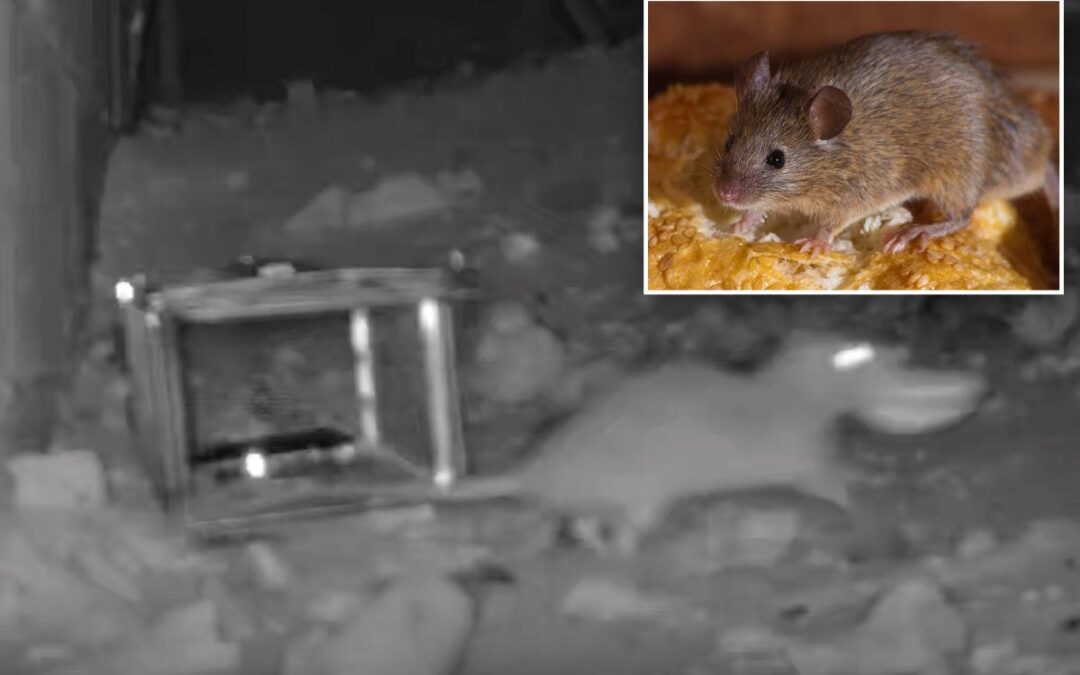
“We have a lot of video clips showing that the rats can avoid the physical traps, like snap traps and sticky traps, which are used very frequently by pest control professionals. They can spend one week or 300 approaches before they even touch the traps,” Yu said.
The findings indicate that mice and rats are adapting to the decades-long war with humans, and that big cities may need to reconsider methods for keeping the disease-carrying critters at bay.
Continuing use of rodenticide could, in the long run, be more harmful to other city wildlife that are not being targeted by the poison, the scientists warn.
The whiskered pests will continue to eat the rodenticide without consequence, but risk poisoning birds, coyotes and other predators that feast on rodents.
“There are studies showing that all of the wild animals that eat roadkills, they contain rodenticide poisons,” Wang said.
“It’s more likely to be transferred to the predators.”
The findings also indicate that there could be future health concerns if mouse and rat populations aren’t curbed in new ways. The rodents contaminate food, damage buildings and infrastructure and can spread diseases and parasites.
While more research is needed, Wang and Yu suggest that city leaders explore non-chemical exterminations, particularly those that focus on prevention and sanitation.

