
Midway through 2026, energy is the issue of the moment.
The standoff in the Strait of Hormuz, soaring gas prices, the race to build AI data centers, and intensifying competition with China all point to the same question: Who will produce the energy that powers the modern world?
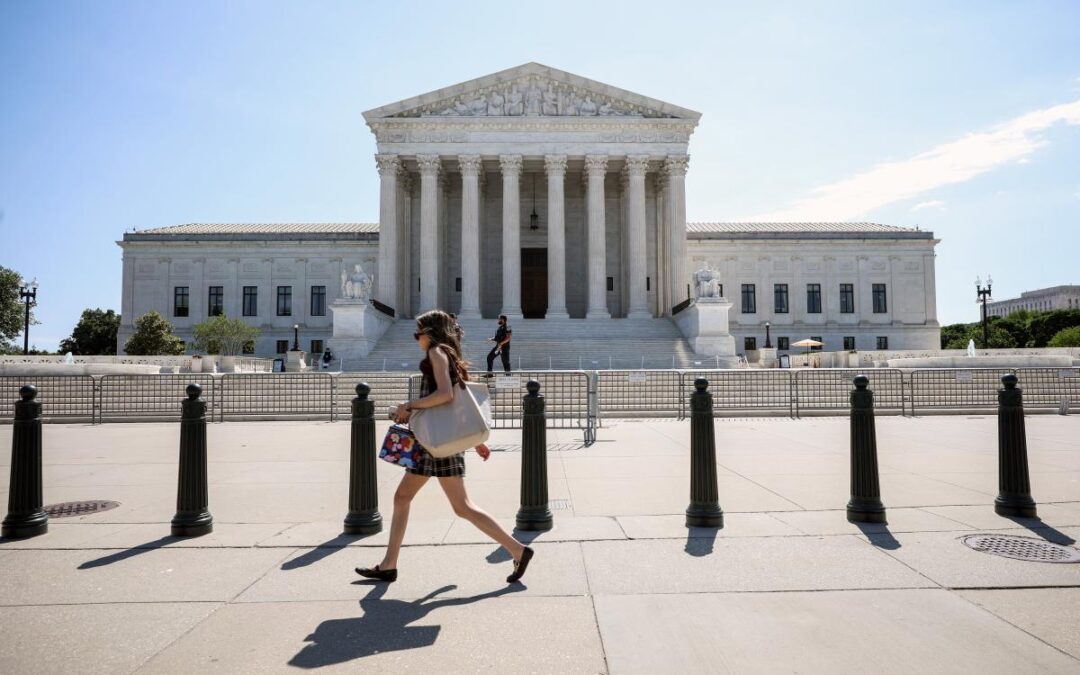
That question is now headed to the US Supreme Court.
In a few months, the justices will hear arguments in one of the most consequential energy cases in decades, Suncor v. Boulder County.
It’s one of dozens of lawsuits brought by progressive state and local governments seeking to make oil and gas companies pay for global warming.
The high court’s decision could determine not only the future of climate litigation, but whether the United States remains an energy superpower.
If the justices greenlight Boulder’s climate claims, the sky’s the limit on the liability costs the energy industry could face.
The lawsuit cites damages “in the billions of dollars.”
That’s just a starting point — in an identical case, a single Oregon county is seeking more than $50 billion in climate damages.
Together, these cases threaten to extract hundreds of billions of dollars from America’s energy sector.
And make no mistake, these costs would be passed on to consumers, just as green mandates have spiked gas prices and electricity bills in California, New York, Europe, and elsewhere.
The architects of these lawsuits openly admit what’s going on: One of the legal strategists behind the Boulder case has said that the goal is to impose a de facto “carbon tax” through the courts.
“This is a rather convoluted way to achieve the goals of a carbon tax,” David Bookbinder of the Environmental Integrity Project said last year. “The people who use the products pay for the damage that they cause.”
Since carbon-emitting fuels still make up over 80% of US energy consumption, pretty much every American would be forced to pay up.
Strip away the legalese, and the core dispute at the center of the climate cases is simple: Does the federal government set US energy policy, or a patchwork of states and localities?
As we wrote in our friend of the court brief last month, the answer will have dramatic consequences on both the domestic economy and US foreign policy.
Start with a simple fact: Global energy demand is surging.
That’s a good thing. Billions of people in developing nations still consume less energy per capita than Europeans did in the 19th century. Their path to modern living standards will require the same products the developed world used to get there: steel, cement, fertilizers, plastics — all of which require carbon-intensive production.
Their soaring energy needs help explain why fossil fuels made up the same sizable share of global energy usage last year — 87% — as they did in the 1970s.
“The post-oil world remains far in the future,” admits David Sandalow, an environmental bureaucrat in the Clinton and Obama administrations.
So if global demand for oil and gas won’t vanish anytime soon, the question is who will supply that energy: the United States, or unstable foreign petrostates.
Not long ago, Europe was dependent on natural gas piped in from Russia; today, it leans on American energy exports to keep the lights on.
That shift would have been impossible without US companies like Houston-based Cheniere Energy, which sent approximately 70% of its total liquefied natural gas cargoes to Europe during the first year of the Ukraine war.
Yet the Boulder-style lawsuits would effectively slap a global surcharge on US energy by forcing companies like Cheniere to price in massive liability for worldwide emissions.
That’s an international carbon tax by another name.
However labeled, it would make US exports less competitive overnight — to the benefit of foreign suppliers like Russia, Saudi Arabia, Qatar, Iraq and Iran, which would gladly undercut US energy exports.
American energy independence didn’t begin with President Donald Trump’s administration.
For decades, the federal government has prevented environmental policy from requiring American energy self-surrender.
The Senate unanimously rejected the 1997 Kyoto Protocol’s carbon-emissions targets over concerns that uneven global obligations would make US businesses carry an unfair share of the costs.
Even President Barack Obama opposed schemes to impose international climate liability on the United States.
Now it’s the Supreme Court’s turn.
The justices should shut down Boulder’s end-run on the Constitution and reaffirm the basic principle that the nation’s energy policy can’t be dictated by local lawsuits.
Sarah Harbison is general counsel for the Pelican Institute for Public Policy. Michael Toth is director of research at the Civitas Institute at the University of Texas at Austin.


