
It’s been quite a week for Rory McIlroy.
Fresh off a successful defense of his Masters title at Augusta National, the 36-year-old finds himself watching the long-running saga of LIV Golf edge toward what could be its final chapter.
He might even afford himself a wry smile.
For years, McIlroy has been one of the most vocal critics of LIV, repeatedly expressing his “hate” for the Saudi-backed breakaway tour that burst onto the scene promising to revolutionize the sport — and pay big bucks to golfers willing to leave the PGA tour for it.
McIlroy became the face of the PGA in the conflict, giving regular interviews and verbally jousting with LIV pros and supporters in what he later conceded was an effort that took a tremendous personal and professional toll, saying he felt like a “sacrificial lamb.”
This week, the golf world was overtaken by rumors that Saudi Arabia’s Public Investment Fund is set to end its investment in LIV, effectively pulling the plug on a longterm future.
And the balance of power in professional golf appears to be shifting back toward the traditional establishment McIlroy — who once said, “If LIV Golf was the last place to play golf on Earth, I would retire” — has defended so resolutely.
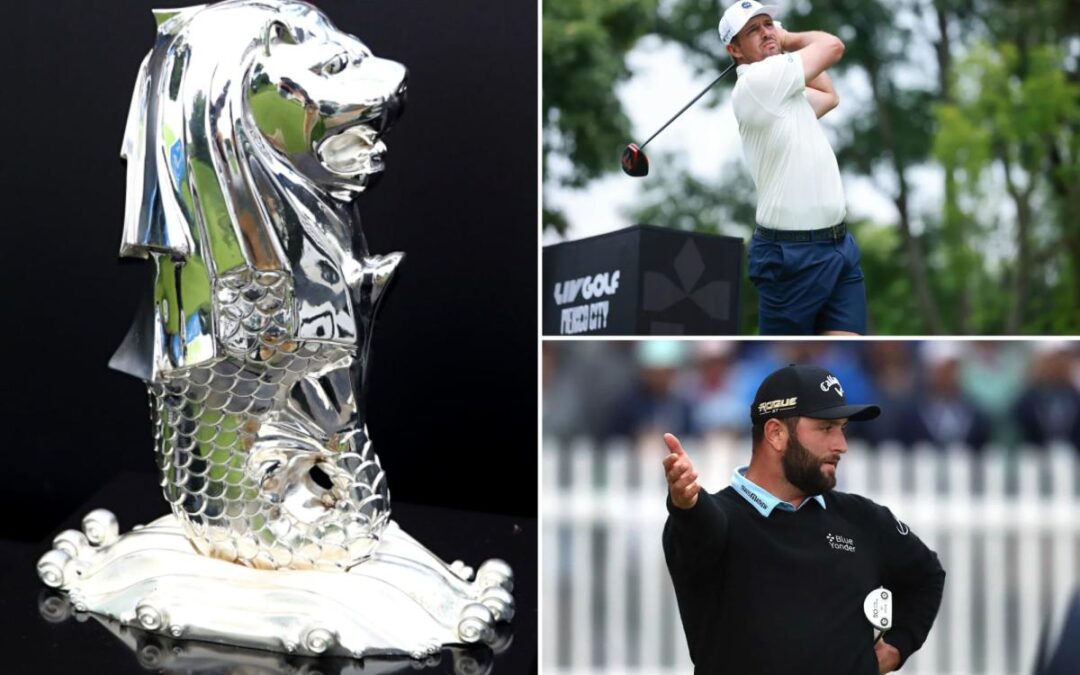
Midweek reports of an emergency meeting of LIV executives in New York City only intensified speculation. While public statements have pushed back against shutdown rumors, and the tour continues with a Mexico City run (where Bryson DeChambeau seemed to be in disbelief over the “destroyed” grass) through Sunday, the underlying reality cannot be ignored: All is not well in LIV land.
Since it launched in 2021 under the slogan “Golf, But Louder,” LIV Golf has been bankrolled to the tune of nearly $6 billion by Saudi Arabia’s PIF. That staggering level of investment was designed to disrupt the dominance of the PGA Tour and reshape the economics of professional golf.
Between 2022 and 2024 alone, LIV reportedly lost more than $1.1 billion. According to financial analysts at Money In Sport, its monthly net spend now exceeds $100 million, driven largely by prize funds that dwarf those on the PGA Tour.
Player acquisition has been another major expense.
As reported by The Post’s Mark Cannizarro, more than $1.3 billion has been spent on contracts alone. Jon Rahm secured a deal reportedly worth $300 million, while Phil Mickelson — who once described his new backers as “scary motherf–kers” — was paid around $200 million despite being well into his fifties.
Even embattled Tiger Woods, his body ravaged by injuries and surgeries, was reportedly offered an eye-watering $800 million to join.
Like McIlroy, he declined.
For others, LIV has been transformative. Journeyman professionals such as Pat Perez suddenly found themselves earning more in a matter of months than they had in decades on the PGA Tour. “I’m paid. I don’t give a damn,” Perez said in 2023 when asked about so-called “sportswashing” to benefit the Saudis’ reputation for human-rights violations, including the 2018 assassination of Jamal Khashoggi.
But the broader picture has grown increasingly uncertain. LIV players were told as recently as last month that funding was secure through 2032.
Geopolitical and economic pressures may have forced a reassessment.
The ongoing conflict involving Iran has reportedly impacted Saudi Arabia’s financial priorities, particularly in relation to oil revenues. Crown Prince Mohammed bin Salman (MBS) is said to be redirecting focus toward large-scale domestic projects, including the $500 billion Neom Super City and 15 new soccer stadiums for the 2034 FIFA World Cup.
As a result, new reports suggest LIV’s guaranteed funding may now only extend through the end of the 2026 season — something CEO Scott O’Neil seemed to confirm Friday.
Recent developments also suggest a change of tack.
This week, the PIF sold a 70% stake in the Saudi Pro League club Al Hilal, and its involvement in ventures like Tom Brady’s Fanatics’ Flag Football initiative appears to be wavering, with events relocated from Riyadh to Los Angeles.
Golf writer Alan Shipnuck believes the shift reflects a broader recalibration. “It seems they’ve decided that pouring money into sports may not be the best way to spend their dwindling capital,” he said on “The Rich Eisen Show” this week.
Intriguingly, the war in Iran could offer the PIF an off-ramp. Golf writer Alan Shipnuck tweeted this week: “Have heard MBS wants to use the war as Force Majeure to pull the plug.”
Even without financial pressures, LIV has struggled to win over golf’s core audience. The product itself — 54-hole tournaments, team formats, shotgun starts, loud on-course music and concerts by Nelly and the Backstreet Boys — was designed to modernize and energize the sport.
But for many fans, it hasn’t resonated.
“Professional golf is very traditional — and everything about LIV isn’t,” Hughes Norton, former agent to Tiger Woods and author of “Rainmaker,” told The Post. “Not one of my golfing friends has ever said to me: ‘Hey, did you see the LIV tournament yesterday?’ Not once.
“LIV Golf just never got any traction with the average golf fan.”
Sports business expert David M. Carter of the Sports Business Group agrees, pointing to a fundamental issue: engagement.
“In order for a sports league to succeed longterm, it requires compelling competition, storytelling that resonates, and the ability to deliver both,” he explained. “Without these, generating revenue from media and corporate sponsors will lag.
“And when there’s no confidence,” he added, “there doesn’t tend to be an amount of investment that can easily salvage it.”
The spending extended far beyond players as LIV created a vastly different ecosystem, even for caddies. On the PGA Tour, caddies cover their own travel, accommodation and expenses, and can lose money if their player misses the cut.
There were no such concerns at LIV. Salaries were guaranteed, all expenses covered, and conditions vastly improved. “It’s a different world,” one caddie said. “We wanted for nothing.”
If LIV does fold, the consequences will ripple across the sport.
Brooks Koepka and Patrick Reed both made moves back toward traditional tours, and even McIlroy said in January that he would be happy for LIV signees to return to the PGA Tour, saying, “They’ve made the money, but they’ve paid their consequence in terms of the reputation and some of the things they’ve lost by going over there.”
Koepka utilized the PGA Tour’s “Returning Member Program,” though it reportedly cost him more than $50 million in fines, donations, and forfeited equity. Reed, meanwhile, is working his way back via the DP World Tour and hopes to regain full PGA Tour status by 2027.
“I’m a traditionalist at heart,” Reed said. “I was born to play on the PGA Tour.”
For others, the path will be far less straightforward. Veterans like Sergio Garcia, Lee Westwood and Ian Poulter may lack both the incentive and the time to rebuild their standing although, with each of them bagging $25 million of PIF’s money, the landing should be soft.
Younger stars face a different challenge: competitiveness.
Bryson DeChambeau and Australia’s Cam Smith, both major winners, have struggled to replicate their previous form. At this year’s Masters, both missed the cut.
Indeed, of the 10 LIV players in the field, only England’s Tyrrell Hatton mounted a serious challenge, ultimately tying for third place.
Iain Carter, BBC golf correspondent and author of “Golf Wars: LIV and Golf’s Bitter Battle for Power and Identity,” sees a pattern. “Jon Rahm hasn’t come close to a major win since moving and the likes of Cam Smith and Dustin Johnson have clearly gone backwards,” he said. “The fact is, most LIV players looked underprepared for the Masters.”
Ultimately, LIV’s story may serve as a cautionary tale — proving that money alone, even in unimaginable quantities, cannot guarantee success in a sport rooted in tradition, history and fan loyalty that’s deeply ingrained.
If the end does come, it will not simply mark the failure of a rival tour. It will represent the closing of one of the most disruptive and polarizing chapters in modern golf.
For the players who took the leap, the aftermath may be the hardest part. Reputations have been damaged, relationships strained and once-assured legacies — particularly for Ryder Cup stalwarts like Garcia, Westwood and Poulter — have been thrown into doubt.
Certainly, the PGA Tour and DP World Tour will likely welcome back top talent, but it will be on their own terms. “There may be some resentment but ultimately the tours want the best players,” adds Iain Carter.


