
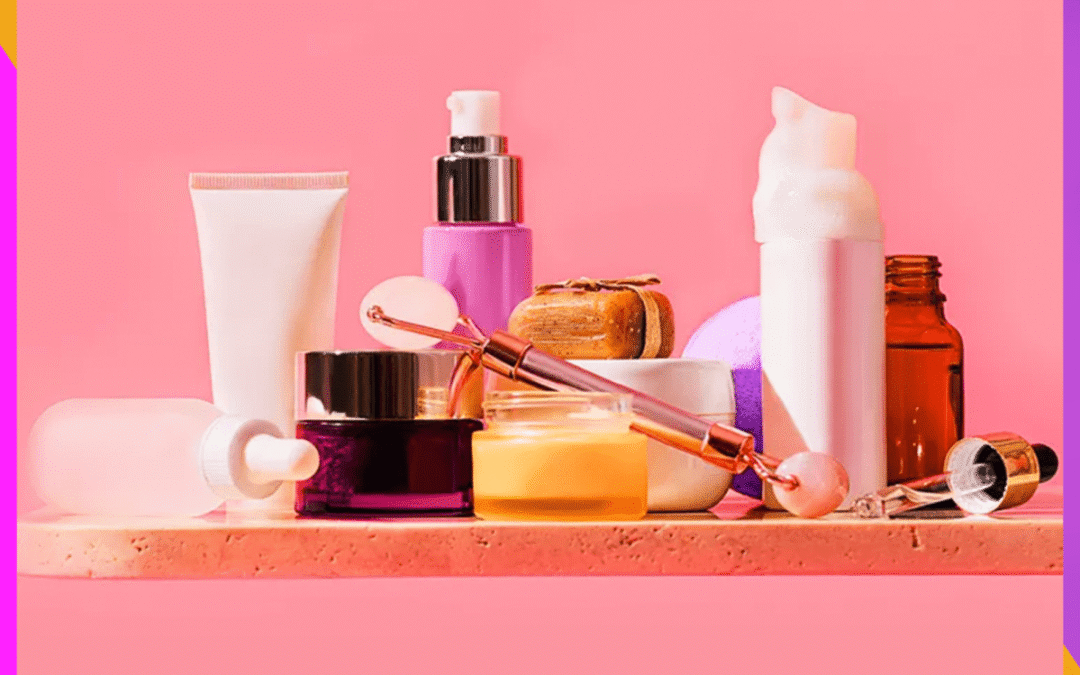
Skincare is one of the few beauty categories where I treat ingredient lists like a personal scoreboard.
As a beauty shopping reporter, I spend a lot of time comparing formulations, tracking how actives behave across different skin types and noticing which products actually deliver on their claims versus those that just sound impressive on paper.
That habit becomes especially useful when looking at skincare through the lens of age. Skin in the early 20s tends to respond best to straightforward cleansing, oil control and barrier-friendly hydration that doesn’t overwhelm.
By the 30s, the focus moves toward sustained hydration and ingredients that support firmness and texture, while peptides and vitamin C begin to show their value. In the 40s and beyond, people begin to want more moisture support, barrier reinforcement and formulas that help skin maintain resilience as natural cell turnover changes.
How does the skin change as we age?
“As skin ages, we see reduced collagen and elastin support, slower barrier recovery, more
dryness, more visible pigmentation irregularities and changes in texture and firmness,” Jane Yoo, MD, NYC-based board-certified dermatologist, assistant clinical professor of dermatology at Icahn School of
Medicine at Mount Sinai and medical director of the Clinical Research Center of New York, told the New York Post.
Some of this is intrinsic aging, and some is driven by external factors like UV exposure, which is why sunscreen remains the single most important anti-aging product.
Products for your 20s
“In your 20s, I usually focus on prevention and barrier health,” Dr. Yoo shared. “That means daily sunscreen, a gentle cleanser, a moisturizer that supports the skin barrier and then one or two useful
add-ons depending on skin type.”
She notes that hyaluronic acid is a good hydration-support ingredient and panthenol is excellent for supporting the skin barrier and reducing dryness or irritation.
Products for your 30s
“In your 30s, I usually start emphasizing prevention plus early correction,” Yoo suggests. “This is the
decade when many patients begin noticing uneven tone, early fine lines, post-inflammatory
pigmentation or dullness, so I like daily sunscreen, an antioxidant in the morning and some form of retinoid or retinol at night, if tolerated.”
This is also a good decade to start thinking about targeted pigment management or collagen-supporting ingredients, she notes, rather than relying on hydration alone. “Topical retinoids and retinol are among the best-supported ingredients for photoaging and fine lines,” Yoo said.
Products for your 40s
“In your 40s, I usually focus on collagen support, pigment control and barrier preservation,” Yoo described. “Many patients begin seeing more persistent dryness, fine lines, laxity and uneven tone, so this is where richer moisturizers, retinoids, peptides and pigment-regulating ingredients can all play a role.”
Products for your 50s and up
“In patients 50 and older, skincare often needs to do more barrier support, pigment management and texture support at the same time. Skin tends to become drier, thinner and more easily irritated with age, so I prioritize sunscreen, barrier-repair moisturizers, retinoids if tolerated and brightening ingredients for uneven tone,” Yoo listed.
What is the 4-2-4 rule in skincare?
“The 4-2-4 rule is a K-beauty cleansing technique: four minutes massaging in an oil cleanser, two
minutes with a water-based cleanser and four minutes rinsing, often starting with warm water
and ending cooler,” Yoo shared.
Some people enjoy it as a ritual, but from Yoo’s dermatologist perspective, it can be too much for patients with rosacea, eczema, sensitive skin or a compromised barrier.
Which two serums cannot be used together?
There are very few absolute “never together” rules, but some combinations are more likely
to be more irritating than helpful.
“The most common example is retinoids with strong exfoliating acids like glycolic acid or other aggressive leave-on acids in the same routine, especially in sensitive skin,” Yoo said. “It’s less about chemistry ‘canceling out’ and more about avoiding unnecessary irritation and barrier disruption.”
Which is better for aging skin: retinol or hyaluronic acid?
“They do different jobs, so I would not call them interchangeable,” Yoo distincts. “Retinol is the better true anti-aging ingredient because it helps with fine lines, texture and collagen-related changes
over time, while hyaluronic acid is better for hydration and temporary plumping.”
If she had to choose one for aging skin specifically, retinol wins on “long-term evidence,” she noted, while hyaluronic acid is an excellent support player.
The bottom line
The best routine is not the most complicated one — it is the one a person will do
consistently.
“Across every age group, the foundation is still the same: daily sunscreen, gentle cleansing, barrier support and one or two targeted actives chosen for the person’s real skin concerns,” Yoo concludes.
This article was written by Victoria McDonnell, New York Post Commerce Journalist & Content Strategist, who has spent countless hours researching, testing hundreds of products and comparing the latest makeup, skincare, hair and beauty items and trends to determine what’s truly worth your hard-earned cash. She evaluates formulas, textures, ingredients and more, in addition to consulting medical and industry experts. Some of Victoria’s latest conquests include testing the best sheet masks on the market, and a rinse-and-repeat review of the best shampoos for all hair types and budgets. Victoria, who received a beauty industry essentials certification from the Fashion Institute of Technology, has been creating shopping guides for the New York Post since 2021 and previously held positions at Insider Reviews and CNN Underscored.


