
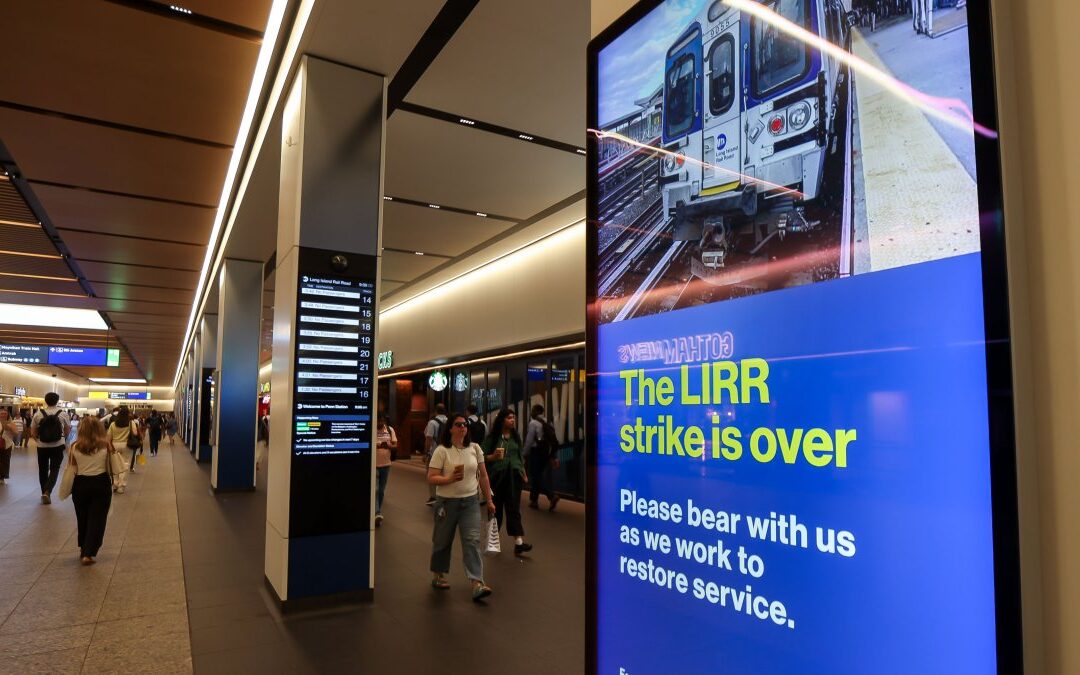
Long Island Rail Road trains are back, and commuters are getting back something else: money.
After days of travel headaches due to the strike, there is some good news coming down the tracks for LIRR riders. Some ticketholders will be getting refunds from LIRR for the days service was suspended.
So who is eligible, and how much money can riders expect?
Only those with monthly tickets are eligible for refunds. According to the MTA, that’s about 68,000 people.
The refunds cover Saturday, Sunday, Monday, and Tuesday — four days of reimbursed fares.
When it comes to how much money those riders can expect to see, it depends on where the riders are coming from. To determine what the refund will be, ticketholders should take the total that is paid for the monthly ticket, divide it by 31, then multiply by four.
For example, for the riders who spend $394 on a monthly pass from Ronkonkoma, they would get a $51 refund.
“I think that’s great. I had to take the bus which cost me $7.50 each time. So it’ll cover the cost of the bus,” said LIRR rider Eileen McQueenie.
For those who buy their monthly tickets electronically, the refund will be automatically sent to the credit or debit card on file. The credits should appear by June 30.
“I think it’s great they’re giving some money back and I’m glad they got the strike completed pretty quickly and everyone’s back in business,” said fellow rider Mike Gilbert.
MTA officials acknowledge today the refunds won’t be cheap. MTA Chief Financial Officer Jai Patel said the refunds will cost the transit agency about $2.4 million to cover the four-day period.
When asked why they were going to pay riders back for four days when the strike only lasted three — two of which were weekend days when rail traffic is usually far less busy — MTA Chairman Janno Lieber said it would be unfair of them to guess when the ticketholders use the train.
“I think we had a quick discussion about that. I didn’t think it was fair to assume monthly ticket holders only travel on weekdays,” Lieber said.
While Lieber has yet to disclose specifics of the contract the MTA agreed to with five engineering unions, NBC New York previously reported that the deal included three years of 3%-3.5% raises, and then a fourth year which nets another 4.5% when bonuses are factored in.
Cost savings include no more overtime for computer training and a switch to electronic paychecks.
The MTA chairman acknowledged frustration that expensive engineer work rules that pay out extra overtime — including rules that pay employees extra money for driving two types of trains on the same shift — didn’t get changed in the new deal. While the unions argued those rules are needed for safety, MTA officials still would like to change that rule in the future.
“There are outdated, antiquated and abusive work rules still on the books, and the way things work is once there’s a rule on the books, you can’t change it if the other side doesn’t want to,” Lieber said.
As for when those who had been on strike will vote to ratify the new contract, NBC New York was told it would be about two weeks.


