
The consequences of the NATO summit that concluded Wednesday in Ankara will be determined primarily by two questions: Will Europeans step up to honor their defense-spending commitments and carry more of the security burden on the continent? And will President Trump step back further from the alliance?
The answer to the first question is a resounding yes. Unfortunately, the answer to the second question is maybe.
At the heart of these dynamics is the concept of “NATO 3.0,” which US Under Secretary of Defense for Policy Elbridge Colby and Secretary of Defense Pete Hegseth popularized and NATO Secretary General Mark Rutte adopted.
dpa/picture alliance via Getty Images
Before we can wrap our heads around NATO 3.0, we need to understand its antecedents — or at least the administration’s view of them.
At the NATO Defense Ministerial in February, Colby characterized NATO 1.0 as a “hard-nosed, realistic, clear-eyed approach to deterrence and defense” employed in the early decades of the alliance before the collapse of the Soviet Union. Americans expected European allies to “pull their weight,” and that is largely what they did. While there were issues within the alliance of course, Colby rightly views that period as “tremendously successful.”
Indeed, the primary purpose of the alliance was — and is — to deter and defeat armed attacks against its members. By that standard, the alliance is one of the most successful in history and a leading American grand strategic asset.
But with the end of the Cold War, the alliance shifted to what Colby calls “NATO 2.0,” a period he says was characterized by at least two elements: a focus outside the continent and European disarmament. During this period, Colby notes that America “provided the overwhelming share of high-end military power for Europe’s defense.” It is this period that Trump criticizes most as unfair.
But that concern ignores relevant context.
The reason for Europe’s shift in focus was that the Soviet Union collapsed, partly due to the role Europeans played. After the Cold War, there was concern in many quarters that the alliance needed to “go out of area or go out of business.” Thankfully, the alliance didn’t go out of business. It turns out, of course, that the threat from Moscow was not over, as Georgians and Ukrainians know all too well.
And where was some of Europe’s supposedly misguided focus during NATO 2.0? Afghanistan.
It is worth remembering that America — not Europe — was attacked on Sept. 11, 2001. Still, NATO invoked Article 5 of the North Atlantic Treaty, treating al Qaeda’s attacks on Washington and New York as an attack on Europe and Canada.
Then our NATO allies backed up their political commitment with tangible action, sending tens of thousands of troops to fight alongside Americans. Many of these allies stood with Americans there for 20 years and stayed until the final days when President Joe Biden decided to leave Afghanistan. And more than 1,000 European and Canadian service members made the ultimate sacrifice in Afghanistan and never returned home to their families.
One should keep such facts in mind when tempted to cast aspersions on Europeans and on the NATO 2.0 period.
To be sure, Europeans fell far short on defense spending during that time. But, before we get too upset about that, it is worth considering America’s wildly insufficient defense spending during the same period.
We should avoid lecturing allies who paid far more than money after 9/11. And, at a minimum, we should not threaten to steal territory (Greenland) from allies such as Denmark, whose soldiers bled in Afghanistan alongside Americans. Such might-makes-right behavior is from Putin’s playbook, and America should be better than that.
So, what about the new NATO 3.0?
Its focus, according to Colby, is allies stepping up and assuming “primary responsibility for the conventional defense of Europe.” That is certainly a reasonable and necessary expectation. America has vital interests elsewhere as well, and its resources are not infinite. Colby is right to press Europeans to focus on “outputs and capabilities” and “ready forces, usable munitions, resilient logistics, and integrated command structures.”
Here’s a key point: Our NATO allies have listened to Washington and acted.
They increased their collective defense spending by nearly 20% in 2025. This year, five European allies are already projected to meet the 3.5% of gross domestic product on core defense spending target almost a decade early.
It will be interesting to see whether the United States can sustain that level of defense spending.
In addition to increased spending, European allies are increasingly fielding combat capabilities and formations crucial for NATO deterrence. Germany, for example, is fielding a forward-stationed armored brigade in Lithuania to bolster deterrence on the eastern flank.
The challenge is the delay between increased European defense spending and the delivery of those “outputs and capabilities” to deployed combat forces. Damaging statements from the president regarding America’s commitment to collective defense, as well as US military withdrawals from Europe that are premature or excessive, could create an interim deterrence gap that invites aggression.
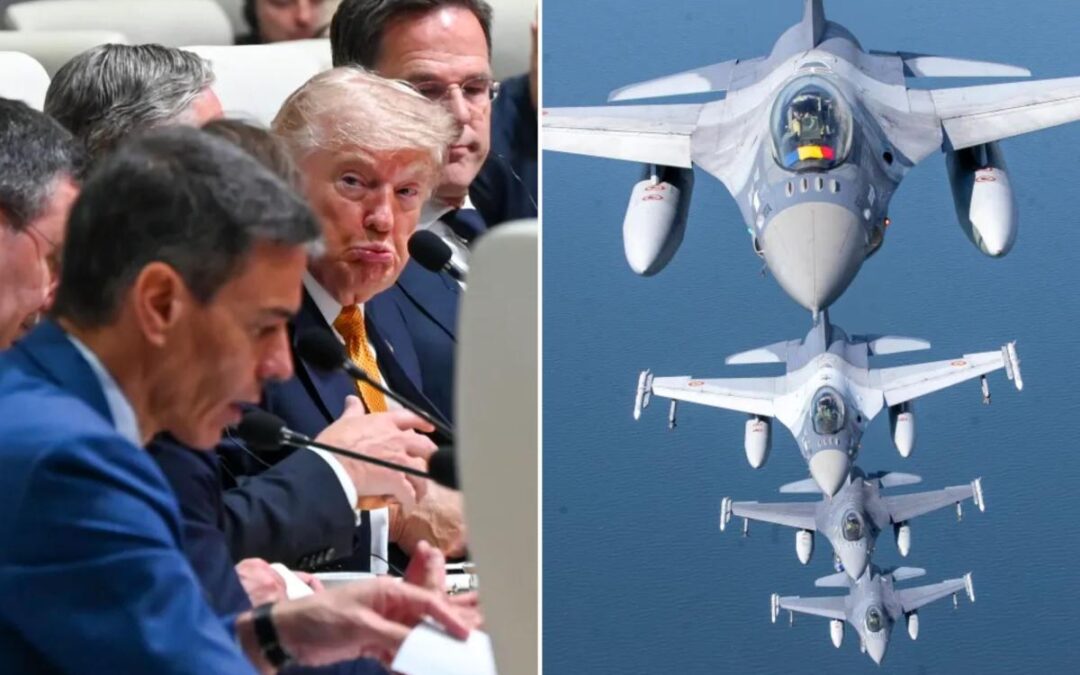
Unfortunately, the Trump administration has already started to reduce the American combat power in Europe that is needed. That includes ending the US Army’s rotational Infantry Brigade Combat Team deployment to Romania.
The broad outlines of NATO 3.0 are sound. But its success will depend on whether reductions in US military posture in Europe are conditions- or timeline-based and how Putin perceives President Trump’s commitment to collective security.
Bradley Bowman serves as senior director of the Center on Military and Political Power at the Foundation for Defense of Democracies.


